

A cold email agency helps businesses craft, send, and optimize campaigns for real results.
Cold email has a reputation problem. Most people think of it as noisy, awkward, or easy to ignore. And honestly, that’s fair—when it’s done wrong. But when it’s done with intention, it becomes something else entirely. A quiet way to start real conversations.
That’s where a cold email agency comes in. Not to blast inboxes, but to slow things down. To think before sending. To understand who’s on the other side of the screen.
Because cold outreach isn’t about tricks or volume. It’s about timing, relevance, and saying the right thing in a way that feels human. When all of that lines up, cold email stops feeling cold. It starts opening doors.
What Is a Cold Email Agency?
At its core, a cold email agency helps businesses start conversations with people they don’t already know. No ads. No algorithms. Just a clear message landing in the right inbox at the right time. Simple in theory. Hard to do well.
Most people think cold email is just writing a few lines and hitting send. But that’s only the visible part. Underneath, there’s research, planning, testing, and a lot of small decisions that shape the outcome. A cold email agency handles all of that, so businesses don’t have to learn it the hard way.
Instead of guessing who to contact, the agency defines the audience first. Who actually needs this offer? Who’s likely to care? That clarity changes everything. It turns cold outreach from noise into relevance.
More Than Just Sending Emails
Sending emails is the easy part. Anyone can do that. What separates a cold email agency is how much thought goes in before the first message ever leaves the inbox.
It starts with positioning. What problem are we solving? Why should the reader care right now? Then comes the message itself. Not salesy. Not clever for the sake of it. Just clear, honest, and human.
On top of that, there’s the technical side. Domains, inbox setup, warming, and deliverability. It’s unglamorous work, but it decides whether an email gets seen or disappears into spam. Agencies live here because they know one mistake can sink an entire campaign.
Strategy First, Tools Second
A common mistake is thinking tools are the strategy. They’re not. They’re just tools. A cold email agency focuses on the system. The order of messages. The pauses between follow-ups. The tone shifts from email one to email three. Each step has a purpose. Each line earns its place.
This is why businesses often turn to specialists like Prospect Labs. Not for software access, but for judgment. For knowing when to push, when to stop, and when to adjust based on real replies, not assumptions.
Why Businesses Choose to Outsource Cold Email
Cold email looks cheap from the outside. But done properly, it demands time, focus, and patience. Most teams already have enough on their plate.
Outsourcing removes that burden. Instead of building from scratch, businesses plug into a process that’s already been tested. They avoid early mistakes. They move faster. And more importantly, they get feedback from the market without burning leads or domains.
There’s also consistency. Campaigns don’t stall when someone gets busy. Follow-ups don’t get forgotten. Everything keeps moving, quietly and steadily.
The Real Role a Cold Email Agency Plays
In the end, a cold email agency isn’t there to “send emails.” It’s there to protect reputation, create opportunity, and build a repeatable outbound channel.
When done right, cold email feels less like outreach and more like an introduction. And that’s the difference between being ignored and being answered.
Cold Email Outreach Agency vs In-House Outreach
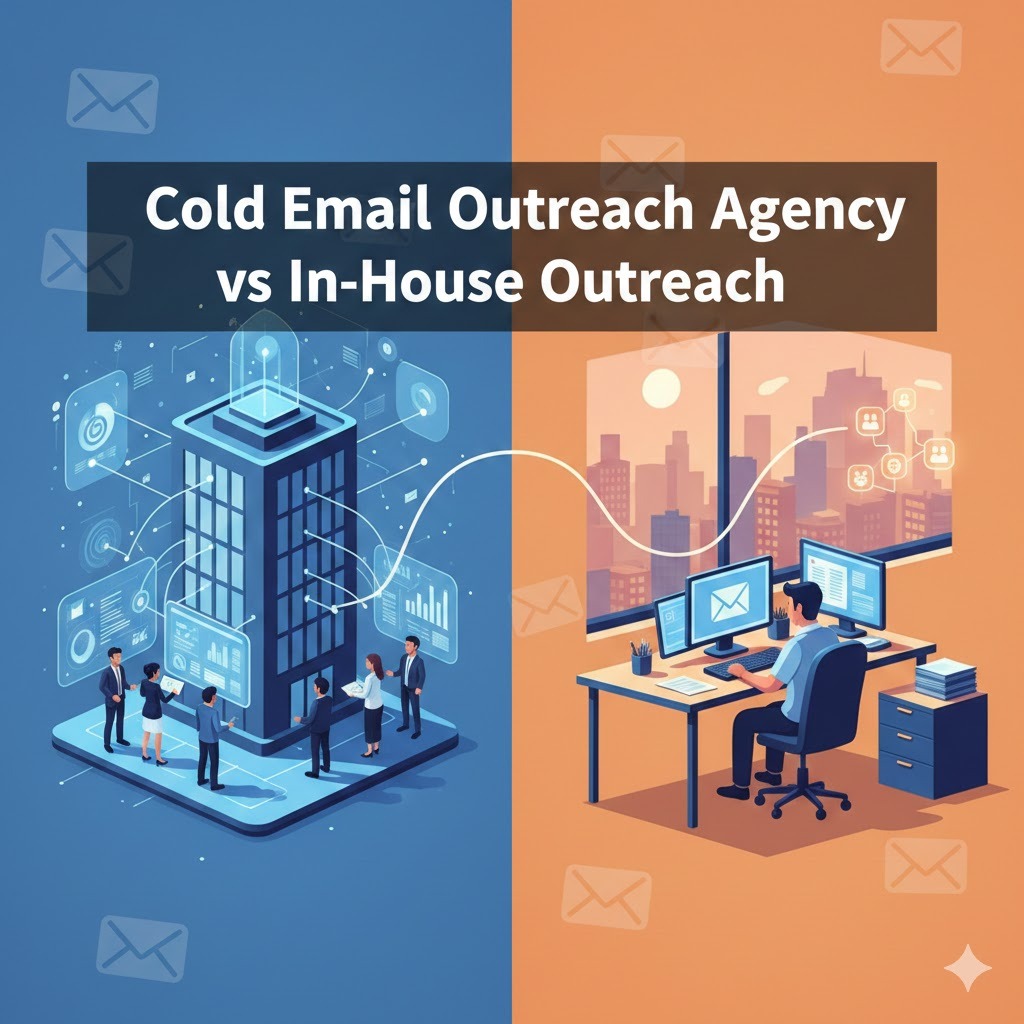
At some point, every team reaches this fork in the road. Do we handle cold outreach ourselves, or do we bring in help? On paper, in-house feels logical. You already know your product. You already have a team. How hard could it be?
Turns out, harder than it looks.
The In-House Route: Control With a Cost
Running cold email internally gives you full control. You decide the message, pick the targets and hit send. That sounds efficient. And sometimes, it is.
But control comes with baggage. Someone has to learn deliverability. Someone has to manage inbox health. Moreover, someone has to test copy, track replies, and adjust campaigns when things go quiet. That learning curve isn’t fast, and it isn’t cheap.
Even then, outreach often becomes a side task. Sales teams chase warm leads. Marketing focuses on content and ads. Cold email gets pushed to “later.” Follow-ups slip. Momentum fades. What started strong slowly loses shape.
The Cold Email Outreach Agency Advantage
This is where a cold email agency changes the equation. A cold email outreach agency doesn’t treat outreach as a side project. It’s the main job.
They come in with systems already built. Targeting frameworks already tested. Copy styles that sound human because they’ve been refined through real conversations. Instead of guessing, they start with what’s proven, then tailor it to fit.
More importantly, they move faster. No weeks spent figuring out why emails land in spam. No trial-and-error that burns domains or trust. You skip the painful early stage and step straight into execution.
Time, Focus, and Mental Bandwidth
One of the biggest differences isn’t technical. It’s mental. In-house outreach competes with everything else. Meetings. Deadlines. Product changes. Cold email needs consistency, and consistency is hard when priorities shift daily.
An agency removes that friction. Campaigns run whether your team is busy or not. Follow-ups go out on time. Replies get tracked. Patterns get spotted early. The machine keeps running in the background while you focus on closing deals or building the product.
Learning vs Leveraging Experience
Building in-house means learning by doing. That can work. But it also means paying for mistakes upfront.
Agencies already paid that price. They’ve seen what fails. They’ve fixed inbox disasters. They know which small tweaks change reply rates. You’re not just outsourcing execution. You’re borrowing experience. That experience often saves months. Sometimes more.
So, Which One Makes Sense?
In-house works when you have time, patience, and dedicated resources. Most teams don’t. For businesses that want faster feedback, cleaner execution, and fewer missteps, outsourcing usually wins. A cold email agency doesn’t replace your team. It supports it. And in outbound, that support often makes the difference between effort and actual results.
The Rise of Done-For-You Cold Email Agencies

Cold email didn’t suddenly become popular. It evolved. Slowly. And with every change, expectations shifted. Businesses no longer wanted tools. They wanted outcomes. Meetings. Conversations. Real signals from the market.
That shift explains the rise of the done-for-you model.
From DIY Outreach to Full Ownership
For a long time, companies tried to do everything themselves. They bought software. Watched tutorials. Copied templates. At first, it felt empowering. Then reality set in.
Inbox issues appeared. Replies slowed down. Follow-ups got missed. What started as a simple experiment became another system to manage.
So businesses began handing over the keys. Instead of learning every moving part, they chose a cold email agency that could run outreach end to end. No setup headaches. No daily micromanagement. Just steady execution.
Why “Done-For-You” Changed the Game
The phrase sounds simple, but the impact is big. A done for you cold email agency doesn’t just advise. It owns the process.
That ownership matters. When an agency is responsible for targeting, copy, deliverability, and optimization, there’s no finger-pointing. If replies drop, they fix it. If messaging misses the mark, they adjust it. Progress becomes the goal, not reports.
For clients, that means less thinking and more clarity. You know what’s being tested. You know what’s working. And you don’t have to chase updates.
Businesses Want Conversations, Not Dashboards
Metrics are useful. But they don’t close deals. Over time, businesses realized they didn’t care how many emails went out. They cared who replied. And more importantly, why they replied.
Done-for-you agencies focus on that. They read responses., notice patterns and refine messaging based on real human reactions, not surface-level stats. That feedback loop is hard to build in-house, especially when outreach is only one of many responsibilities.
Less Risk, More Momentum
Cold email carries risk when handled poorly. Burned domains. Damaged reputation. Lost leads. The done-for-you model reduces that exposure.
Agencies protect inbox health because it’s their lifeline. They pace campaigns, avoid shortcuts and think long-term. As a result, businesses get momentum without gambling their brand.
And because campaigns don’t stall, results compound. Small improvements stack. Reply quality improves. Outreach becomes predictable instead of stressful.
A Natural Evolution, Not a Trend
This rise isn’t about hype. It’s about efficiency. As outbound matured, specialization followed. Businesses stopped asking, “How do we send cold emails?” and started asking, “Who can run this properly for us?”
That’s why done-for-you cold email agencies aren’t a trend. They’re the outcome of demand. And for many teams, they’ve become the most practical way to turn cold outreach into a reliable growth channel.
Outsourced Cold Email Campaigns: What to Expect

Handing over outreach can feel strange at first. You’re trusting someone else with your message, your brand, and your first impression. That hesitation is normal. The good news? When done right, the process is far more structured—and calmer—than most people expect.
The Onboarding Phase: Laying the Groundwork
Everything starts with clarity. A solid cold email agency won’t rush into sending emails on day one. Instead, they slow things down.
They ask about your offer. Your audience. Your past outreach attempts. What worked. What didn’t. This stage sets the tone. It’s less about forms and more about alignment.
From there, they shape the targeting. Who exactly should hear from you? Why now? This focus matters because cold email only works when relevance comes first.
Setup Happens Behind the Scenes
Once direction is clear, the technical work begins. Most of it stays invisible to clients, and that’s intentional.
Domains get prepared. Inboxes are warmed. Sending limits are set carefully. These steps protect deliverability and keep messages out of spam. It’s quiet work, but it’s what allows everything else to function smoothly.
This is one reason outsourced cold email campaigns tend to outperform rushed internal efforts. The foundation gets the attention it deserves.
Campaign Launch: Slow, Intentional, Measured
When emails finally go out, they don’t flood inboxes. They trickle. Agencies start small. They watch replies closely. Not just open rates, but actual responses. Are people confused? Curious? Dismissive? That feedback guides the next move.
Follow-ups roll out naturally. Not aggressively. Each message builds on the last, adjusting tone and timing as needed. The goal isn’t pressure, it’s a conversation.
Ongoing Optimization, Not Set-and-Forget
Cold email isn’t something you launch and walk away from. A good agency treats campaigns like living systems.
Copy gets refined. Targeting gets tightened. Underperforming segments get paused. Strong replies get studied and reused as signals. Over time, the campaign learns.
Clients usually receive simple updates. What’s happening? What’s changing? Why does it matter? No clutter. No vanity metrics.
What Results Actually Look Like
Outsourced outreach rarely explodes overnight. And that’s a good thing. Early wins show up as thoughtful replies. Then meetings. Then patterns. Momentum builds gradually, which makes it sustainable. There’s less risk, less burnout, and fewer surprises.
Most importantly, the process feels stable. Instead of worrying about inbox health or daily tasks, businesses focus on conversations that matter.
The Bigger Benefit
In the end, outsourcing isn’t about losing control. It’s about gaining consistency. With the right partner, cold email becomes a dependable channel. Quiet. Predictable. Effective. And when done well, it feels less like outreach—and more like opportunity arriving on time.
Industries That Benefit Most From Cold Email Outreach

Cold email doesn’t work for everyone. And that’s an important truth. But for certain industries, it fits almost perfectly. Especially where deals start with a conversation, not a click. Let’s look at where it shines.
B2B Services and Agencies
Agencies, consultants, and service providers live on relationships. They don’t need millions of impressions. They need the right ten conversations.
Cold email helps them reach decision-makers directly. No waiting. No competing in crowded ad spaces. Just a clear message explaining how they solve a specific problem.
With the support of a cold email agency, outreach stays consistent and focused. Instead of chasing leads, agencies spend more time closing them.
SaaS and Tech Companies
SaaS growth depends on timing. The right product in front of the right team can change everything.
Cold email works well here because it allows precise targeting. Founders email founders. Sales teams reach operations leaders. Messages feel relevant because they are.
It’s also flexible. Campaigns can test different angles quickly. Pricing. Use cases. Pain points. Feedback comes fast, and products improve because of it.
Professional Services and Consultants
Law firms. Accountants. Coaches. Advisors. These businesses rely on trust. A cold email gives them a quiet way to introduce themselves. No hard pitch. Just context. Just value. When written well, it feels respectful, not intrusive. Instead of waiting for referrals, professionals can create their own pipeline. One conversation at a time.
High-Ticket and Niche Offers
If your offer isn’t for everyone, cold email might be your best channel. High-ticket services, specialized tools, or niche solutions don’t need scale. They need accuracy. Cold outreach allows deep personalization without massive budgets.
Each email has a reason. Each recipient makes sense. That focus leads to better replies and better deals.
Growing Startups and Lean Teams
Startups move fast, but resources stay tight. Cold email fits that reality. It doesn’t demand huge spending. It rewards clarity and effort. And when supported by the right systems, it becomes predictable. Outreach gives founders control over growth without waiting on algorithms or long sales cycles.
Why These Industries Win
The common thread is simple. These industries sell solutions that need explanation. They benefit from dialogue. A cold email opens that door. And when guided by experience and structure, it becomes reliable. In the right hands, and for the right businesses, cold outreach isn’t pushy. It’s practical.
Cold Email Agency Pricing Models Explained
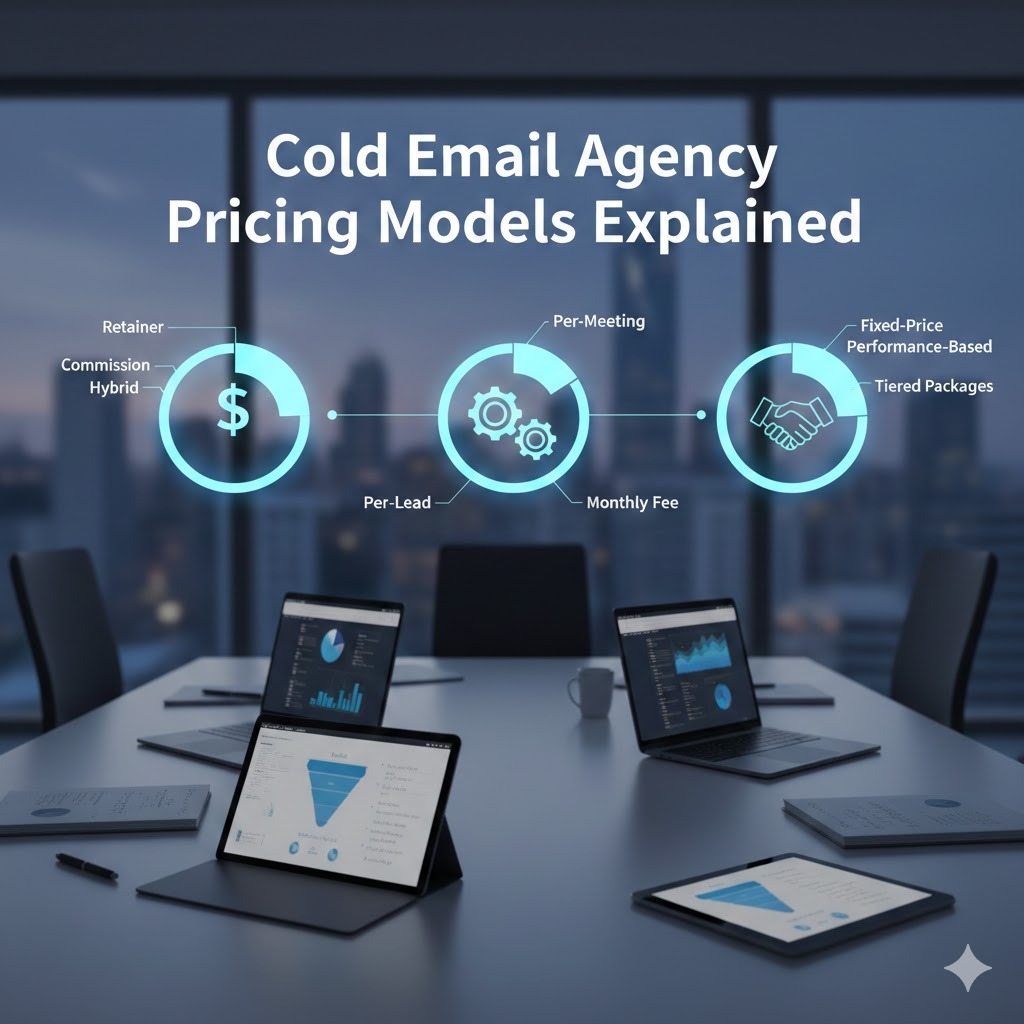
Pricing is usually the first thing people ask about. And also the thing that causes the most confusion. Cold email sounds simple, so the costs can feel surprising. But once you understand what goes into it, the numbers start to make sense.
Let’s break it down.
Monthly Retainers: The Most Common Model
Most agencies work on a monthly retainer. It’s straightforward. You pay a fixed amount, and the agency runs your outreach consistently.
This model supports long-term thinking. Campaigns get time to warm up. Messaging improves. Deliverability stays healthy. Instead of chasing quick wins, the focus stays on building a steady flow of conversations.
For many businesses, this is where a cold email agency adds the most value. You’re not paying for emails sent. You’re paying for attention, experience, and ongoing optimization.
Performance-Based Pricing: Tempting, but Tricky
Performance-based models sound appealing. Pay per lead. Pay per meeting. Simple, right? Not always. These setups often come with shortcuts. Volume increases. Personalization drops. Risk goes up. Agencies under pressure to hit numbers may push harder than they should, and inbox health can suffer.
That doesn’t mean performance pricing never works. It just requires clear definitions, clean targeting, and strong trust on both sides.
Setup Fees and One-Time Costs
Some agencies charge a setup fee at the start. This usually covers technical work and strategy planning. Inbox setup. Domain configuration. Research. Initial copy. These tasks take time, and they happen before results show up. A one-time fee keeps expectations clear. It’s not a red flag. In many cases, it’s a sign the agency values doing things properly.
What Actually Affects Pricing
Prices vary for a reason. Several factors shape the cost. Target market size. Level of personalization. Number of inboxes. Campaign volume. Even your industry plays a role. Reaching enterprise buyers isn’t the same as emailing small teams. The more thoughtful the approach, the more effort it requires.
Cheap vs Sustainable Outreach
Low-cost offers exist. And sometimes, they work short term. But cold email is fragile. One rushed campaign can damage domains and waste leads. Fixing that costs more than doing it right the first time. Sustainable outreach protects your brand. It values pacing. It prioritizes relevance. And it aims for consistency over spikes.
Choosing Based on Value, Not Price
The real question isn’t “How much does it cost?” It’s “What am I getting in return?” A good agency saves time. Avoids mistakes. And builds a system you can rely on. That value compounds.
When pricing aligns with process and care, cold email stops feeling like an expense. It starts feeling like an investment.
Common Mistakes Businesses Make With Cold Email
Cold email doesn’t usually fail because it’s broken. It fails because of small choices that stack up the wrong way. Most mistakes aren’t dramatic. They’re quiet. And that’s why they’re easy to miss. Let’s unpack the big ones.
Treating Cold Email Like Advertising
One of the most common errors is writing emails like ads. Loud headlines. Big promises. Too much selling, too soon.
A cold email isn’t a billboard. It’s a conversation starter. When messages feel pushy, people tune out fast. Instead of clicking, they close. Or worse, they mark it as spam. A good cold email agency understands this difference. It writes to be read, not to impress.
Chasing Volume Over Relevance
More emails don’t equal better results. Yet many teams think scale fixes everything. They blast thousands of inboxes with the same message and hope for replies. What they get instead is silence. Or damage to their domain.
Relevance beats volume every time. Fewer emails, sent to the right people, with a reason to care. That’s where momentum starts.
Fake Personalization
Using someone’s first name isn’t personalization. Neither is dropping their company name into a template. Readers can tell when an email pretends to be personal. It feels off. Forced. And once trust is gone, the message is already lost.
Real personalization comes from understanding context. Why this person? Why now? That takes effort, but it shows.
Ignoring Deliverability Until It’s Too Late
Deliverability isn’t exciting, so it often gets ignored. Until emails stop landing. Skipping inbox warming. Sending too fast. Using risky links. These shortcuts quietly hurt results. By the time teams notice, the damage is already done.
This is why experience matters. Deliverability needs attention from day one, not as a rescue mission later.
Giving Up Too Early
Cold email takes patience. Replies don’t always come from the first message. Many businesses stop after one or two sends. They assume it didn’t work. In reality, most replies come from follow-ups. Polite ones. Timed well. Thoughtfully written. Stopping early cuts the process short.
Treating Cold Email as a One-Time Campaign
Another mistake is thinking of cold email as a quick push instead of a system. One-off campaigns create spikes, not pipelines. Once they end, everything goes quiet again. The strongest results come from consistency. Testing. Refining. Letting small improvements stack over time.
Why These Mistakes Keep Happening
Cold email looks simple. That’s the trap. Behind every effective campaign is structure, discipline, and restraint. When those are missing, results suffer. Avoiding these mistakes doesn’t require magic. Just intention. And when done right, cold email becomes steady instead of stressful.
Conclusion
It’s not just about sending emails. It’s about reaching the right person, at the right time, with the right words. That’s where a cold email agency comes in. They handle the messiness, the follow-ups, the timing—so you don’t have to.
Think of it like building a small engine. Each part matters. Alone, it’s nothing. Together, it moves. Campaigns, messages, leads—they all click when done right.
Working with the right agency saves time. It stops mistakes before they happen. And it turns cold contacts into conversations that actually matter.
At the end of the day, a cold email agency isn’t just a service. It’s a partner. One that helps your business reach further, faster, and smarter. And that’s the kind of push every growing business needs.