


What is lead generation and why it plays such a critical role in modern marketing and business growth.
It rarely begins with a sale. Most of the time, it starts much earlier, in quieter moments. A search, a question and a quick scroll during a coffee break. That’s where things really begin.
This is where lead generation comes into focus. Not as a buzzword, but as a process. A way businesses meet people before asking for anything in return. Instead of pushing offers, lead generation pulls curiosity in. Gently. Naturally.
Think of it as opening a conversation, not closing a deal. You show up with something useful. People notice. They lean in. Over time, interest turns into trust, and trust turns into action.
So before the forms, emails, or funnels, there’s a simple idea at work. Attention first. Relationship next. Everything else follows.
What Is Lead Generation?

At its core, lead generation is simple. It’s about finding people who might care. Not everyone—just the right ones. The kind who pause, read, and think this could help me.
When people ask what is lead generation?, they often expect a technical answer. Forms. Funnels. Ads. However, that’s not where it truly starts. It begins with attention. Someone notices you. Then interest follows. Only after that does a lead exist.
A Lead Is Not a Sale
This distinction matters more than most people realize. A lead is not someone ready to buy immediately. Instead, it’s someone who shows interest. Maybe they download a guide. Maybe they sign up for a newsletter. Or maybe they book a short call to understand things better.
In marketing terms, a lead is a person who shares access. An email address. A phone number. Sometimes just their time. That small exchange signals curiosity, and curiosity is what drives the entire process forward.
Lead Generation Explained Without the Fluff
So, what does lead generation actually mean in marketing? It’s the process of turning attention into contact. You offer something useful. In return, people choose to stay connected. No pressure. No tricks. Just value exchanged for permission.
That’s why content plays such a critical role. Blogs answer questions. Videos simplify ideas. Free tools solve small problems. Each one creates a reason to engage. Over time, these moments build momentum.
This is where companies like Prospect Labs stand out. Instead of chasing every possible lead, they focus on attracting the right audience first. When interest forms naturally, conversations later feel more meaningful and productive.
Why Lead Generation Matters More Than Ever
Buyer behavior has changed. People don’t want to be sold to. They prefer discovering solutions on their own terms. They research, compare, and take their time.
Lead generation supports that shift. It respects timing. It meets people where they are, not where a business wants them to be. As a result, trust begins forming early in the journey.
Not every visitor will convert, and that’s expected. Lead generation isn’t about forcing outcomes. It’s about creating a clear path people can choose to follow when they’re ready.
From Attention to Relationship
Think of lead generation as a bridge. On one side are strangers. On the other are potential customers. That bridge is built with helpful content, clear messaging, and thoughtful follow-ups. Step by step, people move forward.
First comes awareness, then engagement and then contact me. After that, the relationship develops naturally.
That’s the real meaning of lead generation. Not collecting emails. Not chasing numbers. But starting conversations that lead somewhere real.
How Lead Generation Works

At first glance, it can seem complicated. Systems, tools, steps stacked on top of each other. But once you slow it down, the process becomes clear. Lead generation follows a natural flow, one that mirrors how people make decisions in real life.
If you truly understand what lead generation is, this part feels familiar. It’s not about pushing someone forward. It’s about guiding them, one small step at a time.
Step One: Being Seen at the Right Moment
Everything starts with visibility. People can’t engage with what they can’t find. So the first job is showing up where attention already exists.
This might be through search results, social feeds, blog content, or even referrals. The channel matters less than the timing. When someone is already looking for answers, your presence feels helpful, not intrusive.
That’s the foundation of how lead generation works. You meet people at the moment curiosity appears.
Step Two: Offering Something Worth Stopping For
Once attention is there, the next move is simple. Give value. This doesn’t mean selling. It means helping. A clear explanation. A useful guide. A short checklist. Something that solves a small problem or answers a pressing question.
When people get value upfront, trust begins to form. And trust changes the dynamic. Instead of skepticism, there’s openness. Instead of scrolling past, they pause.
Step Three: Turning Interest Into Connection
Interest alone isn’t enough. There needs to be a bridge. This is where forms, sign-ups, or calls-to-action come in. Not as pressure points, but as invitations. A chance to stay in touch. A way to continue the conversation.
The key here is simplicity. Ask for less. Make it easy. The smoother the experience, the more likely people are to say yes.
Step Four: Following Up With Purpose
After someone becomes a lead, the real work begins. Follow-up isn’t about flooding inboxes. It’s about relevance. A helpful email. A timely resource. A reminder that feels useful, not forced.
At this stage, consistency matters more than cleverness. Small, steady touches build familiarity. Over time, familiarity builds confidence.
Step Five: Letting the Relationship Grow
Not every lead is ready to act right away. And that’s okay. Some need time. Some need more information. Others just need to see that you show up consistently. Lead generation respects that pace. It allows people to move forward when they’re ready, not when you rush them.
When done right, the process feels natural. No pressure. No shortcuts. Just clear steps that follow human behavior.
That’s how lead generation works in practice. Attention leads to interest. Interest leads to connection. And connection, handled with care, leads to growth.
Lead Generation Explained for Beginners
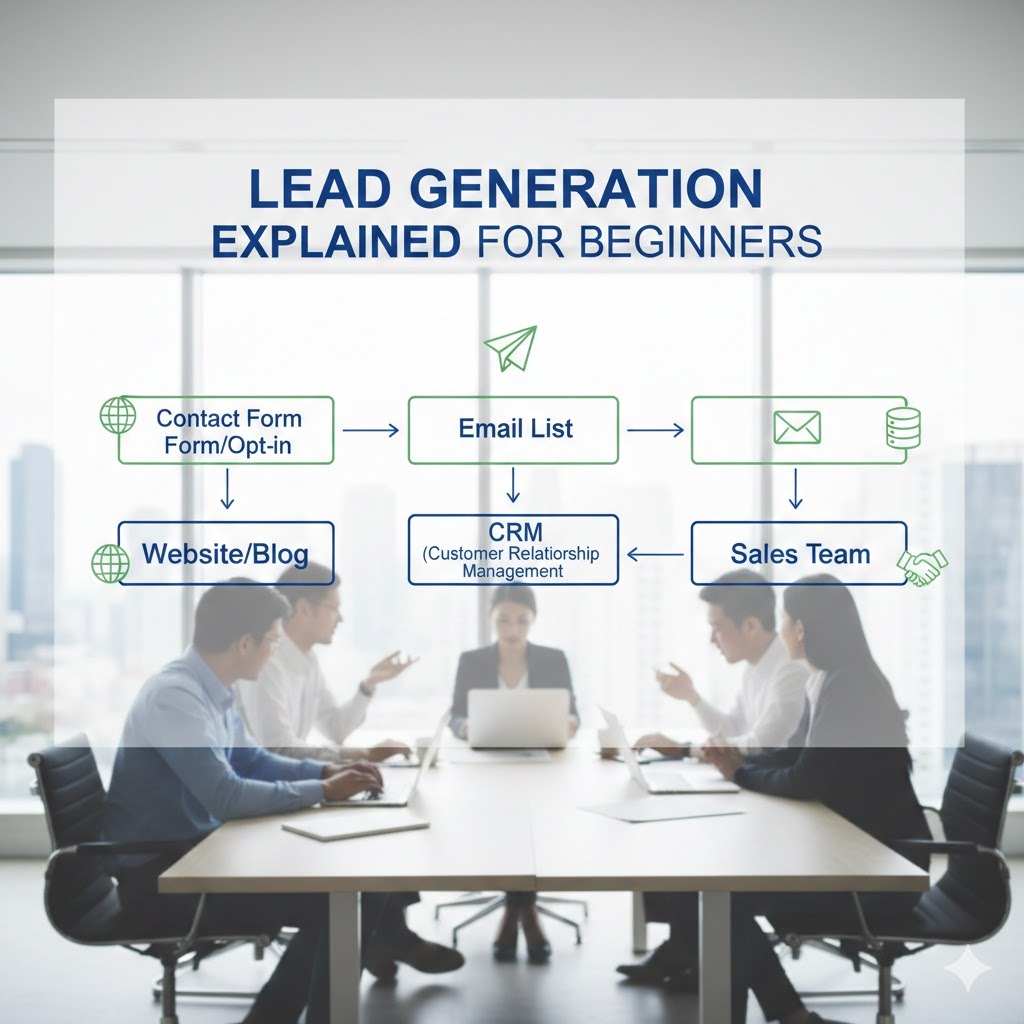
When you’re just starting out, lead generation can feel bigger than it is. There’s a lot of noise around it. Tools, tactics, promises of fast results. It’s easy to think you’re missing something important.
You’re not. At its simplest, understanding what lead generation is comes down to one thing. Getting people interested enough to stay connected. That’s it. No tricks. No shortcuts.
Think Less About Marketing, More About Curiosity
Beginners often jump straight into platforms, ads, funnels and automation. But that usually comes later. The real starting point is curiosity. Someone has a question. You help answer it. Someone has a problem. You help clarify it. When that happens, people naturally want more from you.
This is the heart of lead generation explained for beginners. You’re not trying to convince. You’re trying to be useful.
Small Steps Work Better Than Big Plans
You don’t need a complex setup on day one. In fact, that often slows things down. One clear piece of content is enough. A short guide. A helpful article. A simple sign-up with a clear reason behind it. When people understand the value, they respond. Ask for a little. Deliver well. That balance matters more than most beginners realize.
Trust Builds Quietly
Here’s something rarely said out loud. Most leads won’t act right away. They watch, they read and they wait.
That’s normal. Trust doesn’t announce itself when it arrives. It builds quietly, through consistency. Through showing up again and again without pushing.
If you focus only on fast results, lead generation feels frustrating. But when you focus on relationships, progress starts to feel steady.
Not Every Lead Is the Same
Some people are curious. Some are serious. Others are just passing through. That doesn’t mean the system is broken. It means it’s working as expected. Your role isn’t to force decisions. It’s to support them with clarity and patience. Over time, the right leads move forward on their own.
Growth Comes From Repetition, Not Perfection
You don’t need to get everything right. You just need to keep going. Create, share, learn and adjust. For beginners, lead generation isn’t a milestone you reach. It’s a skill you grow into. Slowly. Naturally. And once that clicks, everything else starts to feel lighter.
B2B Lead Generation Basics
B2B lead generation plays by different rules. Not harder rules. Just quieter ones. Fewer impulse decisions. More thinking. More waiting. And usually, more than one person is involved.
If you already understand what lead generation is, this shift makes sense. In B2B, you’re not chasing quick clicks. You’re building confidence over time.
Fewer Buyers, Higher Stakes
In B2B, the audience is smaller. But each lead carries more weight. One decision can affect a whole team, sometimes an entire company. That’s why B2B buyers move carefully. They read more, ask better questions and rarely rush.
So instead of volume, the focus turns to fit. Right company, role and timing. When those align, everything else becomes easier.
Decisions Are Rarely Solo
Here’s a key difference many miss. B2B decisions almost never happen alone. A manager might research. A director might compare options. Finance might approve. Each person sees the problem from a different angle.
That means your message needs depth. Not hype. Clear explanations. Real use cases. Proof that you understand their world. This is where patience becomes a strategy, not a weakness.
Education Comes Before Persuasion
In B2B, selling too early backfires. People want clarity before commitment. They want to know how something works, why it matters, and what changes after adoption. Good lead generation answers those questions upfront.
Whitepapers, case studies, webinars, and detailed guides work well here. They don’t push. They explain. And explanation builds trust. That approach sits at the center of B2B lead generation basics. Teach first. Sell later.
Timing Matters More Than Pressure
Not every lead is ready now. Some are planning for next quarter. Others for next year. Strong B2B lead generation respects that reality. It keeps the door open without pushing people through it. Regular check-ins. Helpful updates. Relevant insights. When timing finally aligns, the relationship already exists. And that changes everything.
Quality Over Quantity Always Wins
A short list of well-matched leads beats a long list of uninterested ones. This is why segmentation matters. Industry. Company size. Role. Pain points. The clearer the focus, the better the conversations that follow. Over time, this clarity saves resources and builds momentum.
Relationships Are the Real Asset
At the end of the day, B2B lead generation is about trust. Not tricks. Not funnels stacked on funnels.
When people feel understood, they stay engaged. When they stay engaged, they respond. And when they respond, growth becomes steady. That’s the quiet strength behind B2B. And once you lean into it, the process feels far more human—and far more effective.
Examples of Lead Generation in the Real World

Lead generation isn’t a mystery. It’s happening all around you, often in ways you don’t even notice. Every time someone signs up for a newsletter, downloads a guide, or asks for more info, that’s a lead. And seeing it this way makes lead generation feel a lot simpler.
Content That Actually Helps
Think about a blog post. It doesn’t have to be flashy. Just something useful. Maybe it solves a small problem. Maybe it answers a question someone has been googling. A reader lands on it, finds it helpful, and leaves their email to know more. That’s it. That’s a lead.
Videos do the same thing. A short tutorial, a quick demo, or even a behind-the-scenes clip can make someone pause. They notice. They trust. And if they like it, they take the next step. Simple. Humans. Real.
Social Media Isn’t Just Likes
Social media gets a bad rap. People think it’s only for posts and likes. But every comment, every reply, every question someone asks is a chance to connect. A single thoughtful response can turn a casual follower into a lead. Over time, those small moments pile up.
Live sessions, short tips, or polls—these aren’t tricks. They’re ways to meet people where they already are. And that’s lead generation in action.
Emails and Gentle Nudges
Email isn’t dead. Not by a long shot. A simple offer—like a free checklist or guide—in exchange for a name and email creates a lead. Then, you follow up. Not with pressure. But with value. A tip here, an insight there. Slowly, the relationship grows.
Funnels make this smoother, sure. Someone clicks. They land on a page. They sign up. But it only works if it feels natural. If it feels like help, not a hard sell.
Offline Still Works
Not everything happens online. Trade shows, meetups, even casual conversations at events can spark leads. A shared business card, a short chat, or a demo can bring someone closer. And referrals? Those are some of the strongest leads you can get. Someone else did the trust-building for you.
Tiny Steps, Big Difference
The pattern is simple. Little touches. Small interactions. A blog. A comment. A guide. Each one seems minor. But together, they add up. They build trust. They turn curiosity into connection.
That’s the point. Lead generation isn’t magic. It’s practical, human, and patient. The wins happen quietly, step by step. Focus on helping first, and the leads come naturally. That’s the real world in action.
Common Lead Generation Mistakes
Lead generation usually doesn’t fail because of one big mistake. It slips because of many small ones. Tiny choices that seem harmless at the time, but slowly push people away. And once you understand what lead generation is, these mistakes become easier to spot.
Asking Too Much, Too Soon This is a common one. Someone visits your site for the first time, and immediately they’re asked for details. Name. Email. Company size. Budget. Timeline.
That’s a lot to ask from a stranger. At this stage, people are still deciding if they trust you. When the task feels heavy, they leave. Instead, start small. One clear offer. One simple action. Let the relationship warm up before you ask for more.
Focusing on Volume Instead of Fit
More leads sound good on paper. In reality, it often creates noise. When you chase everyone, you connect with no one. The inbox fills up, but conversations go nowhere. This is where quality matters more than numbers.
Some of the best examples of lead generation come from narrow focus. Clear audience, problem and message. Fewer leads, better conversations.
Talking About Yourself Too Much
This mistake is easy to make. Brands love to talk about features, awards, and growth. But people aren’t looking for your story. Not yet. They’re looking for answers to their own problems. When your message centers on you instead of them, interest fades fast. Shift the focus. Speak to the problem first. Let your solution come in naturally.
Ignoring the Follow-Up
A lead comes in. Then… nothing. No message, no acknowledgement and no next step. That silence breaks trust. Follow-up doesn’t need to be fancy. A simple, timely message works. Just enough to say, “We noticed you.” That small moment can change everything.
Treating All Leads the Same
Not everyone shows up for the same reason. Some are curious. Some are comparing. A few are ready.
When everyone gets the same message, it feels off. People can tell. Good lead generation adjusts based on interest and intent. It listens before it speaks.
Relying Only on Tools
Tools help. But they don’t think so. Automation without understanding leads to cold experiences. Messages feel robotic. Timing feels wrong. Lead generation works best when tools support strategy, not replace it.
Forgetting the Human Side
At its heart, lead generation is about people. Real ones. With questions, doubts, and limited time. When the process feels pushy, confusing, or self-centered, it breaks. When it feels helpful and respectful, it works.
Most mistakes come from forgetting this simple truth. Focus on clarity. Focus on value. The rest tends to fall into place.
The Long-Term View of Lead Generation
Lead generation doesn’t reward impatience. It never really has. The results you want rarely show up all at once. Instead, they arrive quietly, over time, built on small choices made consistently.
Once you understand what lead generation is, this long-term view starts to make sense. It’s not a campaign. It’s a habit.
Momentum Beats Moments
Short bursts can create spikes. Long-term effort creates momentum. A single post might bring attention for a day. A single ad might work for a week. But steady, thoughtful lead generation builds something more reliable. Each piece of content supports the next. Each interaction adds weight. Over time, people begin to recognize you. That familiarity matters. Momentum doesn’t shout. It builds.
Trust Compounds Over Time
Trust works like interest. The more time it has, the stronger it gets. When people see you show up regularly with useful insights, their guard lowers. They stop seeing you as a brand and start seeing you as a resource. This doesn’t happen after one email or one visit. It happens after repeated, positive experiences. That’s why consistency often outperforms clever tactics.
Patience Creates Better Leads
Not every lead will act this month. Some won’t act this year. And that’s fine. Long-term lead generation leaves room for that. It stays present without pressure. It offers value without expectation. When timing finally lines up, the relationship is already there. Those leads convert better. They ask better questions. They trust faster.
Systems Grow With You
When you think long-term, you stop chasing shortcuts. Instead, you build systems. Simple ones at first. A few core pieces of content. A basic follow-up process. A clear message. As your business grows, these systems grow with you. They become easier to manage and more effective with time. Lead generation stops feeling chaotic. It starts feeling steady.
The Quiet Advantage
Many businesses give up too early. They expect instant results and move on when they don’t see them.
That’s the advantage of thinking long-term. While others chase trends, you keep building. While others restart, you refine. Over time, that patience creates separation. You don’t need to be louder. You just need to last longer.
Growth That Feels Sustainable
The best part of a long-term approach is how it feels. Less pressure, less scrambling, more clarity and more control.
Lead generation becomes something you rely on, not something you chase. And when growth comes from trust instead of urgency, it tends to stick. That’s the real reward of playing the long game.
Conclusion
Lead generation isn’t some complicated system running behind the scenes. At its heart, it’s a human process. One built on attention, timing, and trust.
Once you truly understand what lead generation is, everything else starts to click. It’s not about chasing people or forcing outcomes. Instead, it’s about showing up with something useful and letting interest grow naturally. Step by step.
Along the way, mistakes happen. That’s normal. What matters is staying consistent, listening closely, and adjusting when needed. Over time, small efforts stack up. Conversations get easier. Relationships feel stronger.
Most importantly, lead generation works best when you slow down just enough to care. Care about the message. Care about the people reading it. Moreover, care about the value you offer before asking for anything back. Do that, and lead generation stops feeling like a task. It becomes a steady path forward.