


How to generate leads for B2B by building a consistent system that attracts, nurtures, and converts the right decision-makers over time.
It never really starts with a campaign or a tool or even a funnel, it starts with a problem. Growth feels uneven. Some months bring leads. Others don’t. And no one can quite explain why. That’s usually the moment teams begin asking a bigger question—how to generate leads for B2B in a way that doesn’t rely on luck.
Because B2B lead generation isn’t about quick wins. It’s about building something steady. Something that works when attention shifts and markets slow down. Piece by piece, you create clarity. You learn who you’re really targeting. You choose the right channels. You test, adjust, and repeat.
When it works, it doesn’t feel noisy. It feels controlled. Predictable. And most importantly, sustainable.
What B2B Lead Generation Really Means
B2B lead generation sounds bigger than it is. Or maybe quieter. It’s not a single action. It’s not a form fill. And it’s definitely not about chasing every email address you can find.
At its core, it’s about starting the right conversations. In B2B, you’re not selling to impulse. You’re selling to logic, timing, and trust. Decisions take longer. More people get involved. And almost everyone needs a reason to believe before they ever say yes. That’s why understanding how to generate leads for B2B means understanding people first, not platforms.
It’s Not About Volume, It’s About Fit
More leads feel good on paper. But in reality, they often slow teams down. Sales wastes time. Marketing gets frustrated. And the pipeline looks full while deals go nowhere.
Real B2B lead generation focuses on fit, the right company, the right role and the right problem. When those line up, everything else moves faster. Outreach feels warmer. Content lands better. And conversations start at a deeper level. Instead of convincing someone they need you, you’re simply showing them you understand what they’re already dealing with.
B2B Buyers Move Differently
B2B buyers don’t wake up ready to buy. Most are busy, cautious, and already juggling too much. So they research quietly. They compare options slowly. And they rarely respond the first time.
That means lead generation has to meet them where they are. Sometimes that’s a blog they skim between meetings, other times it’s a LinkedIn post that makes them pause.
And sometimes it’s a well-timed email that finally clicks.
Each touchpoint matters. Not because it closes the deal, but because it builds familiarity. And familiarity builds trust.
Leads Are Relationships in Progress
In B2B, a lead isn’t a finish line. It’s a starting point. Some leads are curious, some are comparing and some are almost ready.
Your job isn’t to rush them. It’s to guide them. To stay helpful. To show up consistently. That’s where strong systems come in. Companies like Prospect Labs focus on building lead generation engines that respect this pace, instead of fighting it. Because when you pressure too early, people pull back. But when you stay relevant, they lean in.
The Bigger Picture
So what does B2B lead generation really mean? It means clarity over chaos, it means quality over noise. And it means building a process that works even when things slow down.
When you see it that way, lead generation stops feeling like guesswork. It becomes a steady rhythm. One that supports growth without burning trust along the way.
The B2B Lead Generation Process
The B2B lead generation process isn’t a straight line. It moves more like a path with pauses, detours, and moments where nothing seems to happen. And that’s normal. In B2B, progress often shows up quietly before it shows up clearly.
At a high level, the process is about guiding people from awareness to action, without forcing the pace. When teams understand this flow, they stop chasing leads and start building momentum.
Stage One: Awareness Comes First
Every process begins before the lead even knows your name. At this stage, buyers are feeling a problem, not shopping for a solution. They read, they listen and they observe.
This is where content, visibility, and positioning matter. Blogs, LinkedIn posts, podcasts, and search results all play a role. The goal isn’t to sell. It’s to be present and relevant. When your message reflects their situation, awareness turns into interest naturally.
Stage Two: Interest Turns Into Engagement
Once awareness is there, curiosity follows. Buyers start clicking, subscribing, or responding. They may download a guide or reply to a message. These are small actions, but they matter.
Here, clarity becomes important. Your messaging needs to explain what you do and who you help, without overloading details. This is also where trust begins to form. Consistency across channels reassures buyers that you’re not just another option, but a credible one.
Stage Three: Consideration Builds Confidence
Now the buyer is paying attention. They compare options. They ask questions. They involve other decision-makers.
This stage rewards patience. Case studies, detailed pages, and thoughtful follow-ups work best here. Instead of pushing for a close, you remove friction. You answer doubts. You show proof. Over time, confidence replaces hesitation. Understanding how to generate leads for B2B means respecting this phase, not rushing through it.
Stage Four: Intent Becomes Action
Intent doesn’t always look dramatic. Sometimes it’s a clear demo request. Other times it’s a long email with very specific questions. Either way, the signal is there.
At this point, alignment between sales and marketing matters most. Messaging should feel continuous, not handed off. When buyers feel understood across the journey, decisions happen faster and with fewer objections.
Why the Process Matters
Many teams focus on tactics and skip the structure. That’s where things break. Without a clear process, leads fall through gaps, follow-ups become inconsistent, and results feel random.
A well-defined B2B lead generation process brings order. It helps teams see where leads are, what they need next, and how to move them forward without pressure. And when the process works, growth stops feeling unpredictable. It starts feeling earned.
Core B2B Lead Generation Strategies

There’s no single move that makes leads appear. In B2B, results come from layers working together. Some strategies create visibility. Others create conversations. The strongest systems combine both and let them support each other over time.
Understanding how to generate leads for B2B starts with choosing strategies that fit your market, your team, and your buying cycle. Not every tactic belongs in every business, and that’s fine.
Inbound: Building Trust Before the First Conversation
Inbound strategies work quietly. They don’t interrupt, they attract. This includes content, SEO, social presence, and thought leadership. When done well, inbound meets buyers while they’re already searching for answers. A blog solves a problem. A LinkedIn post sparks recognition. A guide helps them think more clearly.
The strength of inbound lies in trust. By the time someone reaches out, they already understand your point of view. That makes conversations smoother and sales cycles shorter. However, inbound takes time. It compounds slowly, but the payoff is long-term stability.
Outbound: Creating Momentum With Intention
Outbound strategies do the opposite. They don’t wait, they initiate. Email outreach, LinkedIn messages, and targeted campaigns help you reach specific accounts directly. This gives teams control and speed, especially in competitive markets. But outbound only works when it’s thoughtful.
Personalization matters. Relevance matters even more. When outreach shows understanding instead of pressure, it opens doors. When it feels generic, it gets ignored. The goal is not volume. It’s starting the right conversations at the right time.
Why the Balance Matters
Relying only on inbound can feel slow. Depending only on outbound travel can feel exhausting. That’s why strong B2B lead generation strategies blend both.
Inbound builds authority and keeps leads coming in steadily. Outbound fills gaps and targets high-value opportunities. Together, they reduce risk. If one channel slows, the other keeps things moving.
This balance also creates consistency. Marketing and sales stop working in silos. Messaging stays aligned. And leads experience a smoother journey from first touch to real engagement.
Strategy Comes Before Tactics
Tools change. Platforms shift. But strategy stays relevant. Before choosing channels, teams need clarity. Who are we targeting? What problem do we solve best? Why should someone listen to us now? When these answers are clear, tactics become easier to choose and easier to improve.
Without strategy, lead generation feels random. With it, every effort has a role. Over time, patterns emerge. Results become predictable.
That’s when lead generation stops feeling like guesswork and starts feeling like a system designed to grow, not chase.
B2B Lead Generation Methods That Still Work
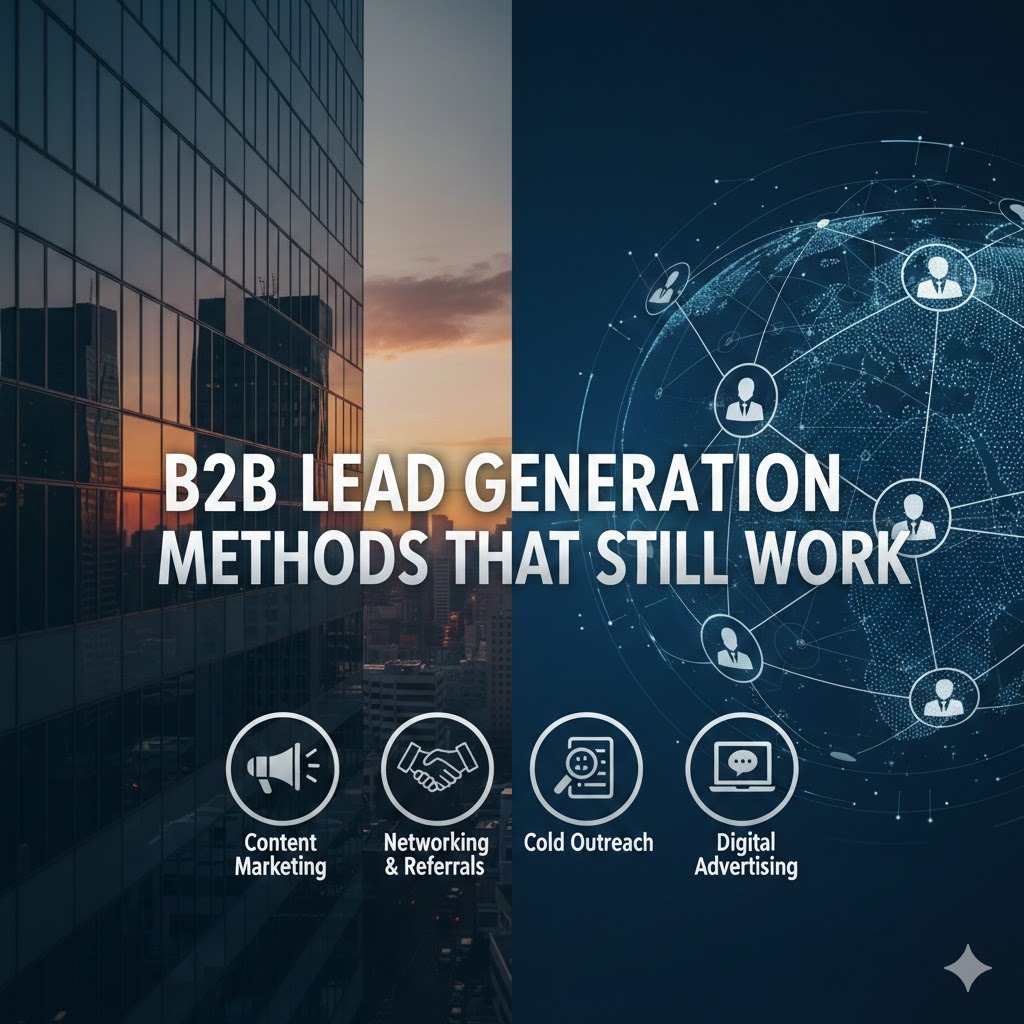
Trends change fast. Tactics come and go. But some methods keep working because they’re built around how people actually make decisions. In B2B, that human element matters more than any platform shift.
If you’re serious about learning how to generate leads for B2B, it helps to focus less on what’s new and more on what consistently delivers results.
Content Marketing That Solves Real Problems
Content still works when it’s written for people, not algorithms. Buyers search because they’re stuck, curious, or planning ahead. Clear blogs, practical guides, and honest insights help them move forward.
The key is usefulness. When content answers real questions, it earns attention. Over time, that attention turns into trust. And trust turns into conversations. This is why content remains one of the most reliable B2B lead generation methods, especially for long buying cycles.
Email Outreach With a Human Touch
Email hasn’t disappeared. Bad email has. Strong outreach respects timing and context. It speaks to one problem, not ten. It feels written, not automated. Short messages that focus on relevance perform better than long explanations.
Follow-ups matter here. Not aggressive ones, but thoughtful check-ins. Often, the second or third message opens the door. Consistency, paired with restraint, makes email a steady lead source.
LinkedIn as a Conversation Channel
LinkedIn works best when it feels social, not transactional. Profiles that share insight attract attention. Comments create visibility. Direct messages work when they follow engagement, not replace it.
Instead of pitching immediately, many teams use LinkedIn to warm up relationships. A post today becomes a reply tomorrow. A conversation follows later. This slow build often leads to higher-quality leads and more natural sales discussions.
SEO That Attracts Intent, Not Just Traffic
SEO still plays a major role, but only when it targets intent. Ranking for broad keywords brings visitors. Ranking for problem-focused searches brings leads.
Pages that explain solutions clearly, show expertise, and guide next steps tend to perform best. SEO works quietly in the background, supporting every other channel by capturing demand that already exists.
Case Studies and Proof That Build Confidence
Buyers want reassurance. Case studies, testimonials, and real examples provide it. These assets work best during consideration, but they also influence early stages. Seeing how others solved similar problems shortens decision time. Proof doesn’t need to be flashy. It just needs to be honest and clear.
Why These Methods Last
What ties these methods together is simplicity. They focus on relevance, clarity, and consistency. They don’t rely on tricks. They rely on understanding. When teams choose a few methods and execute them well, results compound. Leads feel warmer. Conversations improve. And growth becomes easier to manage, not harder to sustain.
B2B Lead Generation Channels

Channels are where strategy meets reality. They’re the paths your message travels before it reaches the right people. Some are loud. Others work quietly in the background. The challenge isn’t using every channel available. It’s choosing the ones that fit your audience and using them with purpose.
When teams ask how to generate leads for B2B, the answer often comes down to this: be present where your buyers already are.
Organic Search: Capturing Existing Demand
Search is one of the most reliable channels because intent already exists. Buyers are actively looking for answers, comparisons, or solutions. When your content appears at the right moment, it feels helpful rather than intrusive.
This channel rewards patience. Results build over time, but they last longer. Strong search visibility also supports other efforts by reinforcing credibility. When buyers see your name repeatedly, trust grows naturally.
LinkedIn: Where B2B Conversations Happen
LinkedIn plays a different role. It’s less about searching and more about discovery. Content, comments, and connections all work together here.
Company pages build awareness. Personal profiles build trust. Outreach works best when it follows engagement, not replaces it. Over time, LinkedIn becomes a steady source of warm leads rather than cold prospects.
Email: Direct and Still Effective
Email remains one of the most controllable channels. You decide who you reach and when. That control comes with responsibility.
Successful email campaigns focus on relevance and timing. Whether it’s nurturing existing leads or reaching out to new ones, the message must feel considered. Short, clear emails outperform long explanations. When done right, email keeps leads moving without overwhelming them.
Referrals and Partnerships: The Quiet Power Source
Referrals don’t scale fast, but they convert well. A recommendation carries built-in trust, which shortens the sales cycle. Partnerships work similarly. When two aligned businesses share audiences, both benefit.
These channels grow slowly, but they add stability. They also tend to bring higher-quality leads because the relationship starts with credibility.
Paid Channels: Use With Intention
Paid ads can create quick visibility, but they work best when paired with strong messaging. Without clarity, spend increases while results stall.
In B2B, paid channels perform better for retargeting than cold exposure. They reinforce familiarity rather than introduce ideas from scratch. Used carefully, they support the overall system instead of replacing it.
Why Channel Diversity Matters
No single channel stays strong forever. Algorithms change. Attention shifts. That’s why relying on one source creates risk. Strong B2B lead generation channels work together. Search brings intent. LinkedIn builds presence. Email nurtures. Referrals add trust. Paid supports visibility. When combined, they create a balanced flow that keeps lead generation steady, even when one channel slows down. That balance is what turns effort into consistency—and consistency into growth.
Lead Magnets That Attract the Right B2B Leads

Lead magnets often get misunderstood. Many teams treat them like giveaways, hoping volume will do the work. In B2B, that approach rarely holds up. The goal isn’t to collect contacts. It’s to attract people who are actually worth talking to.
If you’re thinking seriously about how to generate leads for B2B, your lead magnet needs to do one thing well: signal relevance.
Why Generic Offers Fall Short
Discounts, free trials with no context, or vague “free resources” might bring sign-ups, but they rarely bring intent. In B2B, buyers trade attention carefully. They won’t engage unless the value feels specific to their role or challenge.
That’s why strong lead magnets don’t try to appeal to everyone. They speak directly to a narrow problem. When the message is clear, the right people raise their hand.
Educational Assets That Create Trust
Guides, reports, and in-depth articles work because they help buyers think better. Not faster. A well-structured guide can position your brand as a knowledgeable partner, not just another option.
These assets perform best when they focus on one topic and go deep. Clarity builds confidence. And confidence leads to follow-up conversations that feel natural, not forced.
Webinars and Live Sessions That Feel Useful
Webinars still work when they respect time. Shorter sessions with a clear takeaway tend to perform better than long presentations.
The real value often shows up after the event. Questions reveal intent. Attendance signals interest. And follow-ups feel relevant because there’s already shared context. Used this way, webinars become a strong bridge between awareness and engagement.
Tools, Audits, and Assessments
Interactive lead magnets attract serious buyers. Audits, calculators, or assessments provide personalized insight, which increases perceived value.
These formats work especially well because they answer a silent question buyers already have: “Where do I stand?” When your lead magnet helps them see that clearly, trust builds quickly.
Matching the Magnet to Buyer Intent
Not every lead magnet fits every stage. Early-stage buyers need clarity. Mid-stage buyers need comparison. Later-stage buyers need reassurance.
Understanding how to get B2B leads means aligning your offer with where the buyer is mentally. When that alignment exists, conversion rates improve and follow-ups become easier.
Quality Over Quantity, Always
The best lead magnets don’t produce the most leads. They produce the right ones. When magnets attract decision-makers who understand the problem and value your perspective, sales conversations change. They start deeper. They move faster. And they feel collaborative instead of persuasive.
That’s when lead generation stops feeling like a numbers game and starts working like a filter—quietly bringing the right opportunities to the surface.
Conclusion
B2B lead generation rarely breaks through all at once. It builds quietly. One clear decision leads to another. A better message improves response. The right channel brings the right conversation. Over time, those small choices add up.
The real shift happens when teams stop chasing tactics and start building systems. Systems create rhythm. They reduce guesswork. They make growth feel manageable instead of rushed. That’s the difference between short bursts of activity and steady progress.
Understanding how to generate leads for B2B isn’t about doing more. It’s about doing what fits. Knowing your buyer. Showing up consistently. Staying helpful even when there’s no immediate win.
When everything aligns, lead generation stops feeling forced. Conversations feel warmer. Decisions come faster. And growth becomes something you can plan for, not hope for. That’s when the process finally works the way it should.