

SaaS lead generation explained through real systems, real buyers, and strategies that scale without burning trust or momentum.
SaaS lead generation never just clicks into place. It looks simple from the outside, but behind the scenes, it’s a slow build. A mix of trial, error, and small wins that stack over time.
One campaign might bring attention. Another sparks interest. A third finally opens the door to real conversations. Miss one piece, and the whole system feels shaky.
That’s because SaaS isn’t sold on impulse. Buyers take their time. They compare. They ask around. And most won’t raise their hand until they trust what they see.
So real SaaS lead generation isn’t about chasing leads. It’s about creating steady demand, showing up in the right moments, and staying relevant long enough to matter. When those parts align, leads stop feeling random—and growth starts to feel repeatable.
What Makes SaaS Lead Generation Different

At its core, SaaS lead generation isn’t about grabbing attention. It’s about earning patience. Unlike one-time purchases, SaaS asks for commitment. Monthly fees. Ongoing use. Internal buy-in. That alone changes the game. People don’t rush. They observe, test, and often disappear for weeks before coming back with real intent.
That’s why traditional “fill out this form” thinking falls short. SaaS buyers need more than a pitch. They need proof, clarity, and confidence that the solution will still matter months from now.
Long Sales Cycles, Real People
Most SaaS deals don’t move in straight lines. They loop. One person finds the product. Another reviews it. A third raises security questions. Then procurement steps in. Somewhere along the way, momentum slows or pauses completely.
Strong SaaS lead generation accounts for this reality. It doesn’t panic when leads go quiet. Instead, it stays visible, helpful, and consistent. It meets buyers where they are, not where the funnel expects them to be. Often, leads aren’t lost. They’re simply not ready yet.
Why Trust Beats Traffic Every Time
Traffic looks good on dashboards. Trust shows up in pipelines. SaaS buyers are naturally cautious. They’re risking time, budgets, and sometimes their own credibility inside the company. Before booking a demo or replying to an email, they watch.
They read content, scan social proof and pay attention to tone. Over time, they decide whether a brand feels credible or forgettable.
This is where systems matter. Teams that build trust early tend to win later. That’s why companies like Prospect Labs focus on aligning outreach, content, and timing into one motion, instead of chasing isolated tactics.
Lead Generation vs Relationship Building
Here’s the quieter truth. Most SaaS growth doesn’t come from one moment. It comes from a series of small ones.
A post that explains a problem clearly, an email that sounds human and a follow-up that adds value instead of pressure.
Each interaction lowers resistance, slowly and almost invisibly. So when someone finally converts, it feels natural rather than forced. That’s what effective SaaS lead generation looks like beneath the surface. Less noise. More relevance.
The System Beneath the Surface
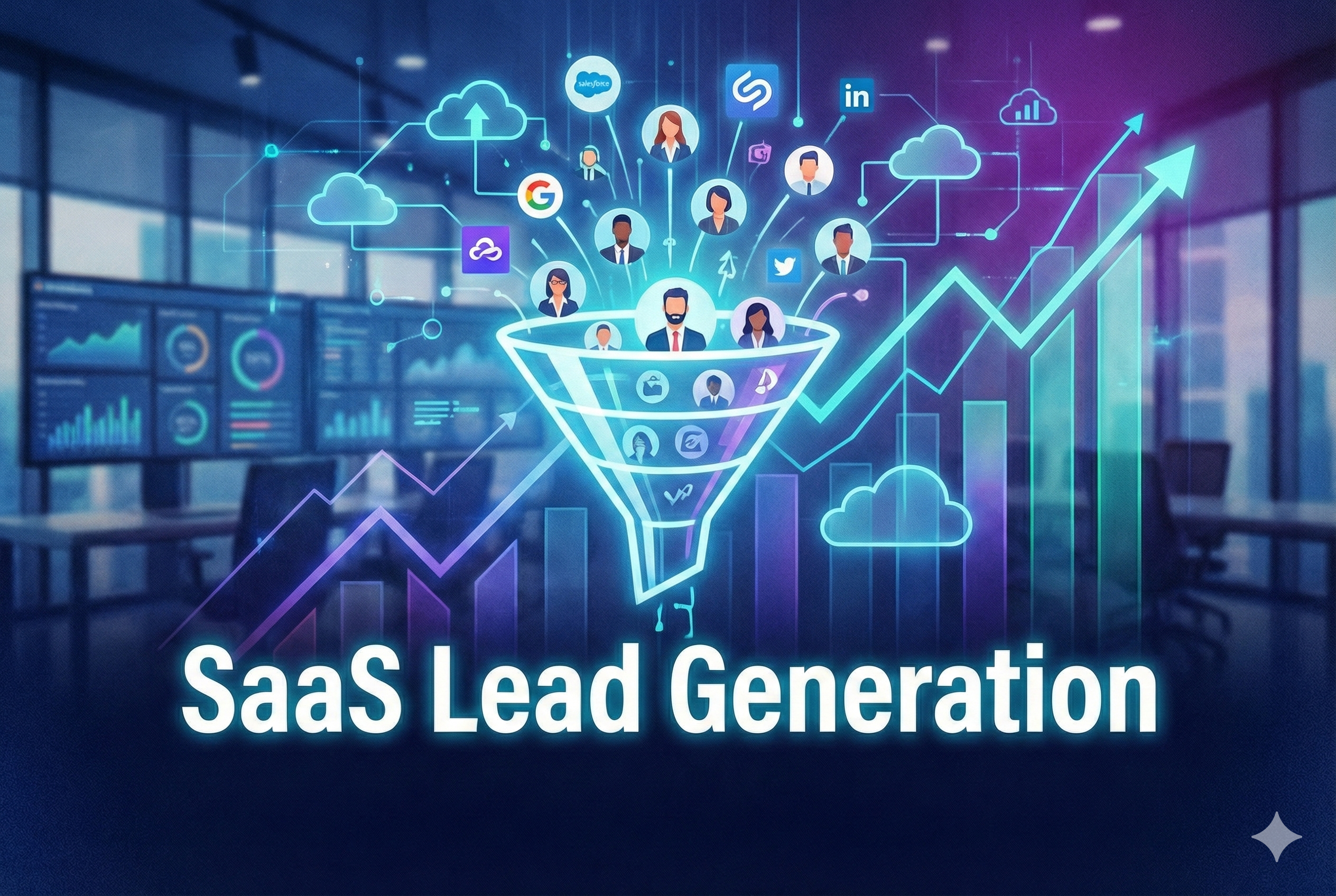
At the end of the day, SaaS lead generation works best when it’s treated as a system, not a stunt. Awareness feeds interest. Interest builds trust. Trust drives action. Action fuels growth.
Skip a step, and everything feels fragile. Build them in order, and the engine runs smoother. Not overnight, but steadily. And in SaaS, that’s what lasts.
B2B SaaS Lead Generation: Who You’re Really Selling To

At first glance, B2B SaaS lead generation seems straightforward. Find the right company. Reach the right role. Book the call.
But that’s only the surface. Underneath, you’re not selling to a business. You’re selling to people inside it. People with deadlines, internal pressure, and a long list of tools already competing for attention. That human layer changes everything about how SaaS lead generation should work.
The Buying Committee, Not the Buyer
In B2B SaaS, decisions rarely sit with one person. There’s the user who feels the pain every day. The manager who cares about outcomes. The executive who worries about cost and risk. And somewhere in the background, IT or security is checking boxes.
Each one wants something different. Yet most outreach speaks to only one voice. Strong B2B SaaS lead generation recognizes this early. It doesn’t push a single message. Instead, it adapts. It gives users clarity, managers confidence, and leaders reassurance. When all three align, deals move. When they don’t, everything stalls.
Job Titles Lie, Problems Don’t
It’s tempting to build lists around titles. Head of Marketing. VP Sales. CTO. But titles don’t tell you what keeps someone up at night. Two people with the same role can have completely different priorities depending on timing, team size, or internal chaos. That’s why problem-first thinking matters more than firmographics.
Effective SaaS lead generation starts with context. What broke recently? What slowed the team down? Moreover, what goal suddenly feels out of reach? When your message speaks directly to that moment, it lands differently. It feels relevant instead of intrusive.
Internal Champions and Silent Influencers
Not everyone who shapes the deal shows up on the call. Sometimes it’s a senior contributor who tests the product quietly. Other times it’s an operations lead who flags concerns behind the scenes. These silent influencers don’t ask for demos, but they decide whether deals survive internal review.
So smart teams give them what they need early. Clear explanations. Simple proof. No jargon. When internal champions feel equipped, they advocate for you when you’re not in the room. And that’s where momentum really comes from.
Intent Over Interest
Clicks are easy. Intent is rare. Many prospects engage out of curiosity. Fewer are actively solving a problem. The difference matters. SaaS lead generation works best when it pays attention to behavior, not just activity.
What content did they spend time on? Did they return? Did they compare options? These signals say far more than a downloaded guide ever could.
When teams learn to read intent, outreach becomes timely instead of pushy. And conversations start at the right depth.
Selling to People, Scaling with Systems
At scale, it’s easy to forget the human side. But the best SaaS lead generation systems never do. They combine structure with empathy. Automation with judgment. Data with context. That balance is what turns B2B SaaS lead generation from a numbers game into a repeatable growth engine.
SaaS Outbound Lead Generation: Reaching Out Without Pushing Away

Outbound has a reputation problem. For many teams, it feels noisy, awkward, or outdated. And honestly, that reputation isn’t random.
When done poorly, outbound interrupts. It talks to people. It asks for time before earning attention. But when done right, it becomes one of the most reliable parts of SaaS lead generation. The difference isn’t the channel. It’s the approach.
Why Outbound Still Works
SaaS buyers don’t always search when a problem starts. Often, they wait. Or they assume the issue is “just how things are.”
Outbound creates the first nudge. A well-timed message can name a problem the buyer hasn’t fully defined yet. It can frame a challenge in a clearer way. And suddenly, a conversation opens.
That’s why SaaS outbound lead generation still matters. It doesn’t force decisions. It introduces ideas. And ideas, when relevant, travel fast inside organizations.
From Interruption to Relevance
Most outbound fails because it sounds like a pitch. Generic lines. Shallow personalization. Overused templates. The moment a message feels copied, trust drops.flips the script. It starts with context. A role-specific insight.
A pattern observed across similar companies. A question that shows you’ve done the work. Short helps. Clear helps more. And relevance beats clever every time. When outreach feels useful, people reply. Not because they’re sold, but because they’re curious.
Cold Email, LinkedIn, and Multi-Touch Reality
No single channel carries outbound alone. Cold email opens doors. LinkedIn builds familiarity. Follow-ups create momentum. Together, they form a rhythm.
One message rarely does the job. Buyers are busy. Inboxes fill up fast. So consistency matters. Not daily pressure, but steady presence. The goal isn’t to chase. It’s to stay visible long enough to matter.
Personalization That Actually Scales
True personalization doesn’t mean writing from scratch every time. It means building systems around shared pain points, roles, and timing. One insight. Multiple variations. Clear logic underneath.
This is where SaaS lead generation becomes sustainable. You keep the human feel while gaining speed. You respect the buyer’s time without slowing your team down. When structure supports relevance, scale stops hurting quality.
The Follow-Up Most Teams Miss
Silence doesn’t mean no. It often means “not now.” Smart outbound plans for that. Follow-ups add value instead of pressure. A new angle. A useful resource. A sharper observation.
Each touch should earn its place. If it doesn’t, it shouldn’t be sent. Over time, this approach builds familiarity. And familiarity lowers friction when timing finally aligns.
Outbound as Part of a Bigger System
Outbound works best when it doesn’t stand alone. It supports inbound, reinforces content and feeds demand generation. As part of a system, it becomes predictable.
That’s the real role of SaaS outbound lead generation. Not quick wins, but a steady pipeline. Built on relevance, timing, and respect for the buyer.
Scalable SaaS Lead Generation Systems: Growth That Doesn’t Break
Early on, almost anything can work. A few cold emails. One strong piece of content. A campaign that hits at the right moment. Leads come in, and it feels great. But then volume increases, pressure rises, and suddenly everything slows down.
That’s where systems matter. Because real SaaS lead generation isn’t about what works once. It’s about what keeps working as you grow.
Why Tactics Stop Working at Scale
One-off wins are fragile. A campaign depends on one person’s effort. A channel depends on constant attention. Miss a week, and the pipeline dips. Add more volume, and quality drops.
Scalable SaaS lead generation fixes this by replacing isolated tactics with connected processes. Instead of asking, “What should we try next?” teams ask, “What can we repeat without losing relevance?” That shift changes everything.
Systems Over Hustle
Hustle burns out. Systems hold up. A system defines who you target, why you reach out, what you say, and when you say it. It creates rules instead of guesses. And most importantly, it leaves room for learning.
When something works, it gets documented. When it doesn’t, it gets adjusted. Nothing lives only in someone’s head. That’s how teams scale without chaos.
Automation With Restraint
Automation helps, but only when used carefully. Automating bad messaging just spreads bad messaging faster. So the foundation comes first. Clear positioning. Strong insights. Simple language.
Once that’s in place, automation supports consistency. Follow-ups happen on time. Data stays clean. Signals don’t get missed. The goal isn’t to remove humans. It’s to give them leverage.
Feedback Loops That Keep You Sharp
Scalable systems listen. They track what people open, reply to, and ignore. They surface patterns instead of guesses. Over time, messaging sharpens and targeting improves.
Sales feedback matters here too. Which leads convert? Which stall? Those answers feed back into the system and make the next cycle better. Growth becomes less reactive and more intentional.
Alignment Makes Scale Possible
Scalable SaaS lead generation breaks down fast when teams work in silos. Marketing attracts attention. Outbound starts conversations. Sales closes loops. If they’re misaligned, leads fall through cracks.
Strong systems connect these parts. Shared definitions, metrics and understanding of what a “good lead” actually looks like. When alignment improves, friction drops.
Building for Stability, Not Speed
Speed feels exciting. Stability lasts longer. The best SaaS lead generation systems grow quietly. They don’t spike and crash. They build momentum through repetition and refinement.
That’s the real promise of Scalable SaaS lead generation. Growth that compounds without breaking the team, the message, or the buyer experience.
Lead Qualification for SaaS Companies: Turning Interest Into Real Opportunity

Not every lead deserves a sales call. That’s a hard truth most teams learn late. In SaaS, interest is easy to confuse with intent. Someone downloads a guide. Another signs up for a trial. It feels like progress. But without qualification, pipelines fill up fast—and deals slow down even faster. That’s why lead qualification sits at the center of healthy SaaS lead generation.
Why “More Leads” Isn’t the Goal
Volume looks good. Until it doesn’t. Sales teams waste hours on conversations that go nowhere. Marketing celebrates numbers that never turn into revenue. Frustration builds on both sides.
Strong lead qualification fixes this by narrowing focus. It asks a simple question early: Is this problem real, and is it urgent? If the answer is unclear, the lead isn’t ready. Not bad. Just early. And early leads need guidance, not pressure.
Behavior Speaks Louder Than Forms
Forms lie. Behavior doesn’t. Job titles, company size, and budget estimates offer context, but they rarely show intent. What people do matters more than what they say.
Did they return to the site? Did they explore pricing? Also, did they invite teammates into the product? These actions signal seriousness. Over time, patterns emerge. And those patterns help teams prioritize without guessing. This shift is especially important in lead generation for SaaS companies, where timing often matters more than fit on paper.
MQLs, SQLs, and Reality
On paper, the funnel looks clean. MQLs pass to SQLs. Sales takes over. Deals close. In practice, it’s messier. The problem isn’t the labels. It’s the lack of shared understanding behind them. When marketing and sales define “qualified” differently, leads fall into a gray zone.
The fix is alignment. Clear criteria. Agreed signals. Regular feedback. When both teams trust the system, handoffs feel smoother and conversations start at the right level.
Qualification Is an Ongoing Process
Qualification doesn’t end after the first call. I need to change. Priorities shift. Champions move on. So good teams keep listening throughout the journey.
They ask better questions, notice hesitation and adapt their approach instead of forcing the next step. This flexibility keeps deals alive longer and protects relationships even when timing isn’t right.
From Filtering to Focusing
At its best, lead qualification doesn’t block growth. It sharpens it. By focusing on the right prospects, teams spend time where it counts. Sales closes faster. Marketing learns faster. And the entire SaaS lead generation engine runs cleaner.
Because in the end, growth isn’t about talking to everyone. It’s about talking to the right people at the right moment—and letting the rest warm up until they’re ready.
Common SaaS Lead Generation Mistakes
Most SaaS teams don’t fail at lead generation. They stall. Not because they’re lazy or careless, but because small mistakes pile up. Slowly. Quietly. Until results feel inconsistent and hard to explain. And in SaaS lead generation, those small missteps can cost months of momentum.
Chasing Every Channel at Once
It usually starts with excitement. A new platform pops up. A competitor tries something new. Suddenly, teams are everywhere at the same time. Emails, ads, content, social, partnerships. All running half-built.
The problem isn’t ambition. It’s dilution. When focus disappears, learning slows. Nothing gets enough time to work. Strong channels never mature because attention keeps shifting. Growth becomes reactive instead of intentional.
Confusing Activity With Progress
Busy doesn’t always mean being effective. More emails sent, content published and meetings booked. On paper, things look active. But pipelines stay thin.
This happens when teams measure effort instead of outcomes. Opens instead of replies. Clicks instead of conversations. Dashboards light up, but revenue doesn’t follow. Real SaaS lead generation tracks what actually moves deals forward. Everything else is noise.
Over-Automating Too Early
Automation feels like scale. But too much, too soon, does the opposite. Generic messages go out. Personal touches disappear. Prospects feel like names on a list instead of people with problems.
Automation should support clarity, not replace it. When the foundation is weak, automation only amplifies what’s broken. The result? More outreach. Fewer responses. Less trust.
Ignoring the Follow-Up Window
Most deals don’t die. They drift. A lead shows interest. A message goes unanswered. And then… nothing. No follow-up. No context. Just silence.
Timing matters more than teams realize. The right message, sent too late, loses power. Consistent, thoughtful follow-ups keep conversations alive without adding pressure. Ignoring this window quietly kills momentum.
Talking Too Much About the Product
Features are easy to explain. Problems are harder. Many teams default to product talk because it feels safe. But buyers don’t wake up wanting software. They wake up wanting fewer headaches.
When messaging leads with features, attention drops. When it starts with pain, curiosity grows. Strong SaaS lead generation speaks the buyer’s language first. The product comes later.
Treating Leads Like Numbers
At scale, it’s tempting to see leads as data points. But buyers feel the tone. They notice effort. They remember how you made them feel during the first interaction.
When leads are treated like numbers, relationships never form. And in SaaS, relationships often decide deals.
Learning Too Late
The biggest mistake? Not learning fast enough. Campaigns run without review. Feedback goes uncollected. Patterns get missed. The same mistakes repeat.
Teams that grow treat every interaction as information. They adjust quickly. They improve steadily.
Because avoiding mistakes in SaaS lead generation isn’t about perfection. It’s about paying attention early—and acting on what you see.
Conclusion
SaaS lead generation rarely feels dramatic while it’s happening. Most days, it looks quiet. Messages going out. Content doing its job in the background. Conversations start slowly, then stop, then start again.
But over time, something builds. When demand is created before it’s captured, leads feel warmer. When systems replace guesswork, growth feels steadier. And when teams focus on people instead of tactics, momentum becomes easier to sustain.
That’s the real shift. SaaS lead generation isn’t about chasing attention or forcing outcomes. It’s about showing up with clarity, staying relevant, and earning trust one step at a time.
So if progress feels slow, that’s normal. Keep refining, listening and connecting the pieces.
Because when everything starts working together, growth stops feeling random. It becomes repeatable. And that’s when SaaS really begins to scale.