

The best sales automation tools help B2B teams stay consistent and focused on real conversations that move deals forward.
Sales don’t usually break in one big moment. It slips. Slowly. A missed follow-up here. A late reply there. Spreadsheets pile up. Tabs stay open. And before you notice, good leads go quiet.
That’s where automation steps in. Not to replace people, but to clear the noise. It handles the small, repeatable work so sales teams can focus on real conversations. The kind that actually moves deals forward.
Today, B2B teams aren’t looking for shortcuts. They want systems that keep them consistent, organized, and on time. That’s why the best sales automation tools matter more than ever. When used right, they don’t make sales feel robotic. Instead, they bring rhythm, structure, and momentum—without losing the human touch.
What Sales Automation Really Means (And What It Doesn’t)

Generated by AI
Sales automation gets misunderstood a lot. Some hear the word and imagine bots blasting emails all day. Others think it’s about replacing sales reps entirely. In reality, it’s neither of those things.
At its core, sales automation is about removing friction. The small tasks that slow teams down. The repetitive work that drains energy. Logging activities. Scheduling follow-ups. Moving deals from one stage to the next. Automation steps in quietly and takes care of those pieces, so humans can do the work that actually needs a human.
Automation Isn’t Autopilot Selling
This part matters. Sales automation doesn’t mean setting things up once and walking away. Good automation supports effort. It doesn’t replace it.
Think of it like guardrails on a road. They don’t drive the car. They just keep things moving in the right direction. Automated reminders make sure no lead slips through. Sequences help reps stay consistent. Workflows reduce guesswork. But the message? The timing tweaks? The real conversations? Those still belong to people. That’s why the best setups never feel robotic. They feel organized.
Where Automation Helps the Most
Automation shines in places where repetition lives. Follow-ups that always get delayed. Tasks that get forgotten. Updates that never make it into the CRM.
With the right tools, those gaps disappear. Leads get routed instantly. Emails go out on time. Deals move forward without constant manual nudging. As a result, sales teams spend less time managing systems and more time talking to prospects.
This is especially true in B2B. Long cycles. Multiple decision-makers. Lots of touchpoints. Automation keeps everything stitched together, even when weeks stretch into months.
What Automation Should Never Do
Here’s the line you don’t cross. Automation shouldn’t strip personality out of outreach. It shouldn’t send generic messages that feel copied and pasted. And it definitely shouldn’t ignore context.
If every prospect gets the same email, the same timing, the same pitch, automation becomes noise. Not leverage. That’s why smart teams treat automation as a framework, not a script.
Companies like Prospect Labs focus on using automation to support real conversations, not drown them out. The tech handles structure. The sales team brings judgment.
Tools Don’t Matter Without Intention
There’s no shortage of platforms promising results. But the best sales automation tools don’t win because of features alone. They win because they fit how teams actually sell.
When automation aligns with processes, things click. Workflows feel natural. Outreach feels timely. And sales stop feeling chaotic. In the end, sales automation isn’t about doing more. It’s about doing the right things, more consistently. And that’s where the real value shows up.
How B2B Sales Teams Actually Use Automation Today

Generated by AI
B2B sales rarely move fast. Deals stretch. People go quiet. Decisions bounce between inboxes. So instead of chasing speed, most teams use automation to stay present. Consistent. Hard to forget.
That’s the real shift. Automation isn’t about doing more outreach. It’s about doing the right follow-up at the right time—without relying on memory or messy notes.
Staying Visible Without Being Pushy
Most deals don’t die because of a “no.” They faded because no one followed up. Automation fixes that gap.
Sales teams set gentle reminders. A check-in after a proposal. A nudge when someone opens an email. A follow-up when a meeting goes quiet. Because of this, reps don’t need to guess when to reach out. The system keeps things moving, while messages still feel natural and human. As a result, prospects stay warm. And conversations don’t disappear into silence.
Managing Long Sales Cycles With Less Stress
In B2B, time works differently. Some deals close in weeks. Others take months. Automation helps teams keep track without hovering.
Workflows update deal stages automatically. Tasks appear when action is needed. Notes stay organized. So even when a prospect goes quiet for a while, nothing gets lost.
Meanwhile, sales leaders get clarity. They can see where deals stall, where momentum builds, and where support is needed. That visibility alone changes how teams operate.
Keeping Teams Aligned Without Extra Meetings
Sales doesn’t work in isolation. Marketing hands over leads. SDRs qualify them. Account executives take over. Then customer teams step in.
Automation smooths those handoffs. Leads route to the right person instantly. Deal stages trigger alerts. Everyone sees the same information, at the same time. Because of that, teams stop asking, “Who owns this?” They already know.
Using Data Without Drowning in It
Modern sales tools collect a lot of data. Open rates. Replies. Call outcomes. But smart teams don’t chase every number.
Instead, automation highlights what matters. Which messages get replies. Which sequences stall. Moreover, which prospects show buying signals. Over time, patterns appear. Teams adjust. Outreach improves. And decisions feel less like guesswork.
Choosing Tools That Match How They Sell
Here’s the part many teams learn the hard way. Not every tool fits every process. The best sales automation tools are the ones that match real workflows. Not the other way around. B2B teams look for tools that support personalization, respect timing, and integrate cleanly with their CRM.
When automation fits the sales rhythm, everything feels lighter. Less chaos. Fewer dropped balls. More space for real conversations. And that’s how B2B teams actually use automation today. Not to sell louder. But to sell smarter, calmer, and with purpose.
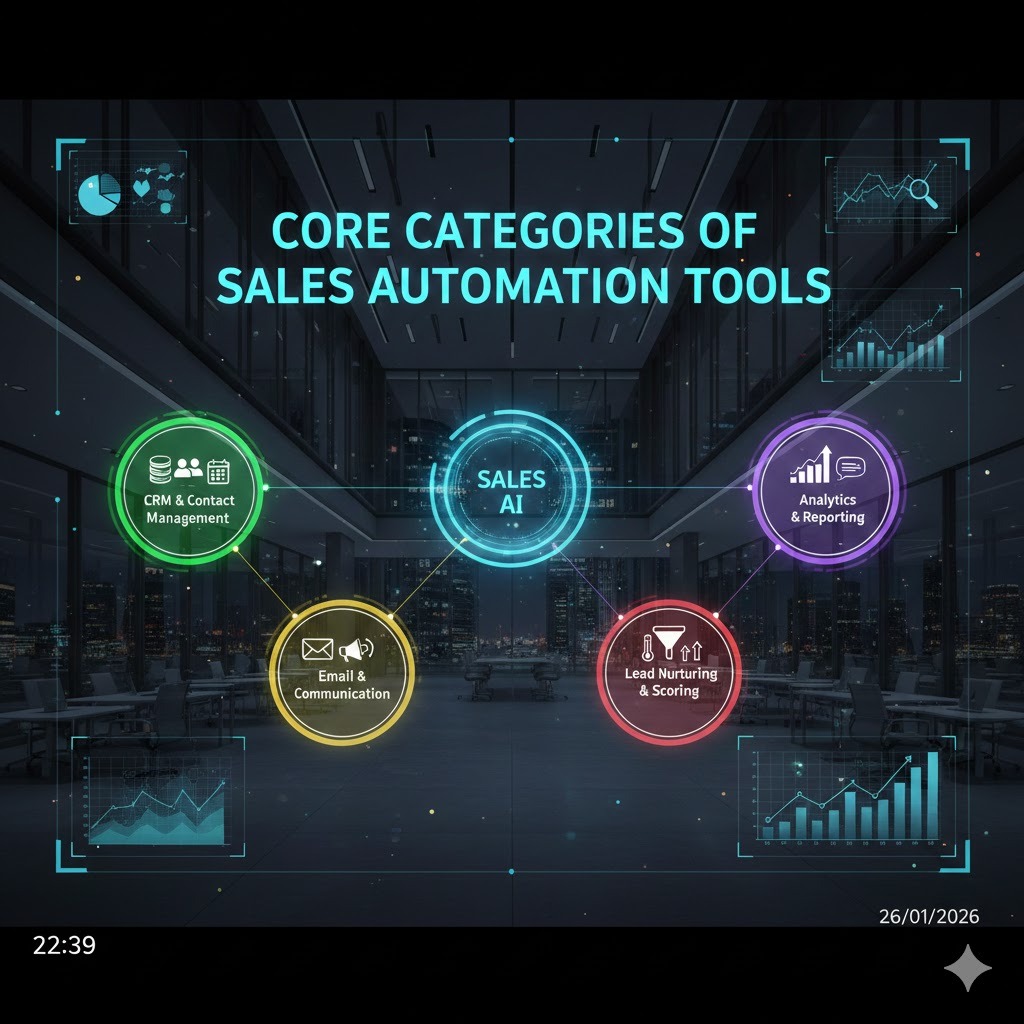
Core Categories of Sales Automation Tools
Generated by AI
Sales automation doesn’t come in one neat box. It shows up in layers. Different tools solve different problems. And understanding those categories makes choosing a lot easier.
Instead of chasing features, most teams start by fixing pressure points. Where does work slow down? Where do things fall apart? That’s where the right type of automation steps in.
Sales Automation Platforms: The Central Hub
These are the all-in-one systems. The place where everything connects. Sales automation platforms usually handle pipelines, contacts, tasks, and reporting under one roof. They pull activity from emails, calls, and meetings. Then they turn it into something usable.
For growing B2B teams, this central hub brings calm. No more jumping between tools. No more guessing what happened last week. Everything lives in one place, and updates happen quietly in the background. It’s not flashy. But it’s fundamental.
Outbound Sales Automation Tools: Keeping Outreach Consistent
Outbound selling lives on follow-ups. And follow-ups are easy to forget. That’s where outbound sales automation tools shine. They help teams plan sequences instead of single messages. Email today. LinkedIn touch tomorrow. A reminder to call next week.
More importantly, they keep timing steady. Prospects hear from you without feeling chased. And reps don’t rely on sticky notes or memory to stay consistent. Used correctly, these tools don’t make outreach louder. They make it smoother.
Automate Sales Outreach Tools
Scaling outreach is tricky. Do too little, and growth stalls. Do too much, and messages feel cold.
Automate sales outreach tools sit in the middle. They handle delivery, tracking, and follow-ups, while reps focus on message quality.
Templates help speed things up. Personal touches keep things real. Over time, teams learn what works and adjust. Outreach becomes a process, not a scramble. And when replies come in, automation steps back. Humans take over.
Sales Workflow Automation Software
Not all sales problems face prospects. Many live inside the team. Sales automation software also works behind the scenes. Assigning leads. Creating tasks. Updating deal stages. Triggering alerts when something changes.
This kind of workflow automation keeps sales moving without constant manual effort. It reduces errors. It saves time. And it keeps everyone aligned without endless check-ins. Quiet work. Big impact.
Why Categories Matter More Than Tools
Here’s the key takeaway. The best sales automation tools aren’t defined by brand names. They’re defined by fit. Some teams need structure first. Others need better outreach. Many need both.
Once you understand the categories, choices get simpler. You stop chasing shiny features. Instead, you build a setup that supports how your team actually sells. And when automation fits the process, sales starts to feel less chaotic—and a lot more effective.
Common Sales Automation Mistakes
Generated by AI
Sales automation can do a lot of good. But when it’s rushed or misunderstood, it can quietly work against you. Most mistakes don’t happen on day one. They show up later, when results feel flat and outreach starts getting ignored. The good news? These missteps are common—and avoidable.
Automating Before Understanding the Process
This is where many teams slip. They buy tools first and figure things out later. Without a clear sales process, automation just speeds up confusion. Leads get pushed through stages that don’t fit. Follow-ups fire at the wrong time. And reps end up working around the system instead of with it. Automation works best when it follows a proven flow. Not when it tries to create one from scratch.
Treating Personalization Like a Token
First names aren’t personalization. Neither is swapping a company name into a generic message. When automation relies too heavily on templates, outreach starts to feel thin. Prospects notice. Replies slow down. Trust drops.
Smart teams use automation for structure, then layer real context on top. A recent post. A shared connection. A clear reason for reaching out. That’s what keeps messages human.
Over-Automating the First Touch
First impressions matter. Yet this is where automation often goes too far. Sending fully automated cold messages at scale might feel efficient. But without care, it turns into noise. And once a prospect tunes you out, it’s hard to win them back.
The balance is simple. Automate delivery. Control the message. When the first touch feels thoughtful, automation works in your favor.
Ignoring Data Hygiene
Automation depends on clean data. And messy data breaks everything.
Wrong titles. Old email addresses. Duplicates. These small issues pile up fast. Suddenly sequences fail. Reports lie. And reps lose confidence in the tools they’re supposed to trust.
Regular cleanup isn’t exciting. But it keeps automation effective. Without it, even the best sales automation tools struggle to deliver results.
Setting It and Forgetting It
Automation isn’t a one-time setup. Markets change. Messaging shifts. Buyers behave differently. Teams that never review sequences or workflows slowly drift out of sync. Open rates drop. Replies fade. And no one knows why.
The fix is simple. Check in. Tweak messaging. Adjust timing. Small updates keep automation aligned with reality.
Chasing Tools Instead of Outcomes
More tools don’t always mean better sales. Stacking platforms without a clear goal creates overlap and friction. Reps waste time learning systems. Leaders lose visibility. And momentum slows.
Strong sales teams choose tools with intention. They focus on outcomes, not features. And they let automation support the process—not dominate it. Avoid these mistakes, and automation becomes an advantage. Not a distraction.
The Future of Sales Automation

Generated by AI
Sales automation is changing, but not in the way many people expected. It’s not racing toward fully robotic selling. Instead, it’s moving closer to how people actually work. More support. More insight. Less noise. And that shift is already showing up.
From Rigid Systems to Smarter Assistance
Early automation followed rules. If this happens, do that. It worked, but it felt stiff. Now, tools are getting better at reading signals. Opens. Replies. Timing patterns. Instead of forcing actions, automation starts suggesting them. A follow-up window. A better time to call. A reminder when interest spikes. Sales reps stay in control. The system simply points the way. That’s a big change.
Personalization That Feels Real
The future isn’t about sending more messages. It’s about sending better ones. Automation is learning context. Industry cues. Past conversations. Even subtle behavior patterns. That means outreach can feel more relevant without extra effort from reps.
Not generic. Not scripted. Just thoughtful and well-timed. When personalization feels natural, trust builds faster. And conversations open more easily.
Automation as a Sales Co-Pilot
Sales teams won’t rely on automation to sell for them. They’ll rely on it to think with them. Expect tools to act more like co-pilots. Highlighting risks. Flagging stalled deals. Suggesting next steps. All while staying out of the way.
This kind of support reduces mental load. Reps spend less time deciding what to do next and more time doing it well.
Better Alignment Across Teams
Sales doesn’t live alone anymore. Marketing, revenue ops, and customer teams all touch the same buyer. Future automation connects those dots. Data flows cleaner. Handoffs feel smoother. Everyone sees the same picture. As a result, prospects get a more consistent experience. And teams stop working in silos.
Why Humans Still Matter Most
Even with smarter tools, one thing won’t change. People still buy from people. Automation can be suggested. It can organize. It can nudge. But it can’t replace judgment, empathy, or real conversation.
That’s why the best sales automation tools won’t try to steal control. They’ll earn trust by making sales feel simpler, calmer, and more human. The future isn’t louder than sales. It’s smarter sales. And automation, when used right, will quietly make that happen.
Conclusion
Sales automation doesn’t change how selling works. It simply removes what gets in the way. When used with intention, it brings order to busy days. Follow-ups happen on time. Deals stay visible. Teams stop juggling tabs and start having better conversations. That’s the quiet power behind it all.
Of course, tools alone don’t create results. Process comes first. People come next. Automation supports both. It fills the gaps without taking over the conversation.
That’s why choosing the best sales automation tools isn’t about chasing features or trends. It’s about fit. Tools that match how your team sells. Tools that feel like support, not pressure.
In the end, the goal is simple. Less chaos. More clarity. And enough space for sales teams to do what they do best—build trust, solve problems, and move deals forward, one real conversation at a time.