

B2C lead generation is the key to attracting and converting customers naturally.
It rarely starts with a sale. More often, it begins with a small moment — a scroll, a click, a quick curiosity. People notice something, pause for a second, and then decide whether it’s worth their time. That tiny decision? It’s where everything begins.
B2C lead generation works the same way. You’re not just collecting emails or chasing numbers. Instead, you’re building interest, trust, and timing — all at once. And because consumers move fast and options are everywhere, grabbing attention has become both an art and a science.
So, businesses need more than ads or promotions alone. They need connection. In this guide, we’ll explore how to attract the right people, keep them engaged, and gently turn attention into real customers.
What Is B2C Lead Generation?
It’s easy to think it’s just about getting contacts. Emails. Phone numbers. Sign-ups. But honestly, it runs deeper than that. At its core, B2C lead generation is about catching someone’s interest at the right moment — and then giving that interest somewhere to go.
People don’t wake up wanting to become a “lead.” They’re simply curious. Maybe they want a better product. Maybe a solution. Or maybe they’re just exploring. Your job is to meet them there, gently, without pressure. That’s where the process begins.
A Simple Way to Understand It
Think of it like an invitation instead of a transaction. You create something valuable — a discount, a helpful guide, a free trial, even entertaining content. Then, in exchange, the customer shares a small piece of information. That small step turns an anonymous visitor into someone you can talk to again.
And that’s the real goal. Not the form. Not the data. The relationship. Many businesses, including companies like Prospect Labs, focus heavily on this relationship stage because it determines whether interest grows — or disappears.
Leads, Prospects, and Customers — The Difference
Now, here’s where things sometimes get confusing. A lead is simply someone who showed interest. They clicked, signed up, or asked for more information. A prospect goes a step further. They’re considering buying, comparing options and paying attention. A customer, of course, is the final step. They trust enough to spend money.
The journey moves forward in stages, and each stage needs a slightly different approach. Push too hard too early, and people pull away. Move too slowly, and they lose interest. Balance matters.
B2C vs B2B: Why It Feels Different
Business-to-consumer decisions happen faster. Much faster. In B2B, buyers often research for weeks or months. Teams discuss. Budgets get approved. Logic leads the process.
But in B2C? Emotion plays a bigger role.
Someone sees a product. They like it. They imagine using it. And sometimes — within minutes — they decide. That speed changes everything. Marketing needs to feel personal, clear, and immediate.
Also, the channels differ. Social media, influencers, online ads, and mobile experiences dominate the B2C world. Consumers live there. So brands must meet them there too.
The Bigger Picture
Ultimately, B2C lead generation isn’t about chasing people. It’s about creating moments of connection. Small ones at first. Then stronger ones over time. When done right, it feels natural. Almost effortless. And that’s when strangers slowly become buyers — without feeling pushed at all.
Why Lead Generation Matters for B2C Businesses
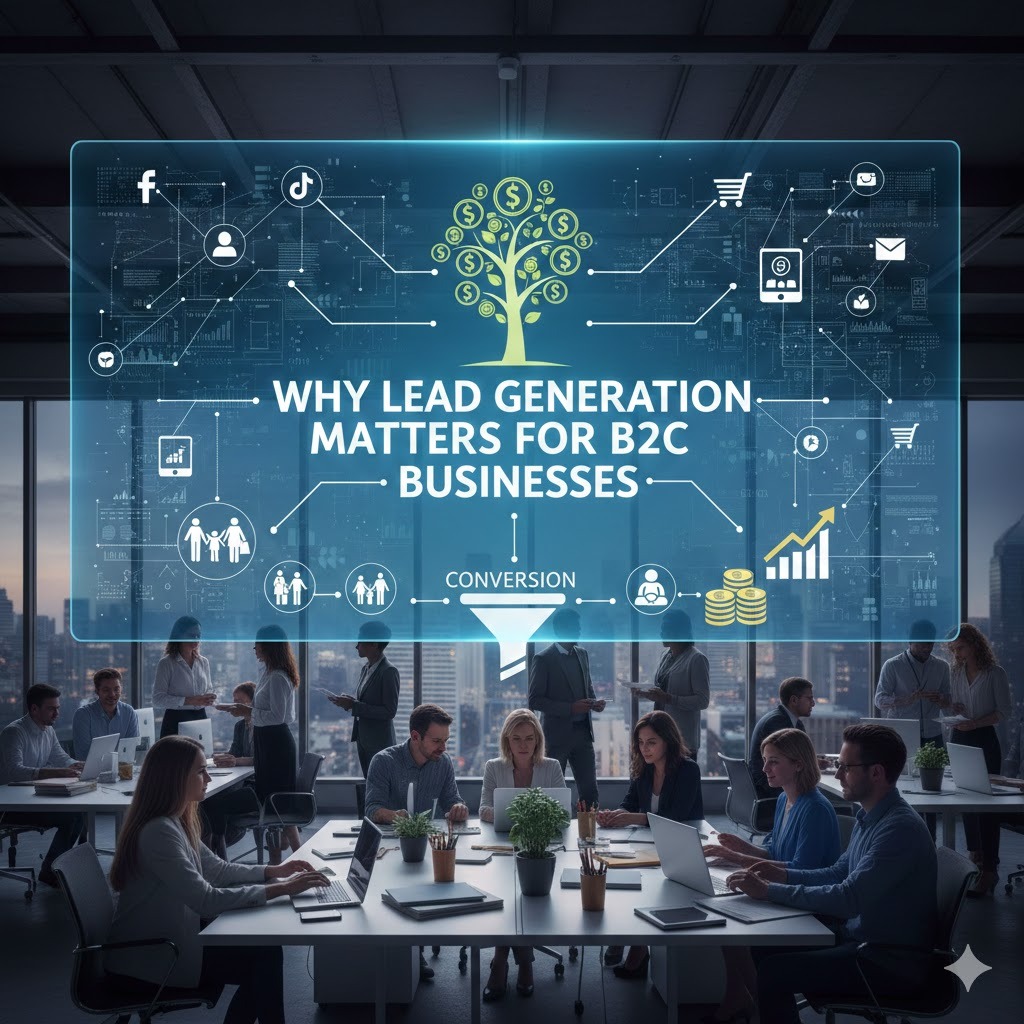
Growth rarely comes from luck. It comes from momentum — small actions stacking up over time. One person discovers you. Another signs up. Someone comes back later and finally buys. When those moments connect, businesses move forward.
That’s exactly why B2C lead generation matters. It creates a steady flow instead of random spikes. And honestly, stability changes everything.
Turning Attention Into Opportunity
People notice brands every day. They scroll past ads, watch videos and click links out of curiosity. But attention disappears quickly unless you capture it. Lead generation gives that attention a direction.
Instead of losing visitors forever, you keep the conversation open. Maybe through email. Maybe through retargeting or, maybe through personalized offers later. Either way, the relationship doesn’t end after the first interaction. And that alone increases your chances of future sales dramatically.
Predictable Growth Feels Different
Revenue becomes stressful when it’s unpredictable. Some months feel great. Others feel uncertain.
However, Lead Generation for B2C Businesses creates a pipeline — a pool of potential buyers waiting at different stages. Some are ready now. Others need time. But knowing they exist gives businesses confidence. Predictability reduces risk. And confidence supports smarter decisions.
Building Trust Before the Sale
Consumers rarely buy from strangers anymore. They research, compare and read reviews. Most importantly, they look for signals of trust. Lead generation helps nurture that trust slowly.
For example, someone downloaded a guide today. They receive helpful emails over the next few weeks. They see your brand again on social media. Familiarity grows. And when they finally need your product, your brand feels safe. Trust doesn’t happen instantly. It builds in layers.
Increasing Customer Lifetime Value
One sale is good. Repeat customers are better. When businesses collect leads, they don’t just gain a single opportunity. They gain future opportunities too. Promotions, new products, loyalty programs — all become easier to share with people who already know you. Over time, this increases customer lifetime value without constantly chasing new buyers. That efficiency matters more than many companies realize.
Staying Competitive in Crowded Markets
Markets today are loud. Competitors run ads. Influencers promote products. New brands appear constantly. Without B2C lead generation, businesses rely only on immediate purchases. And that’s risky.
But with a lead system in place, brands create their own audience. A community they can reach anytime. That control becomes a powerful advantage, especially when advertising costs rise.
The Bigger Impact
Ultimately, lead generation isn’t just a marketing tactic. It’s a growth engine. It supports revenue. Build relationships. Strengthens trust. And creates long-term stability. When done right, it turns simple interest into lasting business momentum — and that’s where real success begins.
Most Effective B2C Lead Generation Channels
No single channel does all the work. Instead, leads come from different directions — sometimes expected, sometimes surprising. One person discovers you through a search. Another through a video. Someone else through a friend’s recommendation. Together, those paths create momentum.
That’s why strong B2C lead generation usually blends multiple channels. Each one plays a role. Each one reaches people in a slightly different mindset.
Social Media: Where Attention Lives
People spend hours scrolling. Not searching — just exploring. That makes social media powerful. Organic posts build familiarity over time. Meanwhile, paid ads create quick visibility. Short videos, stories, and interactive content pull people in because they feel natural, not forced.
The key, however, is consistency. Showing up once isn’t enough. Showing up regularly builds recognition. And recognition builds trust.
Search Engines: Intent at Its Strongest
Search traffic feels different. Someone types a question because they want something now. That intent makes search engines incredibly valuable. When your content appears at the right moment, you meet people exactly when curiosity turns into action.
SEO takes time, yes. But the long-term payoff often becomes one of the most reliable lead sources businesses have.
Paid Advertising: Speed and Precision
Sometimes you need results faster. That’s where paid ads come in. Platforms allow targeting based on interests, behavior, and demographics. In other words, you can reach people who are already likely to care about what you offer.
Even more importantly, retargeting ads bring back visitors who didn’t convert the first time. And often, that second or third touchpoint makes the difference.
Email Marketing: The Quiet Performer
Email rarely feels exciting. But it works. Once someone joins your list, you have a direct line of communication. No algorithms. No competition for attention in a crowded feed.
Helpful content, personalized offers, and timely reminders keep your brand present in people’s minds. Over time, that familiarity increases conversions naturally.
Influencers and Partnerships: Borrowed Trust
People trust people more than brands. Influencers, creators, and affiliates already have relationships with audiences. When they recommend something, the barrier of trust drops quickly.
Interestingly, smaller influencers often perform better than massive ones because their audiences feel more connected and authentic.
Referrals: The Most Natural Channel
Nothing beats a recommendation from someone you know. Referral programs encourage happy customers to share experiences with others. And because trust already exists, conversion rates tend to be higher. It’s simple. People believe people.
The Power of Combining Channels
No channel works perfectly alone. Social builds awareness. Search captures intent. Email nurtures relationships. Ads accelerate reach. But when they work together, something stronger happens. That’s when B2C lead generation stops feeling like effort — and starts feeling like momentum.
Digital Tools for B2C Lead Generation
Doing everything manually works — for a while. Then things grow. More visitors, messages and data. And suddenly, keeping track becomes messy.
That’s where tools step in. Not to replace human connection, but to support it. The right tools make B2C lead generation smoother, faster, and far more consistent. They remove friction so businesses can focus on relationships instead of repetitive tasks.
CRM Systems: Keeping Everything Organized
Imagine meeting hundreds of people but remembering nothing about them. That’s what happens without a system.
Customer Relationship Management (CRM) tools store information, track interactions, and show where each lead stands in the journey. Who signed up yesterday? Who clicked an email? Also, Who might be ready to buy? Instead of guessing, businesses see clearly. And clarity improves decisions.
Email Automation: Staying Connected Without Effort
Following up manually sounds simple — until you have hundreds of leads. Email automation tools send messages based on behavior. Someone downloads a guide? They receive helpful emails automatically. Someone abandons a cart? A reminder appears later.
The timing feels personal, even though the process runs in the background. That balance saves time while keeping communication alive.
Analytics Tools: Understanding What Works
Not every strategy performs equally. Some campaigns succeed. Others quietly fail. Analytics tools reveal what’s happening behind the scenes. Where visitors come from. What they click. When they leave. Which offers conversion. These insights matter because small improvements create big results over time. Data removes guesswork.
Chatbots and AI Assistants: Instant Responses
People don’t like waiting. Questions happen in real time, and delays often mean lost opportunities. Chatbots solve that gap. They answer common questions, guide visitors, and even collect lead information instantly. Meanwhile, AI assistants can personalize experiences based on user behavior. The experience feels responsive — almost human — even outside business hours.
Marketing Automation Platforms: Connecting Everything
Sometimes the real power comes from integration. Marketing automation platforms connect ads, emails, landing pages, and CRM systems into one ecosystem. Leads move automatically from one stage to another. Messages adjust based on behavior. Campaigns run with minimal manual work. Instead of separate pieces, businesses create a coordinated journey.
The Human Element Still Matters
Tools improve efficiency. They increase speed. They reveal insights. But they don’t replace authenticity. The strongest B2C lead generation strategies combine smart technology with genuine communication. Automation handles the routine. Humans handle the connection. And when those two work together, growth feels far more natural — and far more sustainable.
Common B2C Lead Generation Mistakes to Avoid
Sometimes the problem isn’t effort. Its direction. Businesses run ads. Create content. Offer discounts. And still, results feel disappointing. Not because lead generation doesn’t work — but because small mistakes quietly block progress. The truth is, B2C lead generation often fails in subtle ways. And those subtle gaps add up fast.
Targeting Everyone Instead of Someone
Trying to reach everyone sounds smart. Bigger audience, bigger results — right? Not really. When messaging becomes too broad, it loses impact. People don’t feel understood. And when people don’t feel understood, they don’t act.
Clear targeting creates stronger connections. The more specific the audience, the more relevant the message feels.
Weak or Unclear Offers
Sometimes businesses ask for information without giving a real reason.
“Sign up for updates.”
“Join our newsletter.”
But why should someone care? Strong lead magnets solve a problem or create excitement. Discounts, exclusive access, helpful resources, or limited-time perks — these feel valuable. And value motivates action. Without it, visitors simply move on.
Asking for Too Much Too Soon
Long forms create friction. Every extra field becomes another reason to quit. Name, email, phone number, company, location, preferences — it quickly feels overwhelming. Starting small works better. Once trust grows, people naturally share more information later. Momentum matters more than data quantity at the beginning.
Ignoring Mobile Experience
Most consumers browse on their phones. Yet many lead forms still feel clunky on small screens. Slow pages. Tiny buttons. Hard-to-read text. When the experience feels frustrating, interest disappears instantly. Smooth mobile design isn’t optional anymore — it’s essential.
No Follow-Up Strategy
Capturing a lead is only the first step. Without follow-up, opportunities fade. People get busy. They forget. They get distracted by competitors. Consistent emails, reminders, and helpful content keep the connection alive. Even simple follow-ups can dramatically increase conversions over time. Silence, on the other hand, kills momentum.
Focusing Only on Short-Term Wins
Quick sales feel exciting. But chasing only immediate results often damages long-term growth. Aggressive ads, constant promotions, and pressure tactics may work temporarily. Yet they rarely build trust or loyalty.
Sustainable lead generation focuses on relationships. When trust grows, conversions follow naturally — again and again.
The Bigger Lesson
Mistakes in B2C lead generation rarely come from lack of effort. More often, they come from misalignment. Wrong audience, timing and experience. But the good news? Small adjustments create big improvements. When businesses remove friction and add clarity, leads don’t just appear — they convert.
Future Trends in B2C Lead Generation
The way businesses find customers never stays still. It shifts. Slowly sometimes, suddenly at other times. New technology appears. Consumer behavior changes. Expectations rise.
And because of that, B2C lead generation keeps evolving too. What worked yesterday might still work today — but tomorrow usually demands something smarter, faster, and more personal.
Personalization Will Feel Almost Invisible
People don’t want generic experiences anymore. They want relevance. In the future, personalization will go deeper. Websites will adapt in real time. Emails will match behavior instantly. Offers will feel almost perfectly timed.
Not in a creepy way. In a helpful way. When people feel understood, they respond more naturally. That emotional comfort increases conversions without pressure.
AI Will Quietly Power Everything
Artificial intelligence isn’t just a buzzword. It’s becoming the engine behind many marketing systems. AI can predict behavior. Recommend products. Optimize ads. Even write messages that match customer preferences.
Most consumers won’t notice the technology itself. They’ll just notice smoother experiences, faster answers, and better recommendations. And that seamless feeling will become the new standard.
Short-Form Video Will Keep Growing
Attention spans continue shrinking. Video continues rising. Short, engaging videos — whether educational, entertaining, or product-focused — grab attention faster than text alone. Platforms built around quick content already dominate consumer time.
Businesses that learn to communicate visually will capture more leads simply because they meet people where attention already lives.
Privacy Will Reshape Data Collection
Consumers care more about privacy now. Regulations are increasing. Tracking is becoming harder.
This shift changes how businesses collect leads. Instead of relying heavily on third-party data, companies will focus more on first-party relationships — direct sign-ups, memberships, and community engagement. Trust will become the currency of data exchange. When people trust a brand, they willingly share information.
Omnichannel Experiences Will Become Normal
Customers move between devices constantly. Phone. Laptop. Social media. Email. Websites. Future lead generation will connect all those touchpoints seamlessly.
Someone might discover a product on social media, research on a website, receive an email later, and finally convert through a mobile app. The journey won’t feel disconnected — it will feel continuous. Consistency across channels builds confidence.
The Human Touch Will Still Win
Technology will grow. Automation will improve. Data will become smarter. But one thing won’t change. People still respond to authenticity. Brands that communicate honestly, show personality, and build real relationships will stand out — even in a highly automated world. The strongest B2C lead generation strategies will combine innovation with humanity. And that balance will shape the future more than any tool alone.
Conclusion
It rarely comes down to one campaign or one strategy. Instead, growth builds step by step — a click today, a sign-up tomorrow, a purchase later. When those moments connect, momentum appears. And that’s exactly what B2C lead generation is meant to create.
Throughout it all, the goal stays simple. Attract attention. Build trust. Stay present. Then make it easy for people to choose you when the time feels right. Of course, tools will evolve. Trends will shift. Consumer behavior will keep changing. However, the foundation remains steady. People respond to value. They remember positive experiences. And they return to brands that feel reliable.
So rather than chasing quick wins, focus on consistency. Test ideas. Improve small details. Strengthen relationships over time. Because in the end, successful lead generation isn’t about collecting contacts. It’s about creating connections strong enough to turn interest into loyalty — again and again.