

Outbound lead generation is the key to proactively reaching the right prospects and growing your business faster.
Waiting for customers to show up sounds nice. Easy, even. But in real life, it rarely works that way. Growth usually comes from action — reaching out, starting conversations, creating opportunities instead of hoping for them. That’s exactly where outbound lead generation steps in.
Think of it as opening doors instead of knocking on ones that may never open. You choose who to talk to. You decide when to engage. And most importantly, you stay in control of your pipeline. Of course, it takes effort. Sometimes patience, too. Yet when done right, it builds momentum that compounds over time.
So in this guide, we’ll break things down step by step — what it is, why it works, and how businesses can use it to grow faster and smarter.
What Is Outbound Lead Generation?
It starts with a simple idea. Instead of waiting for people to find you, you go find them. You start the conversation. You create the opportunity. That, in its most practical form, is outbound lead generation.
Businesses use it to reach potential customers directly. Sometimes through emails. phone calls and LinkedIn messages or targeted ads. The channel can change, but the goal stays the same — connect with the right people and move them toward a real business conversation.
Take the First Step
Inbound marketing often feels like setting up a shop and hoping foot traffic arrives. Outbound, on the other hand, is more like stepping outside and inviting people in yourself. It’s proactive. Intentional. And often faster.
Of course, that doesn’t mean blasting messages to everyone. Not anymore. Modern outbound is more thoughtful. You research prospects. You understand their problems. Then you reach out with something relevant. When it works, it doesn’t feel cold at all. It feels timely.
More Than Just Cold Emails and Calls
Many people hear outbound and immediately think of annoying sales calls during dinner. But the reality has changed. Today, outbound includes multiple touchpoints working together.
For example:
- Personalized email outreach
- Strategic cold calling
- LinkedIn networking and messaging
- Direct offers through targeted ads
- Event invitations or webinar outreach
Each channel plays a role. Together, they create familiarity. And familiarity builds trust.
Control Over Growth
One of the biggest reasons companies rely on outbound lead generation is control. You’re not depending entirely on search engines, algorithms, or word of mouth. Instead, you decide who enters your pipeline.
That control matters, especially for:
- Startups needing traction
- B2B companies with niche audiences
- Agencies looking for consistent clients
- Businesses entering new markets
Even established brands use outbound to keep momentum steady. Sometimes they partner with specialists like Prospect Labs to scale outreach faster while keeping personalization intact.
Outbound vs Inbound
Inbound attracts. Outbound approaches. Inbound builds awareness over time through content, SEO, and branding. Outbound focuses on direct engagement now. Neither is better universally. In fact, the strongest growth often comes from combining both.
Why Outbound Lead Generation Still Matters in 2026

Trends change. Algorithms shift. Platforms rise and fall. Yet one thing stays surprisingly consistent — businesses still need conversations to grow. And conversations rarely happen by accident. That’s why outbound lead generation continues to matter, even in 2026.
It’s not old-school anymore. It’s evolved. Smarter targeting. Better data. More personalization. But the core idea remains powerful: reach the right people before your competitors do.
Speed Still Wins
Inbound marketing is valuable, no doubt. However, it often takes time. Content needs to rank. Audiences need to build. Trust develops slowly.
Outbound works differently. You don’t wait months to see movement. Instead, you create momentum immediately. A campaign launches, messages go out, replies start coming in. That speed can make a huge difference, especially for companies trying to hit revenue targets or validate new offers. Simply put, outbound shortens the distance between effort and opportunity.
Predictability Brings Stability
Growth feels better when it’s predictable. Business leaders want to know what next quarter might look like. Sales teams want a steady pipeline, not random spikes.
Outbound lead generation provides that control. When you know how many messages you send and how many meetings typically result, forecasting becomes easier. It turns growth into a system instead of a gamble. And systems scale.
Direct Access to Decision-Makers
Another reason outbound still matters? Access. Not every ideal customer is searching online. Some are busy. Some don’t even realize they need a solution yet. Outbound lets you reach them anyway. You step into their world first.
That’s especially valuable in B2B industries, where decision-makers often sit behind layers of noise. A thoughtful message cuts through faster than waiting for them to discover you.
Standing Out in a Crowded Digital World
There’s more content today than ever before. Feeds are full. Inboxes are busy. Ads are everywhere. Ironically, this makes smart outbound more noticeable.
When someone receives a message that actually speaks to their situation — not generic, not automated-feeling — it stands out. It feels human. And human attention is still the most valuable currency in marketing.
Supporting Modern Sales Strategies
Outbound also fits naturally into how sales works today. Multi-touch journeys. Relationship building. Personal branding. Social selling. None of these replace outbound — they enhance it.
Instead of one cold email, prospects might see:
- A LinkedIn connection
- A helpful message
- A relevant case study
- A follow-up call
Step by step, familiarity grows. Trust follows.
Looking Ahead
Technology keeps evolving, but business fundamentals rarely do. Companies grow when they create opportunities, not when they wait for them.
That’s the real reason outbound still matters in 2026. It gives speed, control, access, and consistency — all at once. And when combined with inbound strategies, it becomes even stronger. Because in the end, growth favors the proactive.
Most Effective Outbound Lead Generation Channels

Not every channel works the same. Some feel fast. Others build trust slowly. And a few only shine when combined with the rest. That’s the nature of outbound lead generation — it’s rarely about one method. It’s about the mix.
Think of channels like tools in a toolbox. You don’t use a hammer for everything. You choose what fits the job.
Cold Email: Quiet but Powerful
Email often works behind the scenes. No noise. No pressure. Just a message landing directly where decisions happen — the inbox.
When done right, it feels personal, not promotional. A short note. A clear idea. A reason to respond. That’s usually enough to start a conversation. The mistake? Sending mass templates. People notice. Relevance always wins over volume.
Cold Calling: Human Connection in Real Time
Calls still matter. Maybe more than people admit. Why? Because the voice carries emotion. Tone builds trust faster than text. And real-time conversation removes confusion quickly.
Of course, timing matters. So does the approach. The best calls don’t sound like scripts. They sound like curiosity. Questions first. Pitch later. And surprisingly, many prospects appreciate the directness.
LinkedIn Outreach: Relationship Before Opportunity
LinkedIn sits somewhere between networking and selling. That balance makes it powerful. You connect. You engage with posts. Maybe you share insights. Then, naturally, conversations open. By the time you mention your offer, familiarity already exists. It’s slower than cold email sometimes, but often warmer. And warm conversations convert better.
Targeted Advertising: Precision at Scale
Ads can also play a role in outbound, especially when targeting specific audiences. Instead of waiting for organic traffic, you place your message directly in front of the right people.
Retargeting adds another layer. Someone sees your brand once, then again later. Recognition builds. Trust grows quietly. It’s less personal than direct outreach, but it supports the overall journey.
Events and Webinars: Conversations That Feel Natural
Sometimes the best outreach doesn’t feel like outreach at all. Inviting prospects to webinars, industry events, or small networking sessions creates space for organic interaction. People show up to learn, not to be sold. That shift changes the dynamic completely. And when conversations happen naturally, resistance drops.
Why Multi-Channel Works Best
Here’s where things get interesting. One message rarely converts a lead. But multiple touchpoints? That’s different.
A prospect might:
- See your LinkedIn profile
- Receive an email
- Notice your ad
- Get a call
Suddenly, you’re familiar. Not a stranger. That familiarity is often the turning point.
The Real Key: Consistency Over Perfection
No single channel guarantees success. What matters more is consistency. Showing up. Following up. Staying relevant. Outbound channels are simply paths to conversations. And conversations, when done right, lead to opportunities.
Outbound vs Inbound Lead Generation
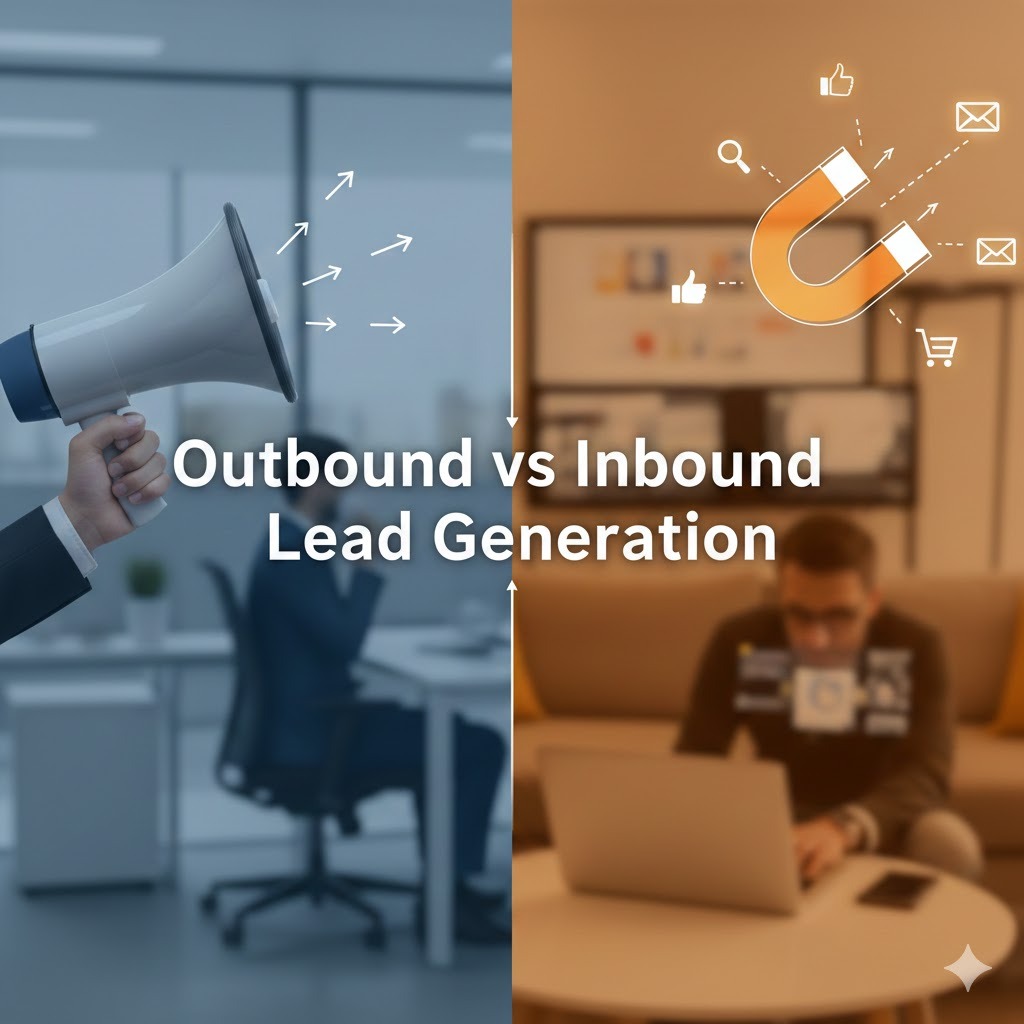
It’s easy to frame this as a competition. Outbound versus inbound. One must be better, right? Not exactly. They simply work in different ways. Different speeds. Different strengths. And when you understand that, the comparison becomes clearer.
Think of it like fishing. Inbound is casting a wide net and waiting. Outbound lead generation is choosing a specific fish and going straight toward it. Both can feed you. The approach just changes.
Inbound: Attraction Over Time
Inbound focuses on visibility. You create content, optimize for search and share insights. Gradually, people discover you. It feels natural because prospects come with interest already forming. They read your blog. Watch your videos. Download your resources. By the time they reach out, trust exists.
The challenge? Time.
Inbound often takes months to gain traction. Algorithms need signals. Content needs authority. Momentum builds slowly, but when it does, it can become very powerful.
Outbound: Action and Speed
Outbound works differently. Instead of waiting for attention, you initiate contact. You send the message, make the call and start the conversation.
That speed is its biggest advantage. Businesses launching new services, entering new markets, or needing immediate pipeline growth often rely on outbound because results appear faster. You don’t depend on discovery. You create it.
Of course, outbound requires effort and persistence. Rejections happen. Responses vary. But the control it offers is hard to ignore.
Control vs Momentum
Here’s a simple way to look at it. Inbound builds momentum. Outbound creates control. With inbound, growth accelerates over time. With outbound, growth responds directly to your actions. Increase outreach, increase opportunities. Pause outreach, pipeline slows. That relationship between effort and outcome makes forecasting easier.
Cost and Resource Differences
Inbound usually demands upfront investment — content creation, SEO, branding, and time. Returns come later. Outbound often requires operational investment — tools, data, outreach teams, and campaigns. Returns can appear sooner. Neither is universally cheaper. It depends on execution.
Why the Best Strategy Uses Both
The smartest companies rarely choose one over the other. They combine them. Inbound builds authority. Outbound opens doors. Inbound nurtures trust. Outbound accelerates conversations.
For example, a prospect might first see your content online. Later, they receive a personalized message. Because they already recognize your brand, the response feels easier. That overlap creates synergy.
The Human Reality Behind Both
At the end of the day, both strategies aim for the same thing. A moment where someone realizes you might solve their problem. Inbound warms the room. Outbound walks up and says hello. And when those two moments meet, growth becomes much more predictable.
Common Outbound Lead Generation Mistakes

Outbound can work beautifully. But it can also fall flat — fast. Not because the strategy is broken, but because small mistakes quietly weaken the results. And often, businesses don’t even notice until the pipeline slows down.
The truth is, outbound lead generation isn’t about doing more. It’s about doing the right things consistently.
Targeting Everyone Instead of the Right People
This is probably the most common mistake. Companies build huge lists and assume volume will solve everything. It rarely does. When the audience isn’t right, even the best message fails. Outreach becomes noise. Responses drop. Teams get frustrated. Precision matters more than size. Always.
Generic Messages That Feel Automated
People recognize templates instantly. The moment a message feels copied and pasted, attention disappears.
Personalization doesn’t mean writing novels. Sometimes one relevant sentence is enough. Mention a challenge. Reference something specific. Show you actually looked. Relevance creates curiosity. Curiosity opens conversations.
Giving Up Too Early
Many opportunities hide behind silence. A prospect might see your first message and ignore it. Not because they’re uninterested — just busy.
Then the follow-up never comes. Consistency changes outcomes. Most replies happen after multiple touches. A gentle reminder. A new angle. A helpful insight. Persistence, when respectful, works.
Talking Too Much About Yourself
Another mistake? Leading with features instead of value. Prospects don’t care about your product first. They care about their problems. Their goals. Their pressure. When outreach focuses on them instead of you, engagement rises naturally. Shift the spotlight outward, and conversations feel easier.
Ignoring Timing and Context
Even great outreach fails at the wrong moment. Budget cycles. Industry trends. Internal priorities. Timing influences everything. That’s why context matters. Understanding when someone might need help is often more important than what you say.
Chasing Quantity Over Quality
It’s tempting to measure success by how many messages go out. More emails, calls and activity. But activity alone doesn’t equal progress. A smaller, highly targeted campaign often outperforms massive outreach with weak targeting. Quality conversations beat large numbers every time.
Forgetting the Human Element
Automation tools help. Data platforms help. Scripts help. Still, people respond to people — not systems. Tone matters. Empathy matters. Authentic curiosity matters. When outreach feels human, trust grows faster.
The Bigger Picture
Mistakes in outbound usually aren’t dramatic. They’re subtle. A weak list. A rushed message. A missing follow-up. Small gaps that compound over time.
Fix the fundamentals, though, and everything changes. Conversations improve. Meetings increase. Momentum returns. Because outbound success rarely comes from secrets. It comes from clarity, consistency, and genuine connection.
Future Trends in Outbound Lead Generation

The landscape keeps shifting. New tools appear. Buyer behavior changes. Attention spans shrink. Yet the goal stays familiar — start meaningful conversations with the right people. What’s changing is how businesses get there.
Outbound lead generation isn’t disappearing. If anything, it’s becoming more refined. More intelligent. More human, oddly enough, even with all the technology involved.
Smarter Personalization Through AI
Personalization used to mean adding someone’s first name to an email. That’s no longer enough. Now, businesses analyze behavior signals, company data, and intent insights to craft messages that feel almost custom-made. AI helps process information faster, but the real value comes from relevance. When outreach reflects someone’s actual situation, responses increase naturally.
Intent Data and Predictive Targeting
Timing has always mattered. The difference now is visibility. Companies can identify prospects who are already researching solutions, hiring for related roles, or showing buying signals online. Instead of guessing who might be interested, businesses focus on those most likely to engage. This shift turns outbound from interruption into opportunity.
Video and Voice Outreach
Text isn’t the only way to connect anymore. Short personalized videos. Voice notes. Even quick screen recordings explaining an idea. These formats feel more personal because they carry tone and emotion. Prospects see effort. Effort builds trust. And trust shortens the path to conversation.
Automation With a Human Balance
Automation continues to expand, but there’s a growing realization — too much automation kills authenticity.
The future isn’t about replacing humans. It’s about removing repetitive tasks so humans can focus on relationships. Tools handle scheduling, tracking, and sequencing. People handle empathy, creativity, and nuance. That balance makes outreach feel natural instead of mechanical.
Multi-Channel Journeys Becoming Standard
Single-channel outreach is fading. Prospects move across platforms constantly, so businesses follow.
A typical journey might include:
- A LinkedIn interaction
- An email introduction
- A helpful resource
- A follow-up call
Each step reinforces the last. Familiarity grows layer by layer. By the time a meeting happens, trust already exists.
Hyper-Targeted Niche Prospecting
Broad audiences are losing effectiveness. Niche targeting is rising. Instead of reaching thousands of general prospects, companies focus on smaller groups with very specific needs. Messaging becomes sharper. Value becomes clearer. Conversion improves. Precision beats scale.
The Constant That Won’t Change
Technology will evolve. Platforms will shift. Strategies will adapt. Still, one thing remains constant — people respond to relevance and authenticity.
That’s the real future of outbound lead generation. Not louder outreach. Smarter outreach. More human outreach. Because no matter how advanced tools become, business still grows through conversations between people.
Conclusion
Growth rarely comes from standing still. It comes from movement — reaching out, testing ideas, starting conversations even when the outcome isn’t certain. That’s the real spirit behind outbound lead generation. It’s proactive. Intentional. And when done thoughtfully, surprisingly powerful.
Of course, it isn’t about sending endless messages or chasing every prospect. Instead, it’s about clarity. Knowing who you want to reach. Understanding what they need. Then showing up with something genuinely useful. Over time, those small actions compound. Conversations turn into meetings. Meetings turn into opportunities.
At the same time, the landscape will keep evolving. New tools will appear. Buyer expectations will shift. Still, one thing won’t change — people do business with those they trust. And trust often starts with a simple hello. So whether you’re scaling fast or building momentum from scratch, outbound gives you control over the journey. And sometimes, control is exactly what growth needs most.