


A practical guide to building a B2B email outreach strategy that turns cold emails into real conversations, qualified leads, and long-term business growth.
It doesn’t start with a pitch. It starts with a conversation. That’s why a smart B2B email outreach strategy still holds power, even in a noisy digital world. Emails give businesses a direct line to real decision-makers — but only when the message feels human. First, you need clarity. Then comes timing, relevance, and a reason for someone to care.
Instead of chasing volume, modern outreach focuses on building trust step by step. And while tools and automation help, thoughtful words make the difference. So, in this guide, we’ll break down how cold emails turn into warm leads, how small tweaks drive better replies, and how a simple message can open doors you didn’t expect.
What Is a B2B Email Outreach Strategy?

It doesn’t begin with a sales pitch. It begins with intent. A clear reason to reach out and a real person on the other side of the screen. That’s where a B2B email outreach strategy comes in. Think of it less like a marketing tactic and more like a quiet system working behind the scenes — guiding who you contact, how you speak, and why your message should matter at all.
At first glance, it may look simple. Send emails. Get replies. Move on. But in reality, good outreach feels more like a conversation unfolding slowly, step by step.
More Than Just Cold Emails
Many people hear “cold email” and imagine mass messages flying into crowded inboxes. Yet strong outreach works differently. It leans on relevance. It asks questions before pushing offers. And instead of trying to impress everyone, it focuses on the few who actually need what you bring.
Teams that do this well — even growth-focused companies like Prospect Labs — often spend more time researching than writing. They look at industries, roles, and timing. Then they shape emails that sound natural, almost casual, as if they were written just for one reader. Because honestly, nobody wants to feel like a number on a list.
Where Outreach Fits in the Sales Journey
Now picture the bigger picture. Marketing builds awareness. Sales closes deals. Outreach sits right in the middle, quietly opening doors. It introduces ideas before trust exists. And over time, those small introductions turn into meaningful conversations.
Usually, it starts with identifying the right decision-makers. Then comes a short message — not a long pitch — simply pointing toward a problem or opportunity. If the timing feels right, the conversation grows. If not, the door stays open for later. That’s the beauty of it. Outreach doesn’t force outcomes. It creates chances.
What the Strategy Is Really Trying to Achieve
It’s tempting to chase metrics like open rates or click numbers. But those are just signals, not the real goal. A strong strategy aims for something quieter — genuine replies, thoughtful questions, and a steady flow of new conversations.
Sometimes success looks like a booked demo. Other times, it’s just a simple “tell me more.” Both matter. Both move things forward. And gradually, as those small moments stack up, email stops feeling like outreach and starts feeling like relationship-building.
Clearing Up a Few Misunderstandings
People often say email outreach is outdated. Or that automation makes everything robotic. Yet the truth sits somewhere in the middle. Tools help you stay consistent, yes — but the message still needs a human voice.
Short emails often work better than long ones. Honest language beats fancy words. And most importantly, strategy always beats volume.
So when you strip it down, outreach isn’t about sending more messages. It’s about sending the right ones — at the right time, with just enough care to feel real.
B2B Cold Email Campaign Structure
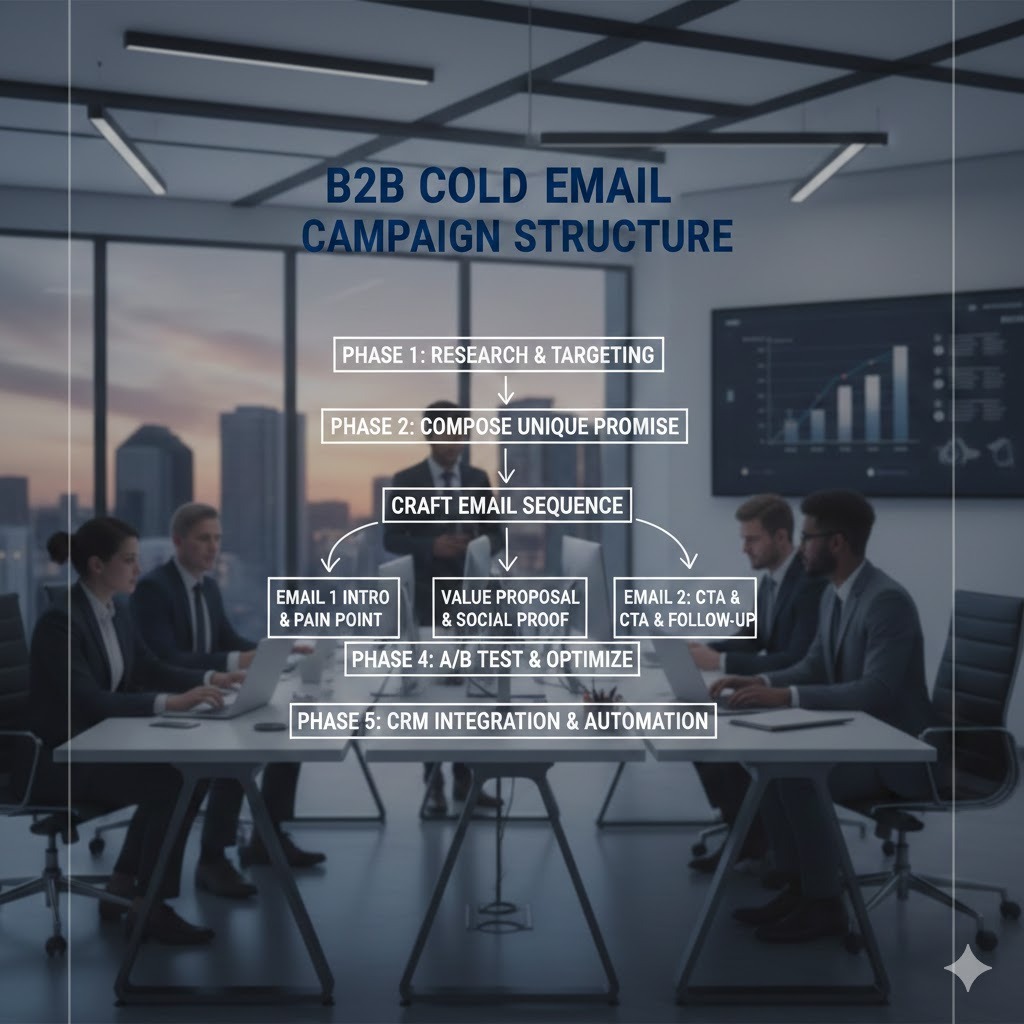
A good campaign doesn’t feel loud or pushy. Instead, it moves with purpose. Every line has a role, and every message builds on the last one. When people talk about successful B2B cold email campaigns, they often focus on tools or templates. Yet the real difference comes from structure — the quiet framework holding everything together inside a smart B2B email outreach strategy.
Let’s break it down in a way that feels practical, not complicated.
The Subject Line: First Impressions Happen Fast
Before anything else, there’s the subject line. It’s small, but it carries weight. If it feels too salesy, people skip it. If it sounds too vague, they ignore it. So balance matters.
Short phrases usually work best. Something natural. Something curious, but honest. Think less hype and more clarity. For example, mentioning a shared challenge or a simple observation often feels more human than shouting about big promises.
And just as important — keep it believable. When expectations match the message inside, trust begins early.
The Opening Line: Make It About Them
Now comes the first sentence. This is where many emails lose their chance. Instead of talking about your company, shift the focus outward. Mention a problem they might be facing. Refer to something real about their role or industry.
It doesn’t have to be long. In fact, shorter often feels warmer. A simple, thoughtful opening makes the reader pause — and that pause is everything.
The Middle: Clear Value Without the Noise
Once attention is there, the next step is simple. Explain why you reached out. Not with long features or heavy jargon, but with clear benefits. Show how you can help without sounding desperate to sell.
Think of this part as a bridge. On one side is curiosity. On the other is action. Your message just needs to connect the two. Some writers try to fit too much here. Yet clean structure works better. One idea. One benefit. One reason to keep reading.
The Call to Action: Keep It Light
Then comes the close. And this is where many campaigns go wrong. A strong call to action doesn’t pressure — it invites. Instead of asking for a long meeting right away, offer something easy. A quick thought. A short reply. Maybe even just a yes or no. When the step feels small, more people take it.
The Follow-Up Flow: Where Momentum Builds
Finally, remember that one email rarely does the job. Follow-ups add rhythm to your outreach. Each message should feel connected but fresh, almost like a conversation picking up where it left off. Some days, the first email gets ignored. That’s normal. But a thoughtful second or third touch often brings replies because familiarity grows over time.
And when all these pieces come together — the subject line, the opening, the value, the gentle CTA, and the steady follow-up — your campaign stops feeling random. It becomes intentional. Structured. And quietly effective, without ever sounding robotic.
B2B Sales Email Tactics That Actually Work

Not every email needs to be clever. Sometimes, it just needs to feel real. That’s the quiet truth behind strong B2B sales email tactics. While tools and templates change, human behavior stays familiar. People open messages that sound honest. They reply to emails that respect their time. And within a thoughtful B2B email outreach strategy, small details often create the biggest results.
Let’s look at what truly makes a difference.
Keep It Short, But Not Empty
First, length matters — but not the way many think. Short emails work because they’re easy to read. Still, short doesn’t mean vague. A few clear lines can say more than a long explanation.
Start with one idea. Stay focused. Then leave a little space for curiosity. When a message feels light, readers are more likely to finish it instead of skimming past.
Personalization That Feels Natural
Next comes personalization. Not the robotic kind with first-name tokens everywhere. Real personalization shows that you noticed something specific — a recent product launch, a hiring trend, or even a shift in their industry.
It doesn’t have to be perfect. In fact, overly polished personalization can feel forced. A simple, honest reference often sounds more human than a long researched paragraph. And when readers feel seen, conversations start more easily.
Follow-Up Without Feeling Pushy
Now, let’s talk about follow-ups. Many campaigns stop too early. Others go too hard. The balance sits somewhere in between.
A gentle reminder after a few days can bring surprising results. Then maybe another touch with a new angle — a fresh insight or quick example. Instead of repeating the same pitch, add small value each time. That way, the email thread feels alive rather than automated. Consistency builds familiarity. And familiarity builds trust.
Use Social Proof, But Keep It Subtle
Another tactic that works quietly well is social proof. Mentioning a result, a client type, or a relatable success story helps readers understand your credibility. Yet it’s important to keep the tone grounded.
One short sentence often does the job. Long lists of achievements can feel heavy. Subtlety keeps the message approachable.
Timing and Rhythm Matter More Than Perfection
Finally, remember that timing shapes how emails are received. Sending messages at thoughtful intervals — not all at once — creates a natural rhythm. Some replies arrive quickly. Others take days. That’s normal.
Instead of chasing perfection in every line, focus on consistency. Write clearly. Send thoughtfully. Learn from replies. Over time, patterns start to appear.
And that’s where strong tactics reveal their real power. They don’t rely on tricks or hype. They simply make communication easier, smoother, and more human — exactly what a long-term outreach strategy needs to grow.
Email Lead Generation for Businesses

Leads don’t usually arrive all at once. They show up slowly. A reply here. A question there. And over time, those small moments start to connect. That’s why Email lead generation for businesses works best when it feels patient, not rushed. Inside a strong B2B email outreach strategy, the goal isn’t just filling a list — it’s creating conversations that actually move somewhere.
Turning Cold Into Curious
At first, most emails feel cold. That’s normal. People don’t know you yet. So instead of pushing hard, shift the tone slightly. Share a thought. Mention a challenge they might already feel. Sometimes one honest line does more than a long pitch ever could. Curiosity grows quietly. And once it starts, replies become easier.
Value First, Always
Some teams try to win attention with big promises. Others take a softer path. A short insight, a small resource, or even a simple idea can open the door. It doesn’t need to be flashy. It just needs to feel useful.
When readers sense that you’re trying to help rather than sell, the energy changes. The conversation feels lighter. More natural.
Let Channels Work Together
Email rarely works alone. Maybe someone notices your name on LinkedIn first. Maybe they’ve seen your company mentioned somewhere before. Then your message lands — and suddenly it feels familiar. These small overlaps matter. They create comfort. And comfort makes replies less intimidating.
Conversations Over Contacts
Not every response turns into a deal. That’s part of the process. Still, each reply tells you something — how interested they are, what they care about, or whether the timing fits.
Instead of rushing ahead, slow down and listen. Ask one more question. Keep the tone simple. Often, the best leads reveal themselves naturally through dialogue.
The Slow Build That Lasts
Here’s the quiet truth: lead generation through email isn’t loud growth. It’s steady growth. Some people reply right away. Others circle back weeks later. And a few stay silent until the timing finally clicks.
But when the messages stay consistent and human, momentum builds. Not overnight. Not perfectly. Just gradually — the way real relationships usually do.
Common Mistakes in B2B Cold Email Campaigns

Mistakes don’t always look dramatic. Sometimes they’re quiet. A line that feels too polished. A message that tries a little too hard. And slowly, replies stop coming. That’s often where a B2B email outreach strategy begins to lose balance — not because the idea is wrong, but because the execution drifts away from real conversation.
Talking More Than Listening
Many emails open with long introductions. Company history. Features. Big claims. Yet most readers skim past it. They’re not looking for a speech. They’re looking for something that feels relevant. A simple shift helps. Start closer to their world. One observation. One honest thought. Suddenly the message feels lighter.
Chasing Volume Instead of Fit
It’s tempting to send emails to everyone. Bigger lists feel safer. But wide outreach often weakens the message. When you try to speak to everyone, the tone loses focus. Smaller, more thoughtful targeting changes that. The words feel sharper. And people notice.
Saying Too Much in One Email
Another common habit is overloading the message. Too many ideas packed together. Too many links pulling attention in different directions. Instead of clarity, readers feel pressure. Less usually works better. One idea. One purpose. One quiet reason to reply.
Forgetting That Follow-Ups Need Fresh Energy
Some campaigns stop after one email. Others repeat the same words again and again. Both approaches miss the point. A follow-up should feel like a continuation, not an echo. Sometimes a small new insight or a different angle is enough. It keeps the thread alive without sounding robotic.
Ignoring the Small Signals
Data doesn’t always shout. Sometimes it whispers. A subject line that gets slightly more replies. A shorter message that feels easier to read. These small signals matter. Instead of changing everything at once, adjust slowly. Watch what shifts. Then move again.
Where Most Mistakes Come From
In the end, many problems come from overthinking. Trying to sound perfect. Trying to impress too quickly. Yet outreach works best when it feels human — steady, simple, and honest. And when that balance returns, even cold emails start to feel a little warmer.
Future Trends in B2B Email Outreach Strategy

Outreach never stands still. What worked last year slowly shifts. New tools appear. Inbox habits change. And yet, one thing stays constant — people still respond to messages that feel real. That’s why the future of a B2B email outreach strategy isn’t about louder tactics. It’s about smarter, more thoughtful connections.
Let’s look at where things seem to be heading.
Personalization That Feels Less Like Automation
For a long time, personalization meant adding a first name or company tag. Now, expectations are changing. Readers notice when emails sound scripted. So the trend is moving toward deeper context — small details pulled from real research.
Not heavy paragraphs. Just subtle touches that show awareness. A recent product update. A shift in their industry. These tiny signals make emails feel intentional rather than automated. And interestingly, the simpler the language feels, the stronger the impact becomes.
AI as a Helper, Not the Voice
AI tools are becoming part of everyday outreach. They help draft ideas, suggest timing, and organize campaigns. Still, the most effective teams use AI quietly, almost in the background.
The voice stays human. The tone stays natural. Instead of replacing creativity, AI helps remove repetitive work so writers can focus on real conversation. That balance is shaping the next phase of outreach — faster systems with softer messaging.
Hyper-Targeted Segmentation
Another shift is happening in how audiences are grouped. Instead of large lists, many campaigns now break prospects into smaller segments. Roles, industries, even growth stages become part of the strategy.
This change makes emails feel more relevant without adding complexity. One message doesn’t try to fit everyone. Instead, small variations speak directly to specific needs. And as relevance increases, response rates often follow.
Blending Email With Other Channels
Email is no longer working alone. It connects with LinkedIn, communities, and even short-form content. Someone might notice your name on one platform, then recognize it in their inbox later. These layered touchpoints build familiarity. And familiarity lowers resistance. Outreach starts to feel less like a cold introduction and more like a continuation of something already familiar.
Conversations Over Campaigns
Perhaps the biggest trend is a mindset shift. Instead of thinking in campaigns, more teams focus on ongoing conversations. Messages feel shorter. Replies feel more open-ended. The goal moves away from immediate sales toward steady relationship building.
And while tools will continue to evolve, the heart of outreach remains surprisingly simple: clear words, honest intent, and timing that respects the reader.
Because no matter how much technology changes, people still look for the same thing in their inbox: something that feels genuine enough to answer.
Conclusion
It doesn’t really end with a final email. It just keeps evolving. One message leads to another. One reply changes how the next conversation begins. And slowly, a strong B2B email outreach strategy takes shape — not from perfect templates, but from small lessons gathered along the way.
Some campaigns will feel quiet at first. That’s normal. Momentum builds in pieces, not all at once. A thoughtful subject line here. A better follow-up there. Over time, those small shifts start working together. And maybe that’s the real takeaway. Outreach isn’t about chasing attention. It’s about staying consistent enough for trust to grow naturally.
So keep the words simple. Keep the tone honest. Let conversations unfold at their own pace — because sometimes the strongest results come from messages that never tried too hard to sound perfect.