
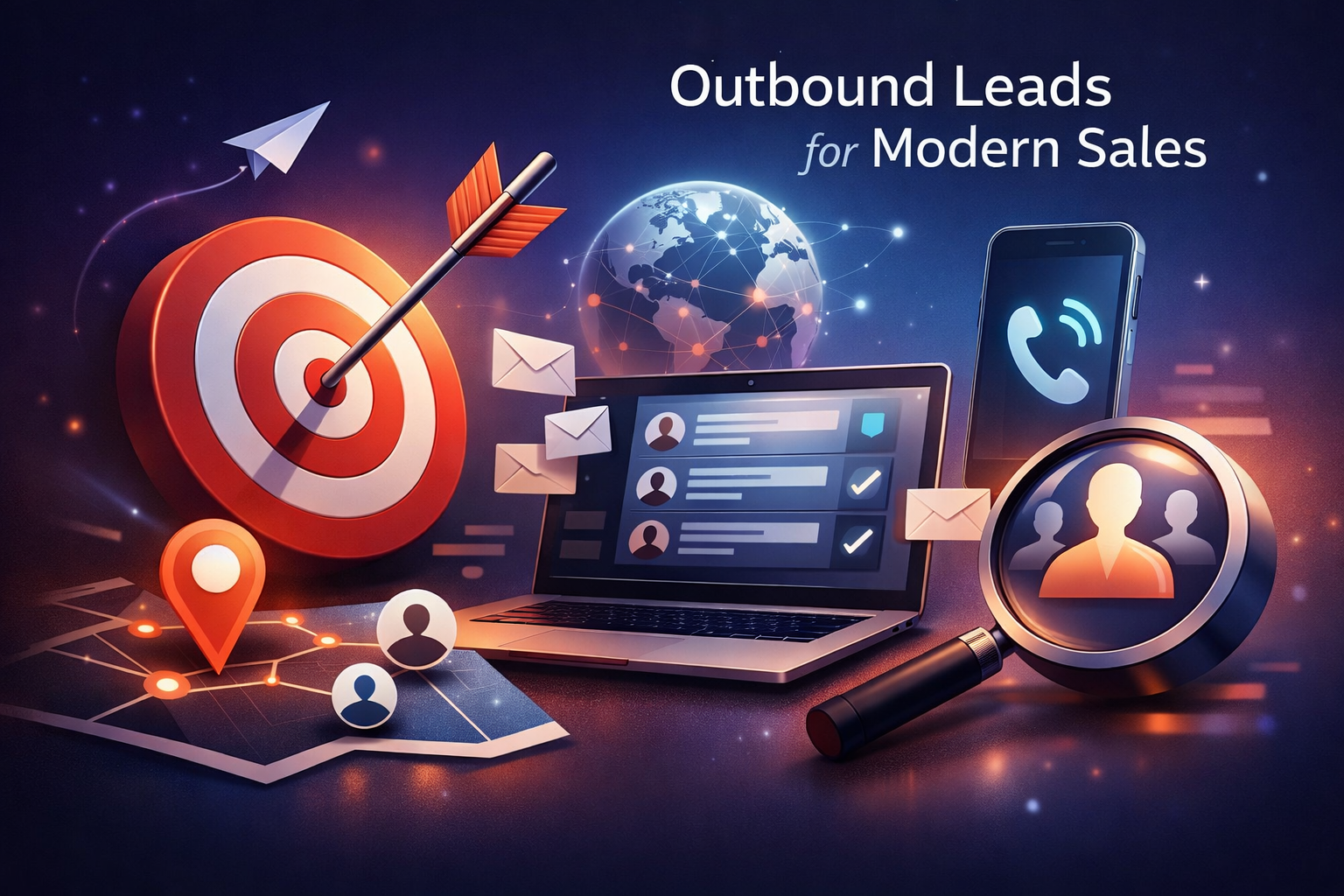

Outbound Leads for modern sales help businesses take control of growth by creating targeted conversations, predictable pipelines, and stronger customer connections.
Outbound never really disappeared. It just changed clothes. What used to feel pushy now feels precise—when done right. Today’s buyers are busy, informed, and honestly a bit harder to reach. So waiting around for leads to show up isn’t always enough. That’s where Outbound Leads for modern sales step in. They give teams control. Direction. Momentum.
Think of it like starting a conversation instead of hoping one happens.
Of course, blasting generic messages doesn’t work anymore. People expect relevance. They notice effort. And they respond to timing that makes sense. So modern outbound is less about volume and more about connection. When strategy meets personalization, something clicks. Suddenly, outreach stops feeling cold—and starts opening real doors.
What Are Outbound Leads?

It starts with initiative. Not luck. Not waiting. Just a decision to reach out first. Outbound leads are potential customers you actively contact instead of hoping they discover you. In other words, your sales team starts the conversation. You identify the right people, approach them, and open the door to opportunity. Simple as that. And honestly, that control is exactly why outbound still matters.
The Basic Idea Behind Outbound
Picture this. You know who might benefit from your product. Maybe they fit your ideal customer profile. Maybe they show signs of needing what you offer. So instead of sitting back, you move forward.
You send a message, make a call and connect on LinkedIn. That person becomes an outbound lead. This proactive approach is the foundation of Outbound Leads for modern sales. It creates momentum because you’re not dependent on website traffic, ads, or algorithms alone. You decide when the pipeline moves.
Common Ways Businesses Generate Outbound Leads
There isn’t just one path. Usually, it’s a mix.
Cold Email Outreach
Still one of the most popular methods. But today, personalization makes the difference. A thoughtful email beats a generic blast every time.
Cold Calling
Yes, it still works. In fact, when timing and relevance align, calls can create instant human connection.
LinkedIn and Social Selling
Professional platforms opened new doors. Conversations now start with comments, shared insights, or direct messages instead of hard pitches.
Targeted Prospecting Campaigns
Sales teams often research companies, decision-makers, and behaviors before reaching out. That preparation increases success rates significantly.
Companies like Prospect Labs, for example, focus heavily on research-driven outreach because accuracy often matters more than volume.
Outbound vs Inbound: A Quick Contrast
Inbound leads come to you. Outbound leads go to them. Inbound might happen through content, ads, or search engines. Outbound happens through direct action. Neither is better in every situation. They simply serve different purposes.
Outbound brings speed and predictability. Inbound builds trust and awareness over time. Together, they create balance.
Why Outbound Feels Different Today
Here’s the shift. Outbound used to feel interruptive. Now, when done well, it feels relevant. Why? Because data has improved. Tools improved. And buyer expectations changed. People respond when messages feel personal. When timing makes sense. When the problem you mention actually matters to them. So modern outbound isn’t about pushing. It’s about aligning.
And when that alignment happens, something interesting follows. Conversations feel natural. Opportunities appear faster. And sales teams gain a level of control that inbound alone rarely provides. That’s the real power behind outbound leads.
Why Outbound Leads Still Matter in Modern Sales

There’s a quiet misconception floating around. That outbound is outdated. That buyers don’t want to be contacted anymore. But reality tells a different story. People don’t hate outreach. They hate irrelevant outreach. And once that difference becomes clear, the value of outbound starts to make sense again.
Control Over Growth
Inbound can feel unpredictable. Some months are strong. Others feel slow. Algorithms change. Traffic drops. Leads fluctuate. Outbound changes that dynamic.
Instead of waiting, sales teams act. They choose who to contact. They decide when to start conversations. That level of control creates stability, especially for businesses that want consistent pipeline growth.
This is exactly why Outbound Leads for modern sales remain essential. They turn uncertainty into action.
Faster Market Entry
New products, services and companies. None of them can afford to wait forever. Outbound helps businesses enter markets quickly. You don’t need years of brand awareness before conversations begin. You simply identify the right audience and start reaching out. Momentum builds faster when you create opportunities instead of waiting for them.
Precision Targeting of High-Value Customers
Not all customers are equal. Some bring more revenue, stay longer and open doors to bigger opportunities.
Outbound allows laser focus. Sales teams can target specific industries, company sizes, or decision-makers. That precision improves efficiency because effort goes toward the right prospects, not random ones. And when targeting improves, conversion rates often follow.
Supporting — Not Replacing — Inbound
Here’s where many people misunderstand things. Outbound and inbound aren’t competitors. They’re partners. Inbound builds awareness. Outbound accelerates action.
Someone might see your content but never reach out. A thoughtful outbound message can reconnect that interest and move things forward. Together, they shorten the path from curiosity to conversation.
Competitive Advantage in Crowded Markets
Markets are noisy now. Everyone creates content, runs ads and posts online. So attention becomes harder to capture. Outbound cuts through that noise because it’s direct. Personal. Intentional. Instead of hoping prospects notice you, you show up where they already are. That visibility creates opportunities competitors might miss.
Predictable Revenue and Forecasting
Sales leaders love predictability. Investors do too. Outbound campaigns produce measurable activity:
- Messages sent
- Conversations started
- Meetings booked
Those numbers create clearer forecasts. And clearer forecasts reduce risk. Over time, that predictability becomes one of outbound’s biggest strengths.
The Human Element Still Wins
At the end of the day, sales remain human. Decisions involve trust, timing, and emotion. Outbound creates space for those connections to begin earlier.
A conversation can solve confusion faster than a website ever could. And that’s why outbound still matters. Not because it’s aggressive. But because it’s proactive. When done right, it doesn’t interrupt. It connects.
Core Channels for Generating Outbound Leads

Not every door opens the same way. Some start with a message. Others with a call. Sometimes, it’s just a comment that turns into a conversation later. That’s the beauty of outbound. There isn’t one path — there are many. And when used together, they create momentum that feels natural, not forced. Let’s walk through the channels that power Outbound Leads for modern sales today.
Cold Email: Quiet but Powerful
Email often works best when it doesn’t feel like marketing. Short. Personal. Relevant. A good cold email doesn’t try to sell immediately. Instead, it starts with curiosity. Maybe it mentions a challenge the prospect faces. Maybe it shares a quick idea. Either way, the goal is simple — start a conversation. And because email scales easily, it remains one of the most reliable outbound tools when done thoughtfully.
Cold Calling: Direct Human Connection
Calls have a reputation. Some deserved it. Some not. But here’s the truth. A well-timed call can do what messages cannot. Tone. Emotion. Real-time response. Those things matter.
Of course, success depends on approach. Scripts that sound robotic fail. Conversations that feel human succeed. So cold calling still works — especially when it focuses on helping, not pushing.
LinkedIn and Social Selling: Relationship First
Professional networks changed outbound completely. Now, outreach doesn’t always begin with a pitch. It might start with engagement. A comment on a post. A shared insight. A thoughtful connection request.
Over time, familiarity builds. Trust grows. And when the message finally comes, it doesn’t feel cold anymore. That relationship-first approach makes social selling one of the fastest-growing outbound channels today.
Multi-Channel Outreach: Where the Magic Happens
One message rarely converts. People are busy. Notifications get missed. Timing isn’t always right. That’s why combining channels works better. An email followed by a LinkedIn touch. A call after a message. A gentle follow-up later. Each interaction reinforces the previous one. Familiarity increases. Response rates improve. Consistency not pressure creates results.
Timing and Relevance Matter More Than Channel
Here’s something important. The channel itself isn’t the secret. Relevance is. A perfectly timed email beats a poorly timed call. A thoughtful LinkedIn message beats a generic campaign. When outreach connects to a real problem, people respond regardless of platform.
So instead of chasing the “best” channel, modern sales teams focus on understanding their audience first.
The Real Advantage: Meeting Buyers Where They Are
Different people prefer different communication styles. Some live in email. Others respond to calls. Many spend hours on LinkedIn.
Using multiple channels increases the chance of meeting prospects in their comfort zone. And when communication feels convenient, conversations start easier. That’s ultimately what outbound channels are meant to do. Not overwhelm prospects. Just open doors. And once a door opens, sales can begin naturally.
Metrics That Define Outbound Success

Numbers tell stories. Not always exciting ones — but honest ones. In outbound, metrics aren’t just reports sitting in dashboards. They’re signals. They show what’s working, what’s off, and where small adjustments can create big improvements. Without them, outreach becomes guessing. With them, it becomes a strategy. That’s why tracking performance is essential in Outbound Leads for modern sales.
Response Rate: The First Signal
This is where everything begins. Are people replying? Are they engaging? If response rates stay low, something usually needs attention. Maybe the message feels generic. Maybe the targeting is off. Or maybe the timing isn’t right.
On the other hand, strong responses often mean your outreach feels relevant. And relevance is the foundation of success.
Conversion Rate: Turning Interest Into Action
Replies are good. Conversions are better. Conversion rate measures how many conversations turn into real opportunities — meetings, demos, or next steps. It shows whether your messaging connects not just emotionally, but practically. Sometimes small wording changes can double conversions. That’s why this metric matters so much.
Meeting Booking Rate: Momentum Indicator
Outbound exists to create conversations that move forward. Meeting booking rate tells you whether interest becomes commitment. If prospects respond but don’t schedule time, friction might exist somewhere. Maybe the value isn’t clear. Maybe the task feels too big too soon. Fixing that gap often unlocks growth quickly.
Cost Per Lead: Efficiency Check
Growth matters. But efficiency matters too. Cost per lead helps businesses understand how much they spend to generate opportunities. When outbound becomes optimized, this number often decreases over time because targeting improves and processes get smoother. Lower cost with higher quality? That’s the sweet spot.
Pipeline Value: Future Revenue Visibility
Pipeline value shows potential revenue created from outbound efforts. It answers an important question: Is outreach producing meaningful opportunities or just conversations? Strong pipeline numbers indicate healthy sales momentum ahead. Weak pipeline suggests adjustments are needed earlier in the process. For leaders, this metric provides confidence. Or warning signs.
Return on Investment (ROI): The Bigger Picture
At the end of the day, results matter more than activity. ROI connects outbound efforts directly to revenue. It measures whether the investment in tools, teams, and campaigns produces profit. When ROI is strong, outbound becomes one of the most reliable growth engines in modern sales. And when it isn’t, the data usually reveals why.
Metrics Are Guides — Not Goals
Here’s something important. Metrics shouldn’t replace human judgment. They should support it. Numbers show patterns. People create outcomes. So the real power comes from combining both. Watch the data. Listen to conversations. Adjust continuously.
Over time, that balance transforms outbound from effort into precision. And that’s when success stops feeling random — and starts feeling repeatable.
Common Mistakes Businesses Make with Outbound Leads

Outbound doesn’t usually fail overnight. It slips. Slowly. Small missteps pile up. Messages go ignored. Pipelines feel thinner. And teams start wondering if outbound even works anymore.
Most of the time, the problem isn’t outbound itself. It’s how it’s being used. Understanding these mistakes can completely change results — especially in Outbound Leads for modern sales, where precision matters more than effort alone.
Sending Generic Messages
This is the biggest one. Prospects can spot copy-paste outreach instantly. If a message feels like it could go to anyone, people assume it wasn’t meant for them. And when relevance disappears, attention disappears too.
Personalization doesn’t mean writing novels. Even small details — industry, role, recent activity — create connection. That connection increases responses.
Targeting the Wrong Audience
Even perfect messaging fails when it reaches the wrong people. Sometimes businesses rush into outreach without clearly defining who they want to reach. The result? Low engagement. Frustration. Wasted effort.
Outbound works best when targeting feels intentional. The more accurate the audience, the easier conversations become.
Giving Up Too Early on Follow-Ups
Many deals hide inside follow-ups. The first message gets ignored. The second one gets noticed. The third one gets a reply.
Yet teams often stop after one or two attempts. Not because prospects aren’t interested — but because the timing wasn’t right. Consistent, respectful follow-ups dramatically increase success rates. Persistence matters. Pressure doesn’t.
Over-Automation Without Human Touch
Automation saves time. But too much of it removes personality. When every message sounds robotic, prospects feel like numbers instead of people. That disconnect reduces trust immediately.
The goal isn’t to avoid automation. It’s to balance it with authenticity. Technology should support conversations, not replace them.
Focusing on Volume Instead of Value
More messages don’t always mean more results. Some teams believe sending thousands of emails guarantees success. But quantity without quality often leads to poor engagement and damaged reputation.
A smaller list with better targeting usually performs far better than mass outreach with no strategy behind it. Precision beats volume almost every time. Ignoring Data and Feedback Outbound produces signals constantly. Open rates. Replies. Objections. Questions.
When teams ignore those signals, they miss opportunities to improve. But when they analyze patterns, messaging becomes sharper. Targeting becomes smarter. Results improve naturally. Listening both to numbers and conversations is where growth happens.
Expecting Immediate Results
Outbound is powerful, but it isn’t magic. Relationships take time. Trust builds gradually. Some prospects respond weeks or months later. Businesses that expect instant wins often abandon campaigns before momentum develops. Patience, combined with consistency, creates long-term success.
Mistakes Are Part of the Process
Here’s the reassuring part. Almost every business makes these mistakes at some point. Outbound is a skill. And like any skill, it improves with awareness and adjustment. Once teams correct these gaps, performance often changes faster than expected. Because when outreach feels relevant, human, and timely — people respond.
Conclusion
Sales has never really been about tools or tactics. It’s about people. Always has been. And that’s exactly why outbound still holds its place.
When done poorly, outreach feels noisy. Forced. Easy to ignore. But when done right, it feels different. Thoughtful. Timely. Relevant. Almost welcome. That’s the shift modern businesses are learning to make.
Outbound Leads for modern sales aren’t about chasing prospects. They’re about starting conversations that might not happen otherwise. They give teams direction when pipelines feel uncertain. They create momentum when growth slows. And most importantly, they put control back into the hands of the business.
Of course, success doesn’t come from volume alone. It comes from understanding people, refining messages, and staying consistent even when results take time. In the end, outbound isn’t cold. It’s simply the courage to reach out first. And sometimes, that first step is all it takes to open the right door.