
When contractors think about marketing, they usually think about one thing at a time. A new website. Some Google ads. A push for reviews. A Facebook page.
Each one helps a little. But none of them fixes the real problem, which is that the pieces don’t talk to each other. A great website that sends leads into a phone nobody answers is still losing work.
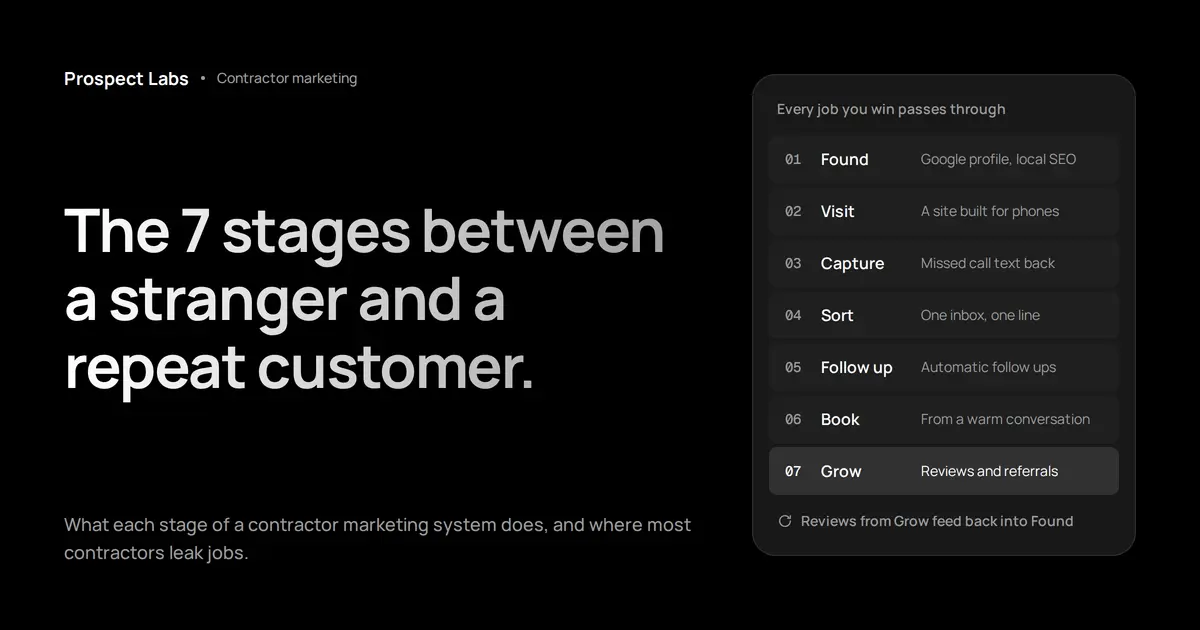
A better way to think about it: every job you win passes through seven stages, from the moment a stranger searches for your trade to the day they hire you again. If any stage is broken, jobs leak out of it. Here’s the full path.
Stage 1: Found
The homeowner has a problem and searches for help. If you don’t show up, nothing else matters.
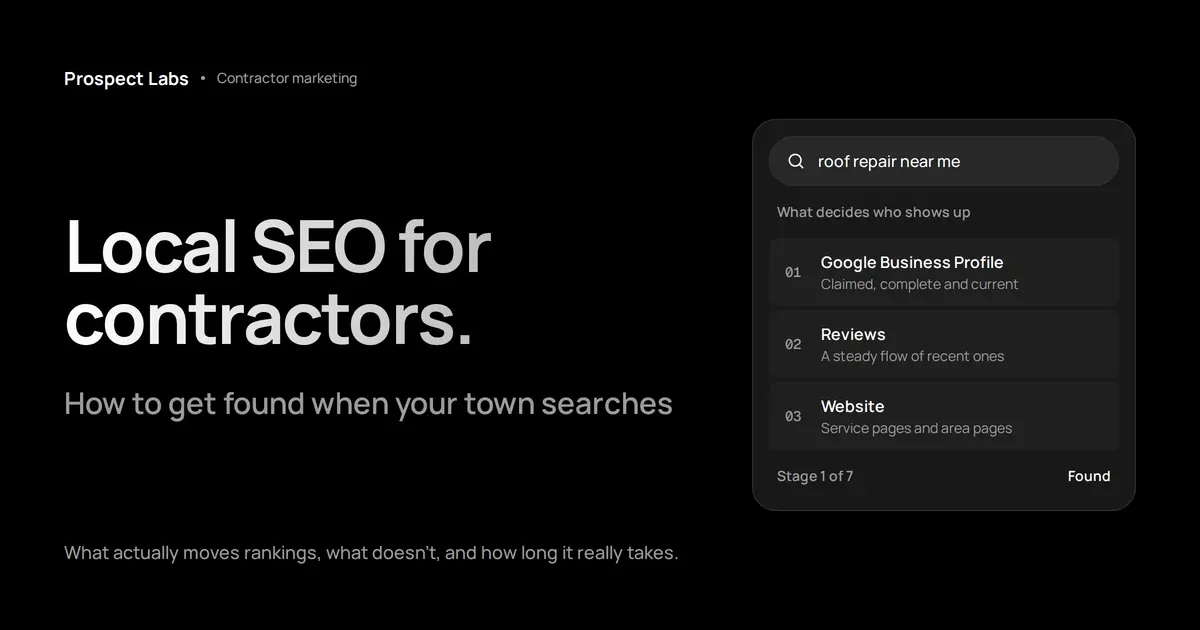
This stage is about local SEO and a properly set-up Google Business Profile, so you appear when people in your town search for your trade. Review volume plays a big part too. Getting found organically in your own area also means you’re not paying for clicks from people outside your service area.
Where it leaks: an unclaimed or half-filled Google profile, a site with no service-area pages, and too few recent reviews.
Stage 2: Visit
They click through to your website. Now you have a few seconds to answer their questions: what do you do, where do you work, and are you any good?
The website is stage two, not the whole system. Its job is to make that decision easy on a phone screen: clear services, a clear service area, your best reviews up front and one obvious way to get in touch.
Where it leaks: a desktop-first design, reviews hidden on a separate page, and a phone number buried in the footer.
Stage 3: Capture
This is the stage most contractors are missing entirely. A visitor who looks and leaves is gone. A visitor who sends you a message is a lead.
Capture means giving people a way to start a conversation that doesn’t depend on you answering the phone. A one-tap “text us” button on the site. An automatic text back to every missed call, in your business name. Either way, the conversation starts on their schedule, not yours.
Where it leaks: calls that ring out with no voicemail, and websites where the only option is to call.
Stage 4: Sort
Once leads start arriving, they come from everywhere: texts, website messages, Facebook, Instagram, phone calls. Scattered across four apps and your personal number, some will slip through.
Sorting means one inbox on your phone for every channel, plus a dedicated business line so work calls and texts are tracked and never mixed up with personal ones.
Where it leaks: a Facebook message nobody saw for three days, and a customer texting your personal number at midnight.
Stage 5: Follow up
Not every lead books on the first reply. They’re comparing quotes, checking with a partner, or just busy. Most contractors reply once, then forget.
Automated follow-up sends a short sequence of messages to new enquiries, so a busy week on your end never turns into a cold lead on theirs.
Where it leaks: quotes sent with no follow-up, and “I’ll get back to you” leads nobody ever chased.
Stage 6: Book
The conversation turns into a scheduled visit or inspection. Because every earlier stage is working, you’re booking from a warm conversation, not chasing a stranger who’s already talked to three other contractors.
Where it leaks: slow replies at the final step. Even a hot lead cools if they wait a day for a time slot.
Stage 7: Grow
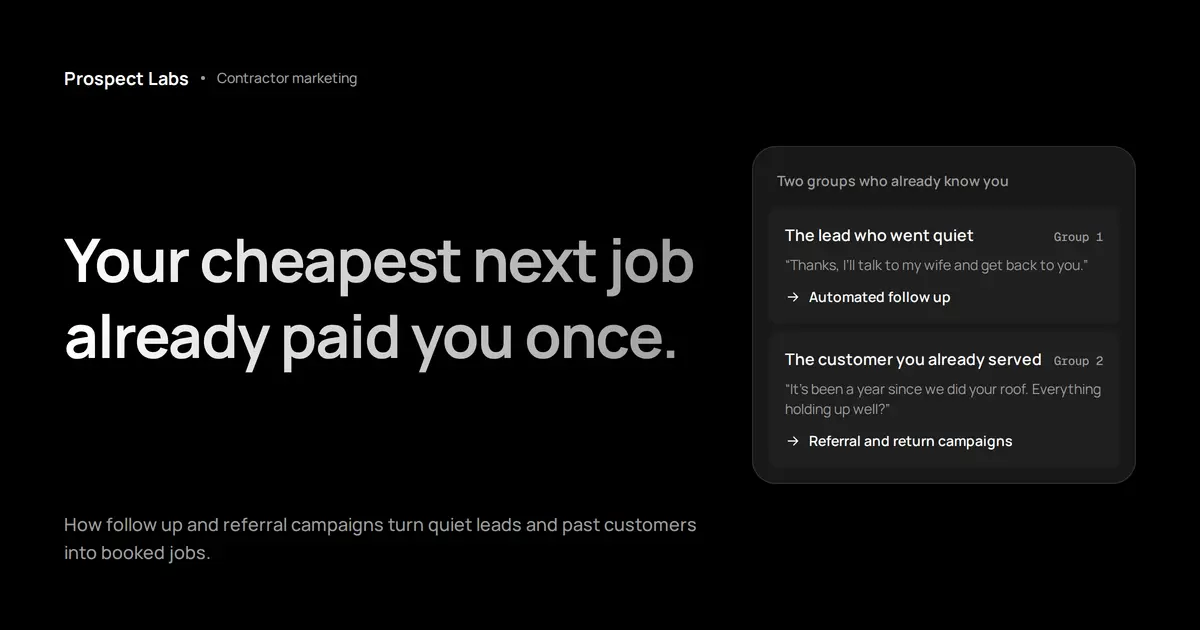
The job is done. For most contractors, that’s where the relationship ends. It shouldn’t be.
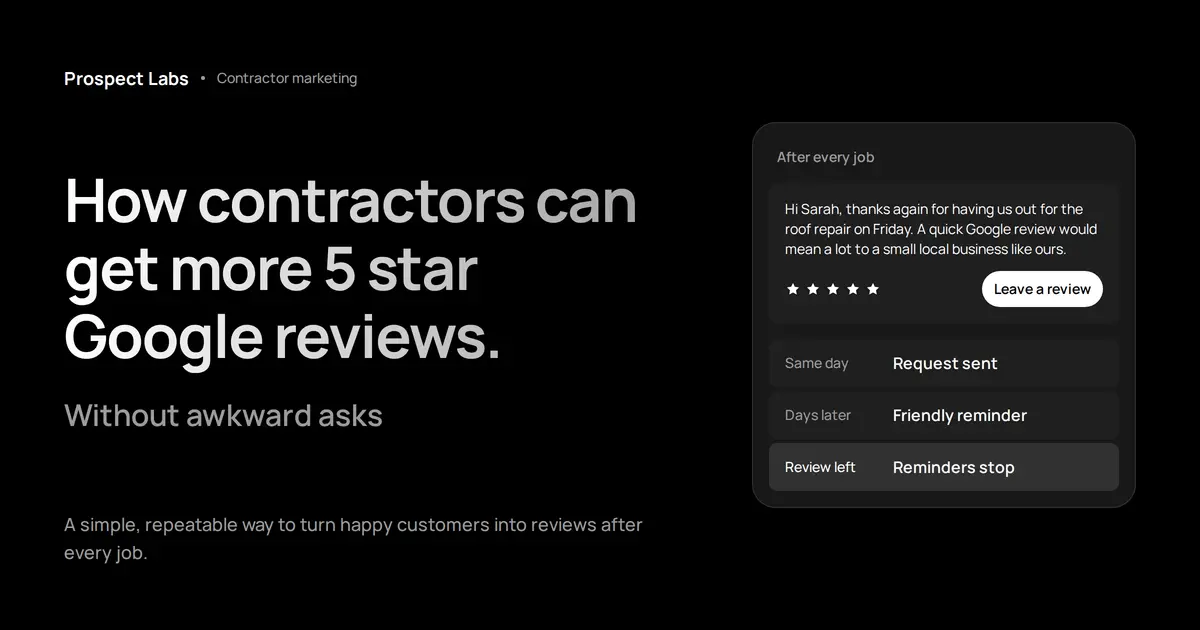
Growth has two parts. First, a one-click review request after every job, with polite reminders, so happy customers actually leave the review they meant to. Those reviews feed straight back into Stage 1. Second, referral and return-customer campaigns that bring past customers back months later, when they need their next job done or know someone who does.
Where it leaks: reviews never asked for, and past customers who can’t remember your name six months later.
Why the stages have to be connected
Notice how the stages feed each other. Reviews from Stage 7 help you get found in Stage 1. Text-back in Stage 3 creates the conversations that follow-up in Stage 5 keeps alive. Fix one stage in isolation and the leak just moves to the next one.
That’s why Prospect Labs builds every stage as one system, on one phone, for one monthly price. We set up, connect and maintain all of it. If you need a manual to use it, we built it wrong.
Map your seven stages
On a strategy call, we’ll map your business against all seven stages and show you which ones are costing you work. Then you’ll see the full system running on live client accounts.