
Quick answer: Remodeling marketing is the system a remodeling company uses to attract homeowners planning kitchen, bathroom, basement and whole home projects, prove it can deliver, filter for budget and fit, and turn the right enquiries into design consultations and signed contracts.
Here’s the thing most remodelers figure out the hard way. You rarely need more leads. You need better ones, and you need to stop losing the good ones during a decision that can take months. A plumber’s customer wants help tonight. Your customer has been dreaming about this project since last Christmas, and the right lead could be worth $80,000 while the wrong one eats your Saturday on an estimate that goes nowhere.
This guide covers how remodeling buyers actually decide, what the 2026 numbers say, how to market each project type, how to filter tire kickers without scaring off good clients, and how to keep your pipeline full when demand is flat. If you also take on new builds and larger general work, our guide to general contractor marketing covers that wider picture, and home service marketing explains the basics every trade shares.
What Makes Remodeling Marketing Different From Other Contractor Marketing?
Remodeling marketing is different because homeowners buy with their eyes and their savings. They collect ideas for months before calling anyone, judge you by your portfolio more than your price, and often need a spouse, a lender or a designer to agree before they sign.
That gives your marketing two jobs running at two speeds. You need to be visible early, while people are still dreaming and saving photos. Then you need to be fast the moment they finally reach out, because by then they’re ready and they’re comparing you with two or three others.
| Phase | What the homeowner is doing | Where they are | What your marketing must do |
|---|---|---|---|
| Dreaming | Saving photos, guessing at a budget | Houzz, Pinterest, Instagram, YouTube | Show finished projects with real details |
| Researching | Reading cost guides and timelines | Google, ChatGPT and other AI tools | Publish honest cost and process pages |
| Shortlisting | Comparing about three remodelers | Google Maps, reviews, your website | Prove local work, recent reviews, licensing |
| Reaching out | Calling or texting, usually after work | Phone and website | Answer, or text back within minutes |
| Deciding | Weighing estimates and financing | Email, texts, the kitchen table | Follow up patiently and make money talk easy |
| After the job | Showing friends the new room | Neighbors, social media | Ask for the review and the referral |
Remodeling Marketing in 2026: What the Numbers Say
The US remodeling market is huge but flat. Spending is holding near record levels, growth is slowing, homeowners are trimming planned budgets, and high end projects keep growing. That rewards remodelers who win a bigger share of existing demand instead of waiting for the market to lift them.
| What the data shows | Figure | Source |
|---|---|---|
| Annual US homeowner spending on improvements and repairs | About $525 billion, expected to hover there through Q3 2027 | Harvard JCHS LIRA, via Pro Remodeler (Oct 2026) |
| Projected yearly growth in remodeling spending | 1.5% by Q3 2027 | Harvard JCHS LIRA |
| Homeowners who renovated in 2025 | 54% | 2026 U.S. Houzz & Home Study |
| Median renovation spend in 2025 | $20,000 | Houzz & Home Study |
| Median planned renovation spend for 2026 | $15,000, down from $20,000 | Houzz & Home Study |
| Spend at the top 10% of projects | $150,000 or more, up from $140,000 | Houzz via Woodworking Network |
| Median kitchen renovation spend in 2025 | $24,000 | Houzz & Home Study |
| Renovating homeowners who hired a professional | 91% | Houzz via Surface & Panel |
Three things matter here for a remodeler.
- Budgets are splitting. Planned spend is shrinking in the middle while the top end grows. Expect more phased projects and smaller first jobs, alongside a steady stream of big ticket clients who care far more about trust than price.
- Almost everyone hires a pro. With 91% of renovating homeowners hiring help, the question isn’t whether they’ll hire someone. It’s whether they find and trust you before they find the next name.
- Flat markets punish leaks. When total spending barely moves, every missed call, slow reply and forgotten past client is work handed straight to a competitor.
How Should You Market Each Type of Remodeling Project?
Market each project type on its own page. A homeowner planning a $28,000 kitchen refresh searches, worries and decides differently from someone planning an $80,000 kitchen gut. Separate pages rank better for specific searches, match what each buyer wants to know and let you show the right proof.
The Cost vs Value report is a useful guide to how homeowners think about each project. Most people don’t remodel purely for resale, but they do ask “is it worth it?”, and having the answer on your page builds credibility.
| Project | Average job cost | Cost recouped at resale | What to lead with |
|---|---|---|---|
| Minor kitchen remodel (midrange) | $28,458 | 113% | Value, speed and minimal disruption |
| Bath remodel (midrange) | $26,138 | 80% | Comfort, function, before and after photos |
| Basement remodel | $52,012 | 71% | New living space without moving house |
| Bath remodel (universal design) | $42,183 | 61% | Safety and aging in place |
| Major kitchen remodel (midrange) | $82,793 | 51% | Lifestyle, design process, full portfolio |
| Major kitchen remodel (upscale) | $164,104 | 36% | Craftsmanship, designers, materials |
National averages from the [2025 Cost vs Value report by Zonda](https://www.jlconline.com/cost-vs-value/2025/). Your local numbers will differ.
Kitchen remodeling marketing
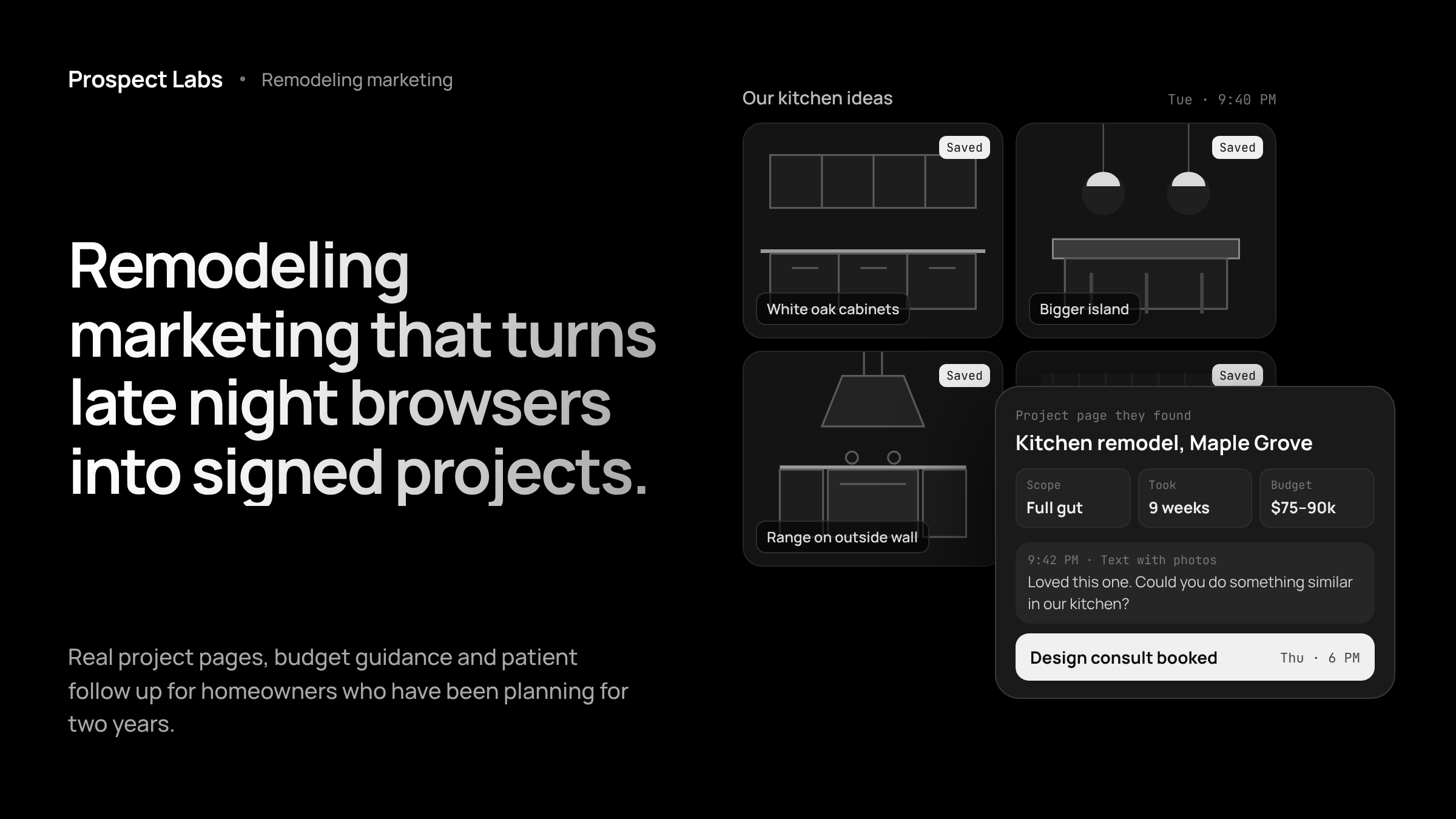
Kitchens are the highest spend room and the most photographed. Build one page for kitchen refreshes and another for full kitchen remodels, each with its own gallery. Under every project, add the town, the scope, how long it took and a budget band. That single habit answers the question every homeowner is too polite to ask on the first call.
Bathroom remodeling marketing
Bathroom buyers worry about mess and time without a working shower. Show day by day timelines, explain dust protection and show tile and shower close ups. If you do accessible bathrooms, give universal design its own page. Older homeowners are some of the biggest spenders in the Houzz data, and they search for terms like walk in shower and grab bars, not “bath remodel.”
Basements, additions and whole home renovations
These are “stay or move” decisions. Your content should compare the cost of adding space with the cost of buying a bigger house, explain permits and structural work in plain English, and show your design process step by step. These buyers take the longest to decide, so they’re also the ones your follow up has to hold onto.
Each project page should also be built for local search: a clear page title with the service and the town, consistent business details and fresh reviews that mention the project type. Our guide to local SEO for contractors walks through the setup.
How Do You Get Better Remodeling Leads, Not Just More?
Better remodeling leads come from setting expectations before the first call. Show budget ranges on project pages, explain your process and typical starting price, ask two or three qualifying questions in your text or form, and respond fast to the people who fit.
Every remodeler knows the Saturday estimate that goes nowhere. The homeowner wanted a $70,000 kitchen for $20,000, or was collecting quotes for a project two years away. You can’t avoid all of them, but your marketing can screen out a lot before you get in the truck.
| Lead source | Typical lead quality | Who else gets the lead | Best use for a remodeler |
|---|---|---|---|
| Past clients and referrals | Highest, already trust you | Nobody | Your cheapest, fastest closing source |
| Google search and Google Business Profile | High intent, ready to talk | Nobody, they chose you | The foundation everything points to |
| Houzz profile | Design focused, mixed budgets | Other pros on the platform | Kitchen, bath and design led work |
| Google Ads and Local Services Ads | High intent if well targeted | You compete in an auction | Filling gaps for high value projects |
| Facebook and Instagram | Early stage dreamers | Not applicable | Staying visible during the dreaming phase |
| Shared lead sites (Angi, Thumbtack) | Mixed, often price driven | Often several remodelers | Testing a new area, with caution |
Some simple ways to filter without sounding cold:
- Publish a starting point. A line such as “most of our bathroom projects start around $25,000” saves both sides time and attracts the clients you actually want.
- Ask useful questions early. Project type, rough timeline and a few photos by text tell you more than a long form ever will.
- Charge for design, credit it back. A paid design consultation that’s credited to the contract separates serious buyers from quote collectors.
- Answer every enquiry fast. Good leads disappear when calls ring out. A missed call text back replies in your business name while you’re on a job site.
Why Does Your Website Matter More for Remodelers Than Most Trades?
For a remodeler, the website is the showroom. Homeowners can’t test drive a kitchen, so they judge you by finished work, a clear process and reviews about similar projects. A site that shows all three and makes texting easy does most of the selling before you visit.
Here’s what a remodeling website needs, in order of importance:
- Project galleries grouped by room, each with the town, scope, duration and a budget band
- Before and after photos of your own work, never stock images
- A process page that walks through consultation, design, selections, build and final walkthrough
- Financing options explained simply, since many clients pay with home equity or a loan
- Reviews that mention specific projects, plus license and insurance details
- A one tap way to text a photo of the room from any page
We break down the full checklist in our guide to contractor website design. If your current site gets compliments but not calls, here’s why a good looking site still loses jobs.
How Do You Keep Remodeling Leads Warm Through a Long Decision?
Keep remodeling leads warm with planned, useful follow up instead of “just checking in.” Send a recap after the site visit, a similar finished project a week later, a clear options note after the estimate and seasonal nudges for anyone who said “next year.”
Silence from a homeowner usually means “not yet,” not “no.” They’re talking to their lender, waiting on a bonus, or arguing gently about the island. The remodeler who’s still politely present in week five often wins the job the fast quoter lost in week two.
| When | What to send | Why it works |
|---|---|---|
| Within 5 minutes of enquiry | A friendly text asking for photos of the space | Starts the conversation before they call someone else |
| Same day as the site visit | A short recap of what you heard them say | Shows you listened, which builds trust |
| About 7 days later | A finished project like theirs, ideally nearby | Lets them picture the result with you |
| After the estimate | A plain explanation of options and financing | Removes the money anxiety that stalls decisions |
| About 3 weeks in | A check on questions plus your next open build slot | Creates gentle urgency without pressure |
| 90 days and beyond | A seasonal note or design idea | Catches the homeowners who were never a no |
You don’t have to send these by hand. Automated lead follow up sends each message on schedule, so a busy week on site never turns a warm lead cold. It’s one part of our seven stage contractor marketing system.
How Do Reviews and Past Clients Fuel Remodeling Growth?
Reviews and past clients carry more weight in remodeling because homeowners are letting a crew into their home for weeks. Recent reviews that describe the project, the cleanup and the communication sell your next job, and past clients often come back for the next room.
Ask for the review at the final walkthrough, when the client is standing in the new kitchen and genuinely happy. Ask them to mention what you built and how the job ran, because a review that says “they kept the house clean during our bathroom remodel” sells far better than “great job.” A one click request with a couple of reminders makes it easy. Our guide shows how contractors get more 5 star Google reviews without awkward asks.
Then remember that today’s kitchen client is next year’s bathroom client. A note on the one year anniversary of the project, a seasonal idea for the next room or a simple referral thank you keeps your name in front of people who already trust you. Here’s how to run referral marketing for contractors on purpose instead of by luck.
How Can Remodelers Handle Seasonality and a Flat Market?
Remodelers beat seasonality by filling the design pipeline in the quiet months. Winter is when homeowners plan spring projects, so use November through February for past client campaigns, design consultations and fresh project pages, then fill your build calendar before the spring rush.
With planned budgets dropping in 2026, it also pays to offer phased projects. A homeowner who can’t fund a full kitchen gut this year might happily start with cabinets and counters now and flooring next spring. Phase one done well is how you win phase two.
Do the Maths on One Remodel
Say your average bathroom remodel is $26,000 and you keep about 20% after materials, labor and subs. That’s roughly $5,200 per job. A complete marketing system at $297 a month costs about $3,564 a year. One extra bathroom a year, from a call you would otherwise have missed, covers it. That’s simple arithmetic on example numbers, not a promise of results, so try it with your own.
5 Remodeling Marketing Mistakes That Cost You Projects
- Using stock photos. Homeowners can tell, and it makes them wonder what your real work looks like.
- One “Services” page for everything. Kitchens, baths and basements each need their own page to rank and to convince.
- Giving no budget guidance at all. Silence on price invites mismatched leads and wasted estimates.
- Treating shared leads as the plan. When four remodelers get the same lead, the cheapest quote usually wins.
- Forgetting the next room. Past clients are the easiest second project you’ll ever sell.
How Prospect Labs Helps Remodelers Win Better Projects
Prospect Labs builds marketing systems for remodeling companies that work through the whole decision, not just the first visit. For a remodeler, that means one connected setup that keeps selling while you’re on site:
- A mobile first website built around your real projects, reviews and one tap texting
- Missed call text back in your business name
- Automated follow up built for long remodeling decisions
- A 5 star review funnel with polite reminders
- Referral and past client campaigns you switch on with one click
- Every call, text and DM in one inbox, plus a dedicated business line
- Local SEO with ongoing updates
It’s one monthly price, live in 7 to 10 days, month to month with no long term contract. Take a look at recent contractor builds to see the work.
Want to see where your remodeling leads are slipping away? Book a strategy call. We’ll look at your website, your reviews and how calls are handled today, then tell you straight whether we’re a fit. If we’re not, we’ll tell you what we’d do instead.
Remodeling Marketing FAQs
What is remodeling marketing?
Remodeling marketing is how a remodeling company attracts homeowners planning kitchen, bath, basement and whole home projects, builds trust with real project proof, filters for budget and fit, and follows up until the right enquiries become signed contracts.
What is the best marketing for remodelers?
The best marketing for remodelers combines project specific web pages with real photos, a strong Google Business Profile, steady recent reviews, fast replies to every enquiry and campaigns to past clients. Referrals and repeat clients usually close fastest and cost the least.
How do remodelers get leads without buying them?
Remodelers get their own leads by ranking in Google Maps and search for each service and town, publishing project galleries, collecting reviews that mention specific projects and asking past clients for referrals. Owned leads come to you alone, so you aren’t competing on price.
How much should a remodeling company spend on marketing?
There’s no single right number. Start with your average project value and margin, then work out how many extra projects a year your marketing needs to win to pay for itself. Owned channels like your website and reviews keep paying after the spend stops.
Does SEO work for remodeling companies?
Yes. Homeowners search for terms like “kitchen remodeler near me” and “bathroom remodel” plus their town. Separate service pages, accurate business details and recent reviews help you show up. Results build over months and depend on your local competition.
How long does remodeling marketing take to work?
Faster replies and better follow up can win back projects within weeks, because they convert leads you already get. SEO and review growth usually take several months. Results depend on your market, your reputation and how consistently you use the system.