
Quick answer: Hardscaping marketing is the system a hardscaping company uses to get found by homeowners planning patios, retaining walls, walkways, fire features and outdoor kitchens, prove it builds them to last, filter for budget and fit, and turn the right enquiries into site visits and signed contracts.
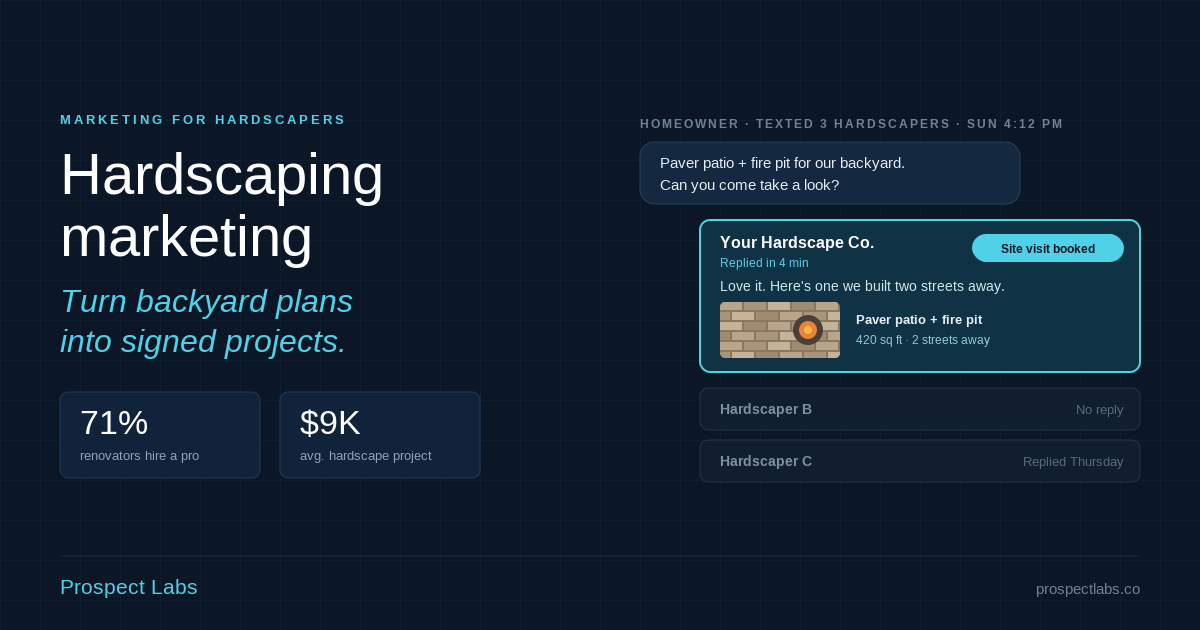
It’s a Sunday afternoon in late March. A couple in Columbus is standing on a cracked concrete slab behind their house, phones out, scrolling paver patio photos and arguing gently about whether a fire pit is worth it. By Tuesday night they’ve saved forty pictures, read two cost guides and texted three hardscapers. The one who replies first, with a few questions and a photo of a similar job two streets away, gets the site visit. The other two never hear back.
That’s hardscaping in a nutshell. The work is permanent, the tickets are big and the decision is slow until, suddenly, it isn’t. You don’t need a flood of leads. You need to be the obvious, trustworthy choice when a homeowner finally decides to spend $15,000 on their backyard, and you need to keep that lead warm through a decision that can stretch across a whole winter.
This guide covers how hardscape buyers actually decide, what the 2026 numbers say, how to market each project type, how to get better leads instead of more tire kickers, and how to fill the calendar before the spring rush. If you also run lawn and planting crews, our guide to home service marketing covers the basics every outdoor trade shares, and remodeling marketing shows how the same long decision plays out indoors.
What Makes Hardscaping Marketing Different From Other Contractor Marketing?
Hardscaping marketing is different because homeowners are buying something permanent that they can’t see until it’s built. They judge you on finished projects, base and drainage know how, and reviews from neighbors, and most of them plan in winter, compare quotes in spring and want the crew on site before summer.
A roofer’s customer has water coming through the ceiling. Your customer has a vision of Friday nights around a fire pit. Nobody needs a retaining wall by tomorrow morning, so your marketing has two jobs. Stay visible while people are dreaming, and be fast and reassuring the moment they reach out, because by then they’re comparing you with two or three other crews.
| Phase | What the homeowner is doing | Where they are | What your marketing must do |
|---|---|---|---|
| Dreaming | Saving patio and fire pit photos | Houzz, Pinterest, Instagram, YouTube | Show finished projects with town, size and materials |
| Researching | Reading cost guides, pavers vs concrete | Google, ChatGPT and other AI tools | Publish honest cost and material pages |
| Shortlisting | Comparing about three hardscapers | Google Maps, reviews, your website | Prove local work, recent reviews, warranty |
| Reaching out | Calling or texting, often evenings and weekends | Phone and website | Answer, or text back within minutes |
| Deciding | Weighing quotes, financing and design | Texts, email, the back porch | Follow up patiently, explain the base you build |
| After the job | Hosting the first cookout | Neighbors, social media | Ask for the review, the referral and the next phase |
One more thing sets hardscaping apart. A badly built patio heaves after one freeze and thaw cycle, and homeowners have heard the horror stories. Talking openly about excavation depth, compacted base, edge restraint and drainage is not boring detail. It’s the proof that separates you from the cheapest quote.
Hardscaping Marketing in 2026: What the Numbers Say
Outdoor demand is healthy and swinging toward hardscape. More homeowners are swapping grass for pavers and stone, projects are getting more ambitious, and more people than ever are hiring a professional instead of doing it themselves. That rewards the hardscapers who are easy to find and easy to trust.
| What the data shows | Figure | Source |
|---|---|---|
| Homeowners hiring a pro for outdoor renovations | 71%, up from 65% in 2024 | 2026 U.S. Houzz Outdoor Trends Study |
| Homeowners upgrading lawn areas who add hardscaping | 57%, up 7 points since 2024 | Houzz Outdoor Trends Study |
| Renovating homeowners adding a patio or terrace | 38% | Houzz Outdoor Trends Study |
| Renovating homeowners adding paths, stairs or steps | 45% | Houzz Outdoor Trends Study |
| Renovating homeowners adding a retaining wall | 19% | Houzz Outdoor Trends Study |
| Outdoor kitchen projects built from scratch | 95% of outdoor kitchen projects | Houzz Outdoor Trends Study |
| Homeowners who hire a stone, paver or concrete specialist | 20% | Houzz Outdoor Trends Study |
| Average professional hardscaping project | About $9,000, most between $5,000 and $18,000 | Angi hardscaping cost data, 2026 |
Three things matter here for a hardscaper.
- The buyer pool is growing. With 71% of outdoor renovators hiring a pro, the question isn’t whether a homeowner hires someone. It’s whether they find and trust you before they find the next crew.
- Low maintenance is the selling point. Hardscape and synthetic turf are both rising because homeowners are tired of mowing and watering. Pages that talk about less upkeep, not just good looks, speak directly to that.
- Broken stuff starts projects. Houzz found that deteriorated or broken outdoor elements are the top trigger for outdoor renovations, at 41%. A sunken walkway or a leaning wall is a marketing opportunity, so give repair and replacement their own pages.
How Should You Market Each Type of Hardscape Project?
Market each hardscape project type on its own page. Someone pricing a 300 square foot paver patio searches, worries and decides differently from someone planning a two tier retaining wall or a $20,000 outdoor kitchen. Separate pages rank for specific searches and let you show the right proof to the right buyer.
Cost is the first thing every homeowner wants to know and the last thing most hardscapers put on their website. A starting range on each page builds trust and quietly screens out people who expected a full backyard for $3,000.
| Project | Typical 2026 installed cost | What to lead with |
|---|---|---|
| Concrete patio | $2,000 to $5,000 | Value, speed and clean finishes |
| Paver patio | $2,400 to $7,000 | Durability, design options, freeze and thaw resistance |
| Retaining wall | $3,200 to $9,000 | Drainage, engineering, solving a real slope problem |
| Fire pit | $700 to $4,500 | Lifestyle, gathering, an easy add on to a patio |
| Outdoor kitchen | $8,000 to $25,000 or more | Entertaining, full portfolio, utilities handled properly |
Patio and retaining wall ranges from Angi’s 2026 hardscaping cost data. Fire pit and outdoor kitchen ranges from a 2026 backyard hardscape cost guide. Your local numbers will differ.
Patio and walkway marketing
Patios are your bread and butter and your best entry point. Build one page for paver patios and another for concrete or stamped concrete, each with its own gallery. Under every project, add the town, the square footage, the paver or stone used and a budget band. Walkways and steps belong on the same page or a sister page, because 45% of outdoor renovators are adding paths, stairs or steps.
Retaining wall marketing
Retaining wall buyers usually have a problem, not a dream. Erosion, a sloped yard they can’t use or an old timber wall that’s leaning. Lead with how you handle drainage, gravel backfill and permits for walls over four feet, and show before and after shots of the slope. These homeowners care far more about “will it hold” than about color.
Outdoor kitchen and fire feature marketing
These are the high ticket, high emotion jobs. Houzz found 68% of outdoor kitchen projects now include plumbing, electrical or heating work, so explain how you coordinate gas lines, electrical and permits. Show the full space at dusk with lighting on, because that’s the picture homeowners are buying. Fire pits make an easy add on, so mention them on every patio page.
Paver driveways and pool decks
Driveways and pool decks attract a different buyer, often someone comparing you with asphalt pavers or the pool builder. Give each its own page that explains load bearing base depth for driveways and slip resistance and heat for pool decks. If you work alongside pool builders, ask for referrals both ways.
Each project page should also be built for local search: a clear page title with the service and the town, consistent business details and fresh reviews that mention the project type. Our guide to local SEO for contractors walks through the setup.
How Do You Get Better Hardscaping Leads, Not Just More?
Better hardscaping leads come from setting expectations before the first site visit. Show starting prices on project pages, explain your build process, ask for a photo of the yard and a rough budget in your text or form, and reply fast to the people who fit.
Every hardscaper knows the Saturday estimate that goes nowhere. The homeowner wanted a 600 square foot travertine patio for the price of a concrete slab, or was “just getting ideas” for a project two summers away. You can’t avoid all of them, but your marketing can screen out a lot before you load the truck.
| Lead source | Typical lead quality | Who else gets the lead | Best use for a hardscaper |
|---|---|---|---|
| Past clients and referrals | Highest, already trust you | Nobody | Your cheapest, fastest closing source |
| Google search and Google Business Profile | High intent, ready to talk | Nobody, they chose you | The foundation everything points to |
| Houzz profile | Design focused, mixed budgets | Other pros on the platform | Outdoor kitchens and design led work |
| Google Ads and Local Services Ads | High intent if well targeted | You compete in an auction | Filling spring gaps for patios and walls |
| Facebook, Instagram and YouTube | Early stage dreamers | Not applicable | Staying visible during the dreaming phase |
| Shared lead sites (Angi, Thumbtack, HomeAdvisor) | Mixed, often price driven | Often several crews | Testing a new area, with caution |
| Yard signs and door hangers near active jobs | Neighbors who just watched you work | Nobody | Turning one job into two on the same street |
Some simple ways to filter without sounding cold:
- Publish a starting point. A line like “most of our paver patios start around $8,000” saves both sides time and attracts the clients you actually want.
- Ask for a photo first. A picture of the yard, the slope or the old slab tells you more than a long form ever will.
- Offer a paid design option. A 3D design fee credited back to the contract separates serious buyers from quote collectors on bigger outdoor living jobs.
- Answer every enquiry fast. Good leads disappear when calls ring out while you’re running a plate compactor. A missed call text back replies in your business name while you’re on site.
Why Does Your Website Matter So Much for Hardscapers?
For a hardscaper, the website is the yard tour. Homeowners can’t walk across a patio you haven’t built yet, so they judge you by finished work, a clear build process and reviews about similar projects. A site that shows all three and makes texting easy does most of the selling before you visit.
Here’s what a hardscaping website needs, in order of importance:
- Project galleries grouped by type, each with the town, size, materials and a budget band
- Before and after photos of your own work, plus a few shots mid build showing the base, never stock images
- A process page covering design, excavation, base, install and final walkthrough
- Warranty details and the paver or wall block brands you’re certified with
- Financing options explained simply, since many outdoor projects are paid over time
- Reviews that mention specific projects, plus license and insurance details
- A one tap way to text a photo of the yard from any page
We break down the full checklist in our guide to contractor website design. If your current site gets compliments but not calls, here’s why a good looking site still loses jobs.
How Do You Keep Hardscaping Leads Warm Until They Sign?
Keep hardscaping leads warm with planned, useful follow up instead of “just checking in.” Send a recap after the site visit, a similar finished project a week later, a clear options note after the quote and a seasonal nudge to anyone who said “maybe next spring.”
Silence from a homeowner usually means “not yet,” not “no.” They’re waiting on a tax refund, getting HOA approval or still deciding between pavers and natural stone. The hardscaper who’s still politely present in week five often wins the job the fast quoter lost in week two.
| When | What to send | Why it works |
|---|---|---|
| Within 5 minutes of enquiry | A friendly text asking for photos of the yard | Starts the conversation before they text someone else |
| Same day as the site visit | A short recap of what they want and what you noticed | Shows you listened, which builds trust |
| About 7 days later | A finished project like theirs, ideally nearby | Lets them picture their own backyard |
| After the quote | A plain explanation of options, materials and financing | Removes the money worry that stalls decisions |
| About 3 weeks in | A check on questions plus your next open install slot | Creates gentle urgency without pressure |
| Late winter | A note that spring install dates are filling up | Catches everyone who said “next season” |
You don’t have to send these by hand. Automated lead follow up sends each message on schedule, so a busy week on site never turns a warm lead cold. It’s one part of our seven stage contractor marketing system.
How Do Reviews and Past Clients Fuel Hardscaping Growth?
Reviews and past clients matter even more in hardscaping because the work is outside where every neighbor can see it, and it’s supposed to last for decades. Recent reviews that describe the project, the cleanup and how the patio held up after winter sell your next job better than any ad.
Ask for the review at the final walkthrough, when the client is standing on their new patio and genuinely happy. Ask them to mention what you built and how the job ran, because a review that says “the crew protected our lawn and finished the retaining wall in four days” sells far better than “great job.” A one click request with a couple of reminders makes it easy. Our guide shows how contractors get more 5 star Google reviews without awkward asks.
Then remember that this year’s patio client is next year’s fire pit, seating wall or outdoor kitchen client. Hardscape projects are often built in phases, and a note on the one year anniversary or a spring idea for phase two keeps your name in front of people who already trust you. Here’s how to run referral marketing for contractors on purpose instead of by luck.
How Can Hardscapers Beat Seasonality?
Hardscapers beat seasonality by selling in winter and building in spring. Homeowners plan outdoor projects when it’s cold, so use November through February for past client campaigns, design consultations and fresh project pages, then start spring with a full install calendar instead of a full inbox.
In colder states, the off season is also the time to fix the website, add the projects you finished last year and ask past clients for the reviews you forgot to request. In the Sun Belt, where patios and pool decks get built all year, the same plan smooths out the slower months around the holidays. If you also do snow removal or tree work, our guide to tree service marketing covers handling demand that arrives with the weather.
Do the Maths on One Patio
Say your average paver patio with a fire pit is $15,000 and you keep about 25% after materials, equipment and labor. That’s roughly 3,750perjob.Acompletemarketingsystemat[297 a month](https://prospectlabs.co/#pricing) costs about $3,564 a year. One extra patio a year, from a call you would otherwise have missed, covers it. That’s simple arithmetic on example numbers, not a promise of results, so try it with your own.
5 Hardscaping Marketing Mistakes That Cost You Projects
- Using stock photos or a supplier’s catalog shots. Homeowners can tell, and it makes them wonder what your real work looks like.
- One “Services” page for everything. Patios, retaining walls and outdoor kitchens each need their own page to rank and to convince.
- Hiding the base. If you never explain excavation, compaction and drainage, you look the same as the cheapest crew in town.
- Treating shared leads as the plan. When four hardscapers get the same lead, the lowest quote usually wins.
- Going quiet in winter. The crews who market in January are the ones booked solid in April.
How Prospect Labs Helps Hardscapers Win Bigger Projects
Prospect Labs builds marketing systems for hardscaping companies that work through the whole decision, not just the first visit. For a hardscaper, that means one connected setup that keeps selling while you’re on the job:
- A mobile first website built around your real patios, walls and outdoor kitchens, with reviews and one tap texting
- Missed call text back in your business name
- Automated follow up built for long, seasonal outdoor decisions
- A 5 star review funnel with polite reminders
- Referral and past client campaigns you switch on with one click, perfect for phase two projects
- Every call, text and DM in one inbox, plus a dedicated business line
- Local SEO with ongoing updates
It’s one monthly price, live in 7 to 10 days, month to month with no long term contract. Take a look at recent contractor builds to see the work, or read how to choose a contractor marketing agency that books jobs instead of clicks.
Want to see where your hardscaping leads are slipping away? Book a strategy call. We’ll look at your website, your reviews and how calls are handled today, then tell you straight whether we’re a fit. If we’re not, we’ll tell you what we’d do instead.
Hardscaping Marketing FAQs
What is hardscaping marketing?
Hardscaping marketing is how a hardscaping company attracts homeowners planning patios, retaining walls, walkways, fire features and outdoor kitchens, builds trust with real project proof, filters for budget and fit, and follows up until the right enquiries become signed contracts.
What is the best marketing for hardscaping companies?
The best marketing for hardscapers combines project specific web pages with real photos, a strong Google Business Profile, steady recent reviews, fast replies to every enquiry and campaigns to past clients. Referrals and phase two projects usually close fastest and cost the least.
How do hardscapers get leads without buying them?
Hardscapers get their own leads by ranking in Google Maps and search for each service and town, publishing project galleries, collecting reviews that mention specific projects, using yard signs on active jobs and asking past clients for referrals. Owned leads come to you alone.
How much should a hardscaping company spend on marketing?
There’s no single right number. Start with your average project value and margin, then work out how many extra jobs a year your marketing needs to win to pay for itself. Owned channels like your website and reviews keep paying after the spend stops.
Does SEO work for hardscaping companies?
Yes. Homeowners search for terms like “paver patio installer near me” and “retaining wall contractor” plus their town. Separate service pages, accurate business details and recent reviews help you show up. Results build over months and depend on your local competition.
When should hardscapers market their business?
Market hardest from November through March. That’s when homeowners plan spring and summer outdoor projects, compare designs and set budgets. Hardscapers who stay visible and follow up through winter usually start the season with a booked install calendar.